Product Discovery for a Textile Compliance SaaS Platform
A 95-page brief turned into a sourced PRD, an OpenAPI contract and a 111-screen clickable prototype, ready to estimate a 28-week Phase 1.
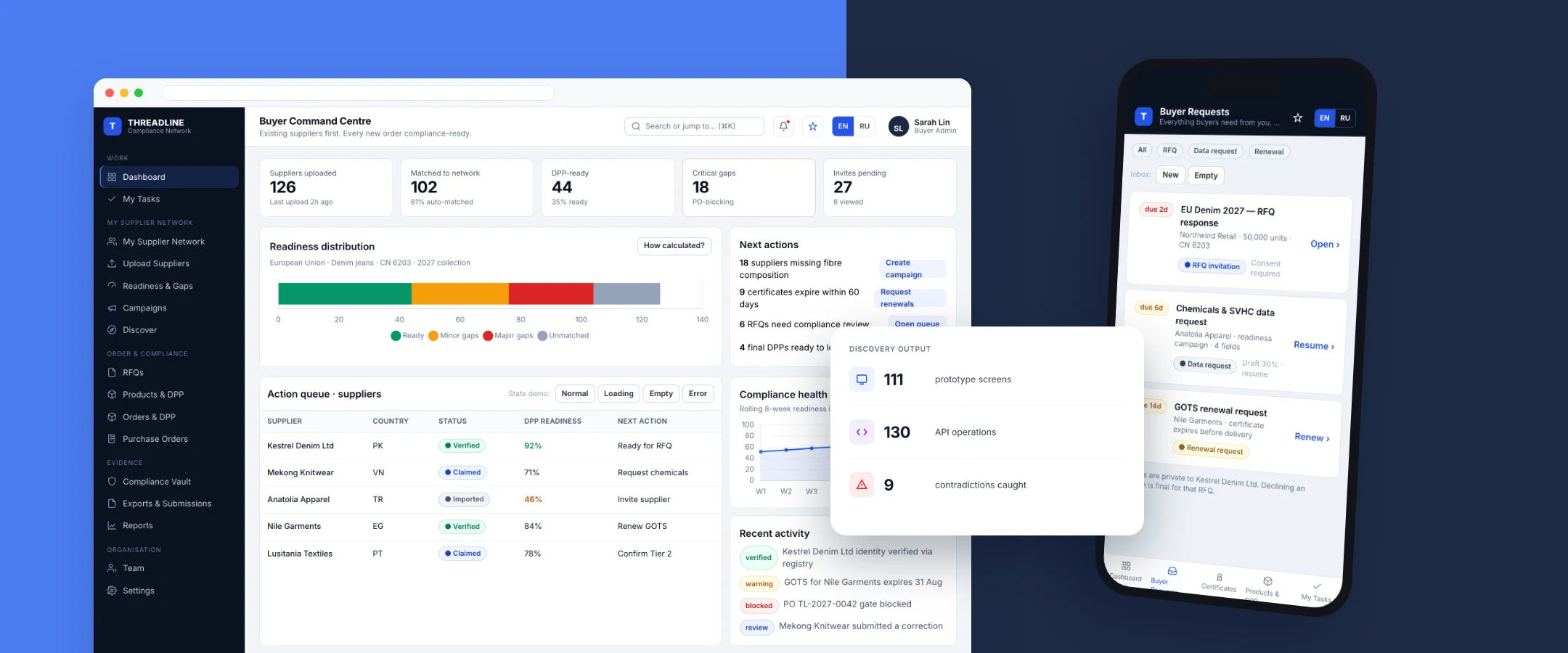
Textile Compliance Platform Discovery gives the client a buildable specification, a clickable product and an evidence-based estimate before a single line of production code.
Partner's Profile
Background
The client is a UK-based startup building a B2B sourcing and compliance platform for the textile and apparel industry, serving buyers in the UK and EU and the factories that supply them. EU regulation drives demand: the Digital Product Passport under ESPR, extended producer responsibility and anti-greenwashing rules. Buyers request the same documents from factories again and again and still lack an evidence base for regulators. The client came with a 95-page PRD and SOW, a 28-page UI screen pack, a 20-page ERD and an 18-page API contract.
Objective
Turn a large but uneven set of documents into something a team can build and price with confidence: requirements with clear provenance, a consistent API contract, a prototype that stakeholders can click through, and a realistic Phase 1 plan. This was a discovery engagement: the deliverables were specification, prototype and estimate, with no backend and no production development yet.
Solution
We ran the engagement as structured product discovery. The PRD was split into 17 parts, about 8,200 lines, and every requirement was tagged by provenance: documented in the source (598), inferred (216) or assumption (114). We formalized 60 compliance rules and 30 business rules. Comparing the documents against each other surfaced 9 contradictions, such as endpoint naming, ERD mismatches and missing foreign keys, which became an open-questions list for the client instead of surprises in sprint three.
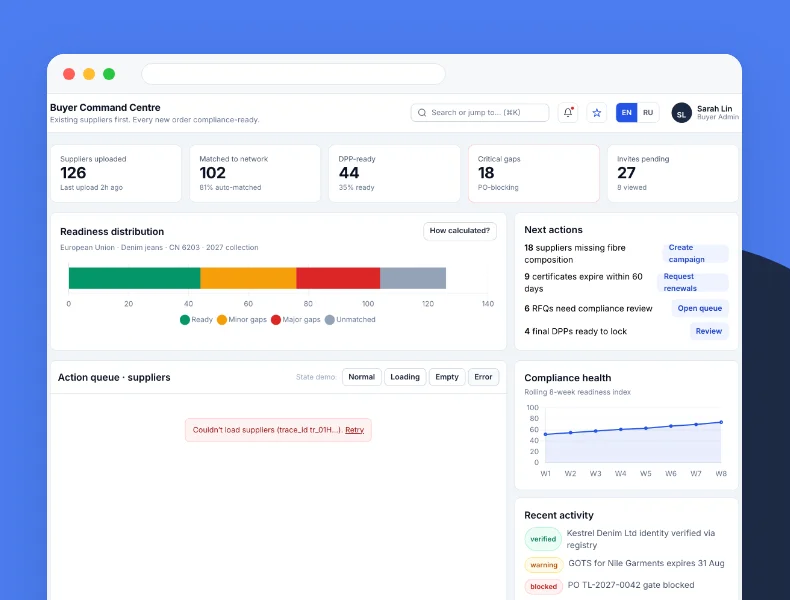
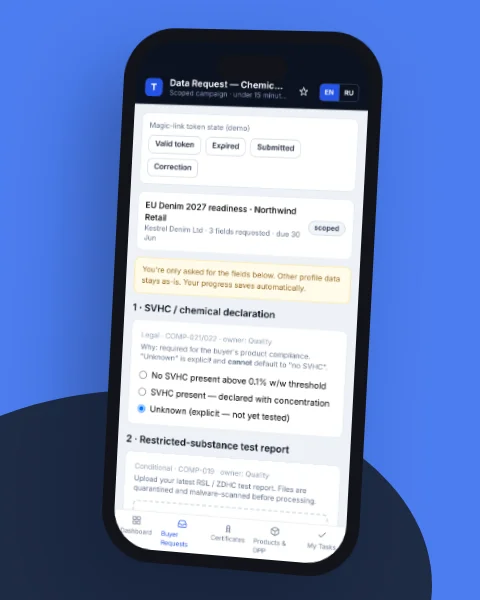
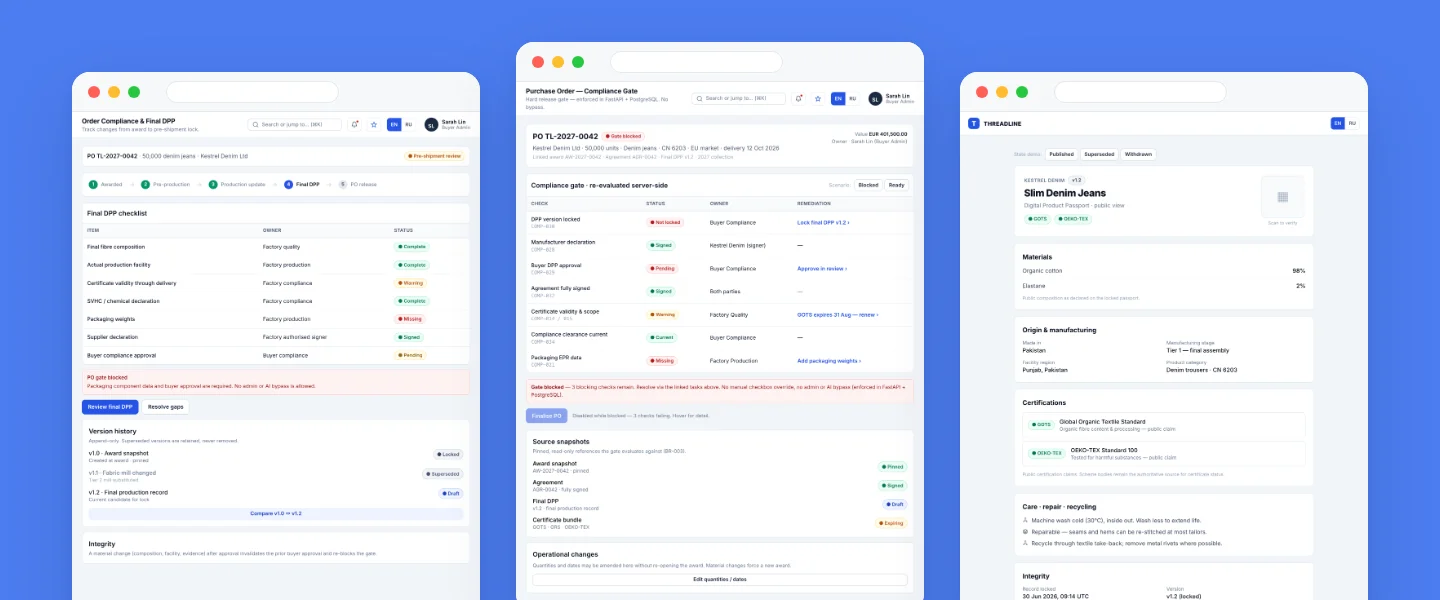
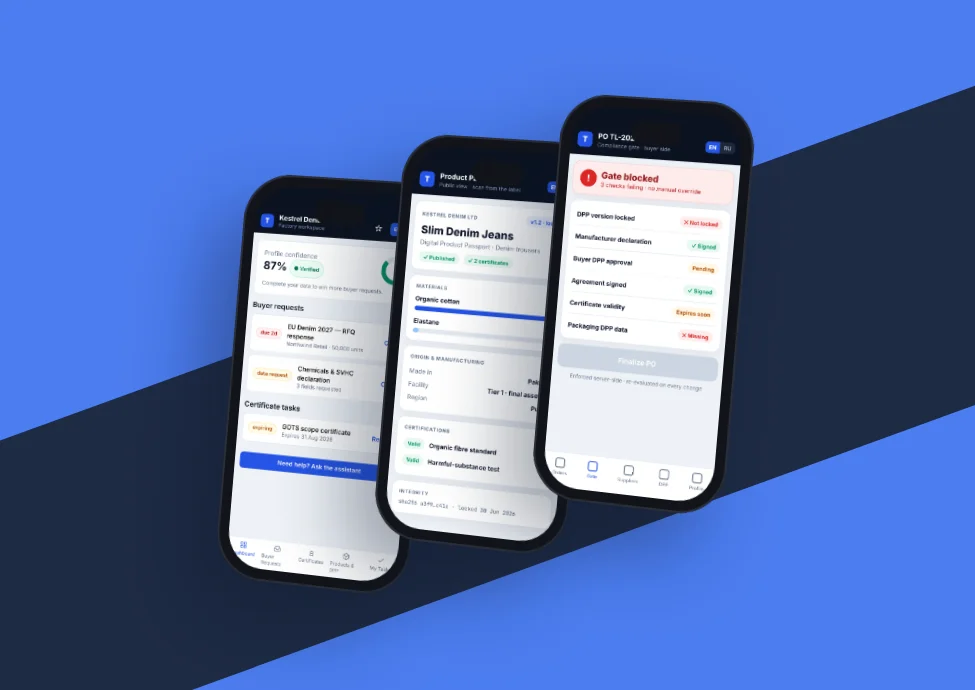
The API contract is OpenAPI 3.1 with 130 operations, 125 paths and 277 schemas. Each operation is mapped to the screens that use it and the permission scope it requires, and endpoints we inferred are flagged so nobody mistakes them for agreed scope. The clickable prototype has 111 screens: 52 for buyers, 18 mobile screens for factories, 15 for admins, plus shared, public, onboarding and auth screens. It includes an EN/RU toggle, a command palette, an AI drawer and switchers for loading, empty, error and blocked states. About 1,090 internal links are validated automatically, with 0 broken.
The central design decision is a compliance invariant: a purchase order or shipment cannot be completed without a frozen product passport, declarations and a compliance check. It is specified at API level and in database constraints, with no bypass for admins or AI. AI may assist, but it can never approve, sign or award. The stack was set by the client: Next.js, FastAPI, Supabase Postgres with Row-Level Security and S3 Object Lock for evidence, against PRD targets of 300–500k facilities, search P95 under 1 s, API P95 under 500 ms and WCAG 2.2 AA.
The result is a 28-week Phase 1 plan (sprints 0A, 0B and 1–6) with an optional 12-week pilot. Development has not started yet.
Technologies
Prototype and Specification
HTML, Tailwind CSS, Chart.js, OpenAPI 3.1
Target Frontend and Backend
Next.js 15, shadcn/ui, TanStack, FastAPI, Pydantic v2, SQLAlchemy 2 (set by the client)
Target Data and Integrations
Supabase Postgres with Row-Level Security, S3 Object Lock, LlamaParse / Azure Document Intelligence, OpenRouter, DocuSign
Projects
Product Discovery for a Textile Compliance SaaS Platform
A 95-page brief turned into a sourced PRD, an OpenAPI contract and a 111-screen clickable prototype, ready to estimate a 28-week Phase 1.
Food Delivery Service App
food delivery service platform

Control Tower
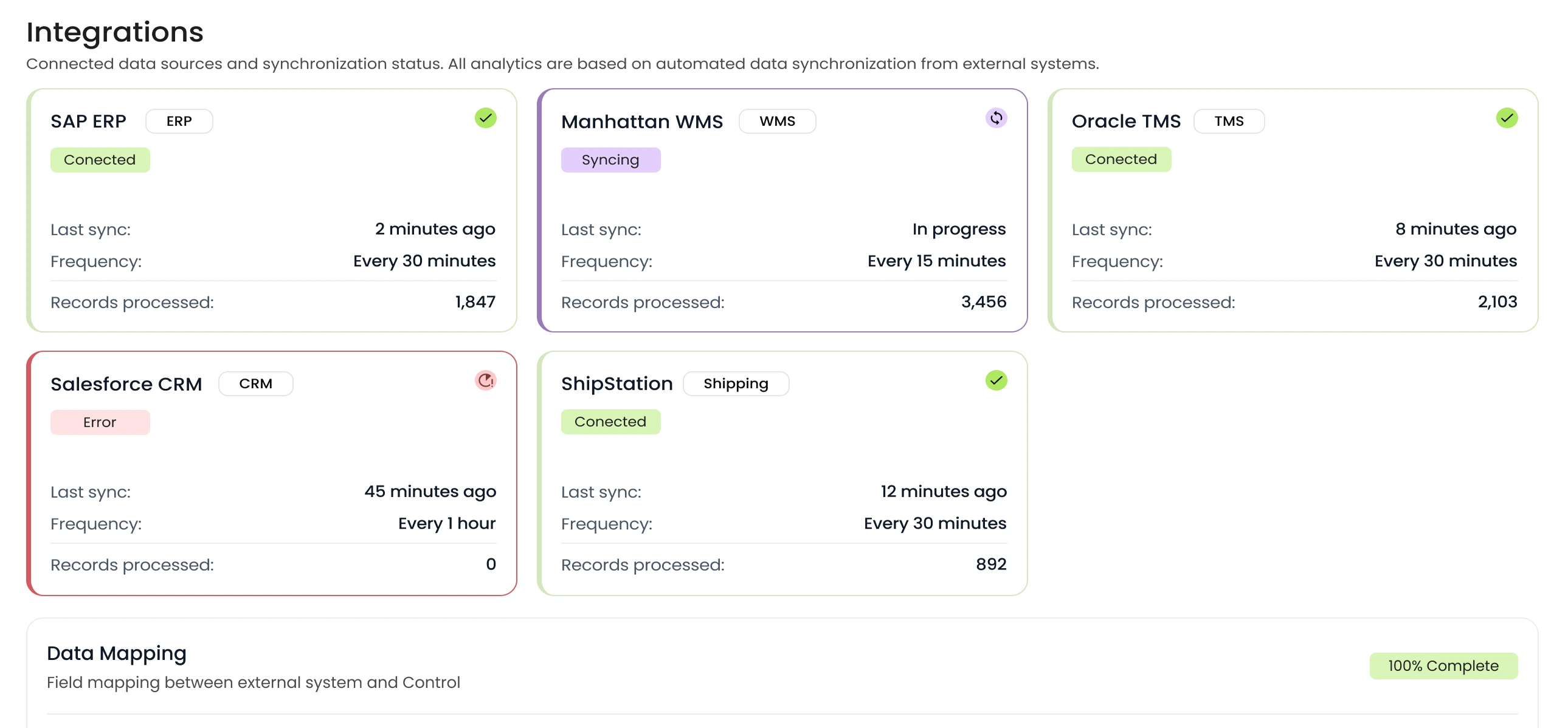
Control Tower transforms raw data into real-time operational intelligence. The ecosystem visualized below acts as a central nervous system for your logistics operations.
Maritime Logistics Software
for ease and efficiency in fleet management.

Taxi Dispatch Software
solution for dispatching and management of taxi

Need a project estimate?
Drop us a line, and we provide you with a qualified consultation.