
Launching Is Easier Than Growing
1. Building Features Nobody Actually Needs
2. Weak Product-Market Fit
3. Poor Onboarding Kills Retention Early
4. Scaling Too Early
5. Ignoring Real Customer Workflows
6. Lack of Iteration After Launch
How Better Product Development Prevents SaaS Failure
The SDH Approach to SaaS Product Development
Business & Product Discovery
MVP Development with Real Validation in Mind
UX/UI Strategy Before Implementation
Scalable Cloud Architecture
Long-Term Partnership Beyond Launch
Final Thoughts
Why Most SaaS Products Fail After Launch (And How Better Product Development Prevents It)

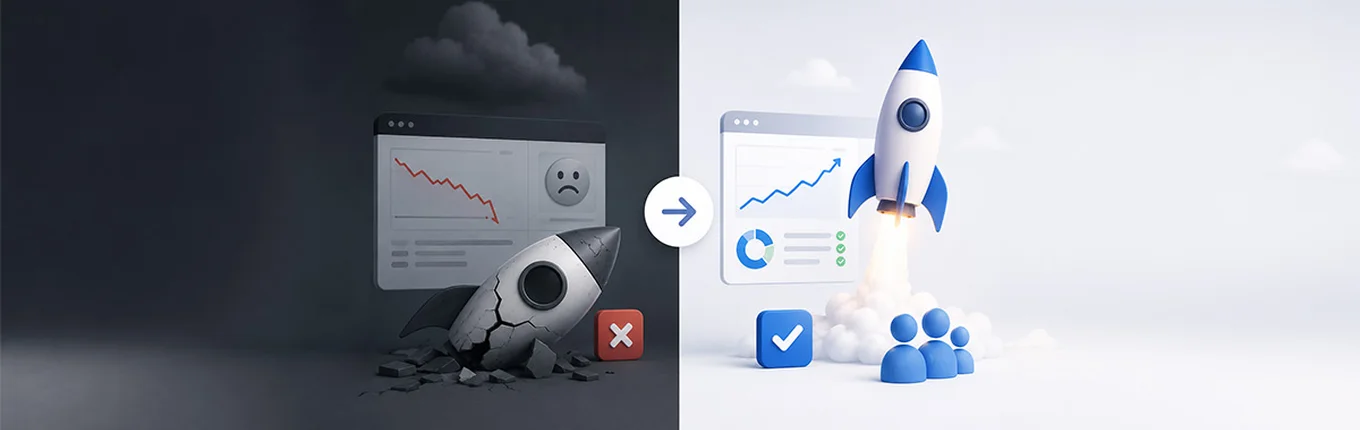
Launching a SaaS product feels like the finish line.
The MVP is shipped. The team is excited. Users start signing up. Investors want updates. Internally, it feels like the hard part is over.
But for most SaaS companies, the real challenge begins after launch.
Because launch does not validate a product.
Users do.
Retention does.
Revenue does.
Product-market fit does.
And this is exactly where many SaaS products start to struggle.
Launching Is Easier Than Growing
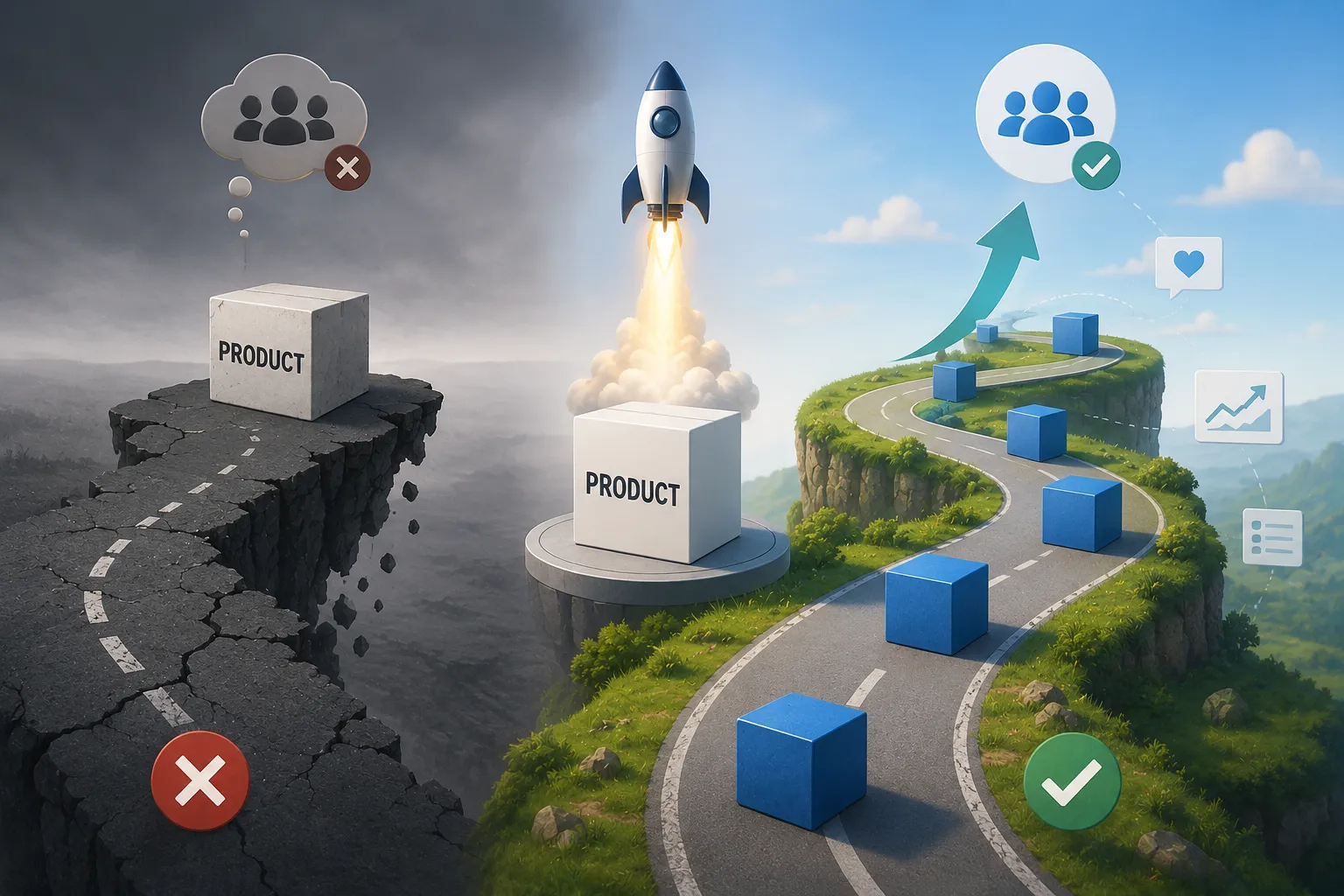
Some attract users but fail to retain them. Others build quickly but scale poorly. Some gain traction early but plateau because the product never truly solves a painful enough problem.
The difficult truth is this:
Most SaaS products do not fail because of bad code.
They fail because the wrong product gets built or because the right product never evolves fast enough after launch.
For founders and product teams, understanding why this happens is often the difference between building something people try… and building something people keep paying for.
The SaaS barrier to entry has never been lower.
Cloud infrastructure is accessible. Development tools are faster. AI accelerates prototyping. Teams can build MVPs in weeks instead of months.
That speed is a huge advantage.
But it also creates a dangerous illusion:
“If we can build it fast, success will come fast too.”
In reality, fast development doesn’t guarantee market demand.
Many products reach production before the team has deeply validated:
- the customer problem
- the urgency of that problem
- how users currently solve it
- whether people will pay for a better solution
Without that validation, launch becomes a test and often an expensive one.
1. Building Features Nobody Actually Needs
This is one of the most common reasons SaaS products fail.
Teams spend months building features based on assumptions:
- “Users will definitely want dashboards.”
- “We should add AI here because competitors are doing it.”
- “Enterprise clients will need this reporting module.”
- “More features will make the product feel more complete.”
But users rarely buy software because it has more features.
They buy software because it solves a painful problem faster, easier, or better than alternatives.
Feature overload creates:
- bloated UX
- higher maintenance cost
- slower development cycles
- confusing onboarding
- lower adoption
And often the most-used feature in the platform ends up being something surprisingly simple.
Successful SaaS products prioritize:
Problem → workflow → outcome
not:
Idea → feature → release
2. Weak Product-Market Fit
A product can launch successfully and still lack product-market fit.
That’s what makes it difficult to diagnose.
You may see:
- traffic
- signups
- demos booked
- trial accounts created
…but users don’t stay.
Churn rises.
Conversion stalls.
Revenue becomes inconsistent.
This usually means the product exists in the market—but hasn’t become essential to the customer yet.
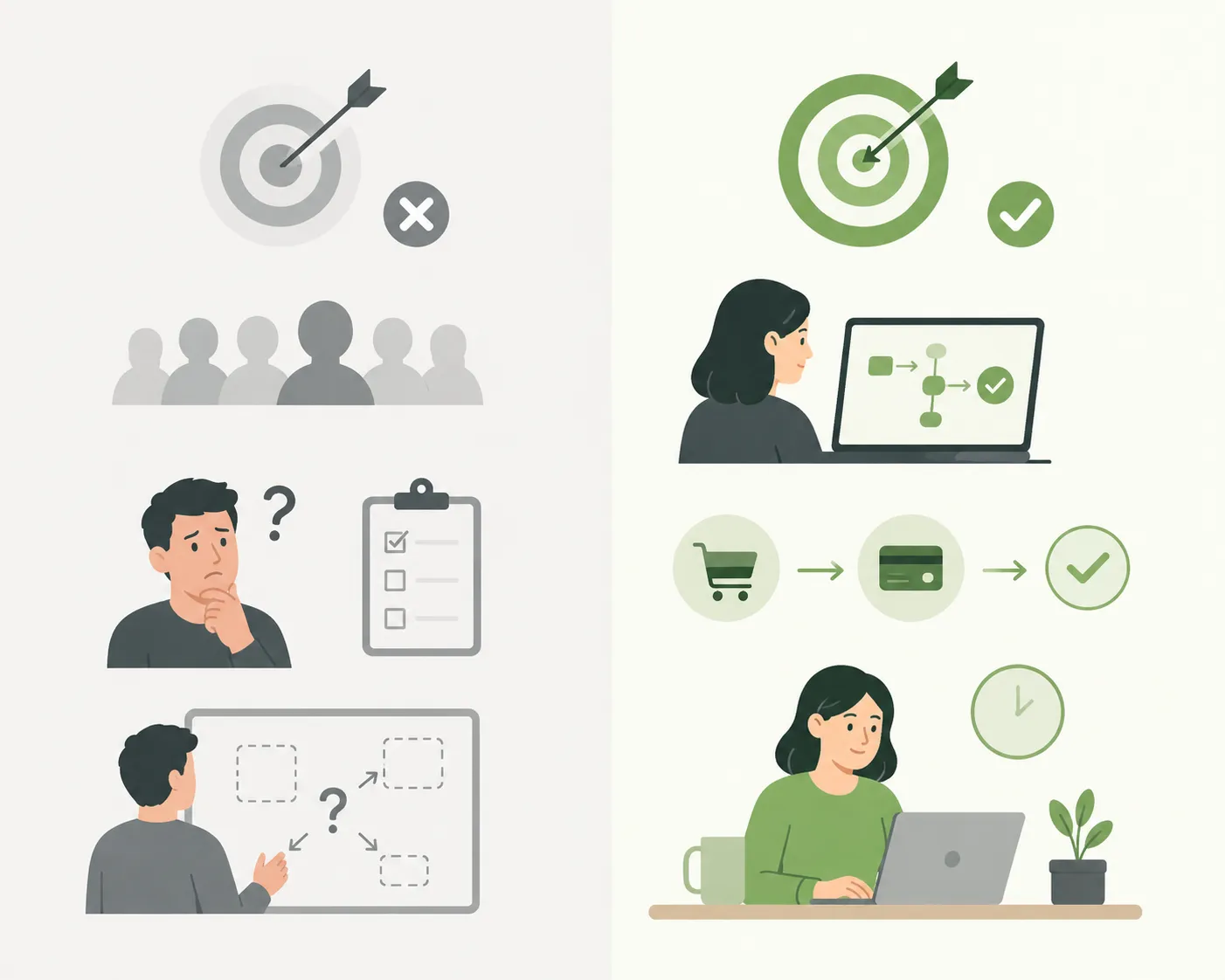
Weak product-market fit often happens when teams:
- solve a minor inconvenience instead of a painful problem
- build for too broad an audience
- don’t understand buying behavior deeply enough
- design around assumptions instead of real workflows
Strong SaaS products become part of a user’s routine.
Weak SaaS products feel optional.
And optional software is easy to cancel.
3. Poor Onboarding Kills Retention Early
Many SaaS teams focus heavily on acquisition.
- Traffic.
- Landing pages.
- Demo funnels.
- Paid ads.
- SEO
But acquisition is only step one.
If users sign up and don’t understand value quickly, they leave.
Poor onboarding creates:
- low activation rates
- abandoned trials
- frustrated support tickets
- high churn in first 30 days
Users shouldn’t need training to understand why your product matters.
Good onboarding helps them reach value fast.
That may include:
- guided setup
- progressive feature introduction
- templates
- automation
- contextual UX
- clear next actions
The faster a user experiences a meaningful win, the stronger retention becomes.
4. Scaling Too Early
This happens constantly in SaaS.
A product gets early traction. A few paying customers arrive.
The team gets excited and begins scaling immediately.
- Hiring grows.
- Infrastructure expands.
- Features multiply.
- Roadmaps become crowded.
But early traction is not always repeatable demand.
Scaling before validation can create:
- unnecessary complexity
- higher burn
- technical debt
- expensive architecture decisions too early
- slower iteration
Many companies build for 100,000 users while still trying to prove value to their first 500.
Growth matters.
But scalable growth only works when the core product already delivers clear repeatable value.
SDH emphasizes this heavily in product development—build lean first, validate fast, then scale with intention.
5. Ignoring Real Customer Workflows

Software doesn’t exist in isolation.
Users interact with products inside larger workflows:
- internal operations
- team collaboration
- approvals
- spreadsheets
- CRM systems
- external platforms
- manual tasks
- APIs
- communication tools
When SaaS teams focus only on the app itself, they often miss the bigger operational picture.
This creates friction.
Examples:
- forcing duplicate data entry
- poor integrations
- workflows that break between teams
- tools that technically function but don’t fit real business operations
The strongest SaaS products fit naturally into the customer’s day-to-day process.
That’s why workflow mapping matters before development starts.
SDH reflects this approach through upfront business analysis, SaaS consulting, UX research, and solution architecture before implementation begins.
6. Lack of Iteration After Launch
Some teams treat launch like a project deadline.
Build.
Ship.
Move on.
But SaaS products are living systems.
After launch comes:
- user behavior analysis
- feedback loops
- bug fixing
- feature refinement
- performance optimization
- UX improvements
- cloud scaling
- infrastructure monitoring
- experimentation
The best SaaS companies don’t launch and stop.
They launch and learn.
Then improve continuously.
Iteration after launch is often where the real product-market fit is discovered.
How Better Product Development Prevents SaaS Failure
Most SaaS failure points begin much earlier than launch.
They usually start during:
- product strategy
- discovery
- architecture planning
- UX design
- development prioritization
That’s why better product development isn’t just writing better code.
It’s creating a better path from idea → product → growth.
The SDH Approach to SaaS Product Development

At SDH, SaaS development is approached as a full product lifecycle, not simply a software delivery project.
Their SaaS development process is built around reducing risk early and creating products ready to scale long-term.
This includes:
Business & Product Discovery
Before development begins:
- defining the product vision
- identifying business goals
- understanding user pain points
- validating market opportunity
- choosing the right architecture
MVP Development with Real Validation in Mind
Rather than building everything upfront:
SDH focuses on lean MVP development designed to:
- reach market faster
- validate assumptions
- collect user feedback
- reduce unnecessary cost
- shorten time to learning
UX/UI Strategy Before Implementation
Good SaaS products need more than functionality.
They need intuitive interfaces users adopt quickly.
SDH includes UX research and SaaS product design early to improve:
- usability
- activation
- engagement
- retention
Scalable Cloud Architecture
Their SaaS engineering teams build products with growth in mind using:
- cloud-native infrastructure
- AWS / Google Cloud / Azure
- APIs & integrations
- scalable backend architecture
- performance optimization
This makes it easier to scale once product demand is proven.
Long-Term Partnership Beyond Launch
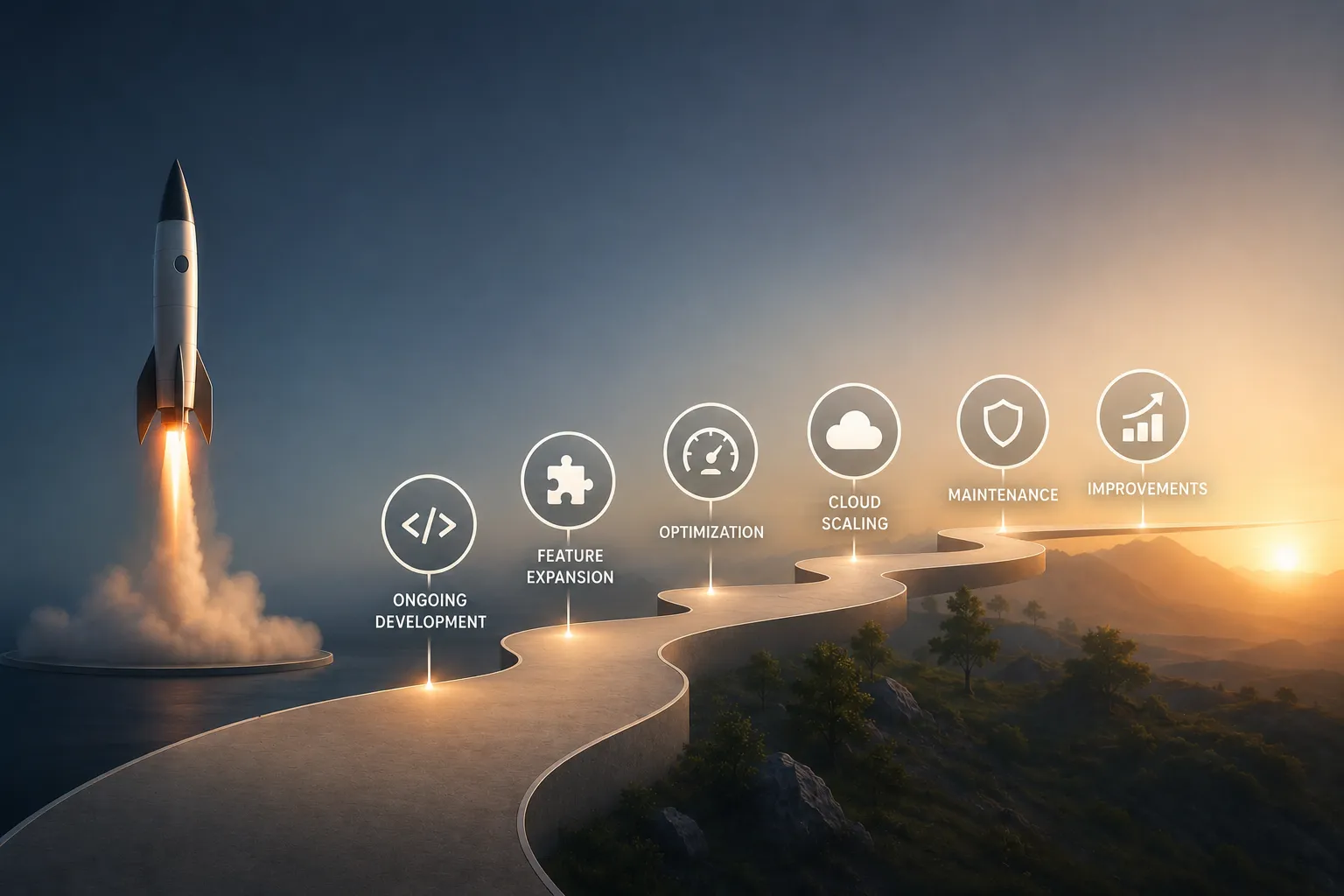
Launch is not the end.
SDH continues supporting clients through:
- ongoing development
- feature expansion
- optimization
- cloud infrastructure scaling
- maintenance
- post-launch improvements
This continuous iteration is often where successful SaaS products separate themselves from failed ones.
Final Thoughts
Most SaaS products do not fail because teams lack effort.
They fail because the product strategy wasn’t strong enough before development or because learning stopped after launch.
Winning SaaS products usually do a few things exceptionally well:
They solve a real problem.
They fit real workflows.
They help users reach value quickly.
They evolve continuously.
And they scale only when the foundation is ready.
That’s why SaaS success is rarely about launching faster.
It’s about building smarter from day one.
For founders, startups, and growing software companies, better product development reduces risk long before the product reaches users.
And once it does, it gives that product a far better chance to stay, grow, and become indispensable.
Categories
About the author

Business Analyst at Software Development Hub. A solution-driven and result-oriented business analyst with a strong academic background in Computer science and Cybersecurity. Capable of communicating effectively with complex, cross-functional, and geographically distributed stakeholders and teams. Resourceful, hard-working, and ambitious team player.
Share




Need a project estimate?
Drop us a line, and we provide you with a qualified consultation.