
Modern Product Development Starts Before Development
1. Discovery: Understanding the Problem Before Building the Solution
2. Product Strategy: Turning Ideas Into Clear Direction
3. UX & Product Design: Translating Strategy Into Experience
4. Architecture: Building the Foundation Before Scaling
5. Development: Turning Product Vision Into Working Software
6. Launch: Moving From Product to Production System
7. Post-Launch Growth: Continuous Improvement Is the Real Product Lifecycle
Why Product Development Today Requires End-to-End Thinking
How SDH Builds Software Products End-to-End
Building Software Today Means Building Systems
From Idea to Production System: How Real Software Products Are Built Today

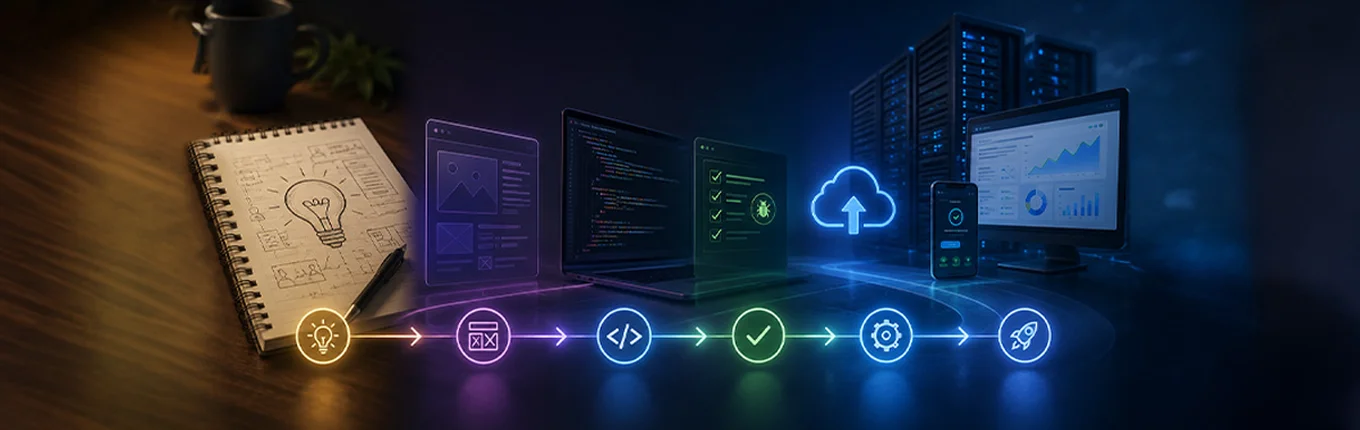
Bringing a software idea to life has never been easier or harder.
Easier, because the tools to build products are more accessible than ever.
Harder, because building software that actually survives in production requires much more than writing code.
Modern software products are no longer static applications with a one-time launch.
They are living systems.
They evolve with users.
They scale with demand.
They integrate with infrastructure.
They adapt to business change.
And they require continuous improvement long after the first release.
That’s why successful product development today is not a linear “design → build → launch” process.
It’s a connected lifecycle.
Modern Product Development Starts Before Development
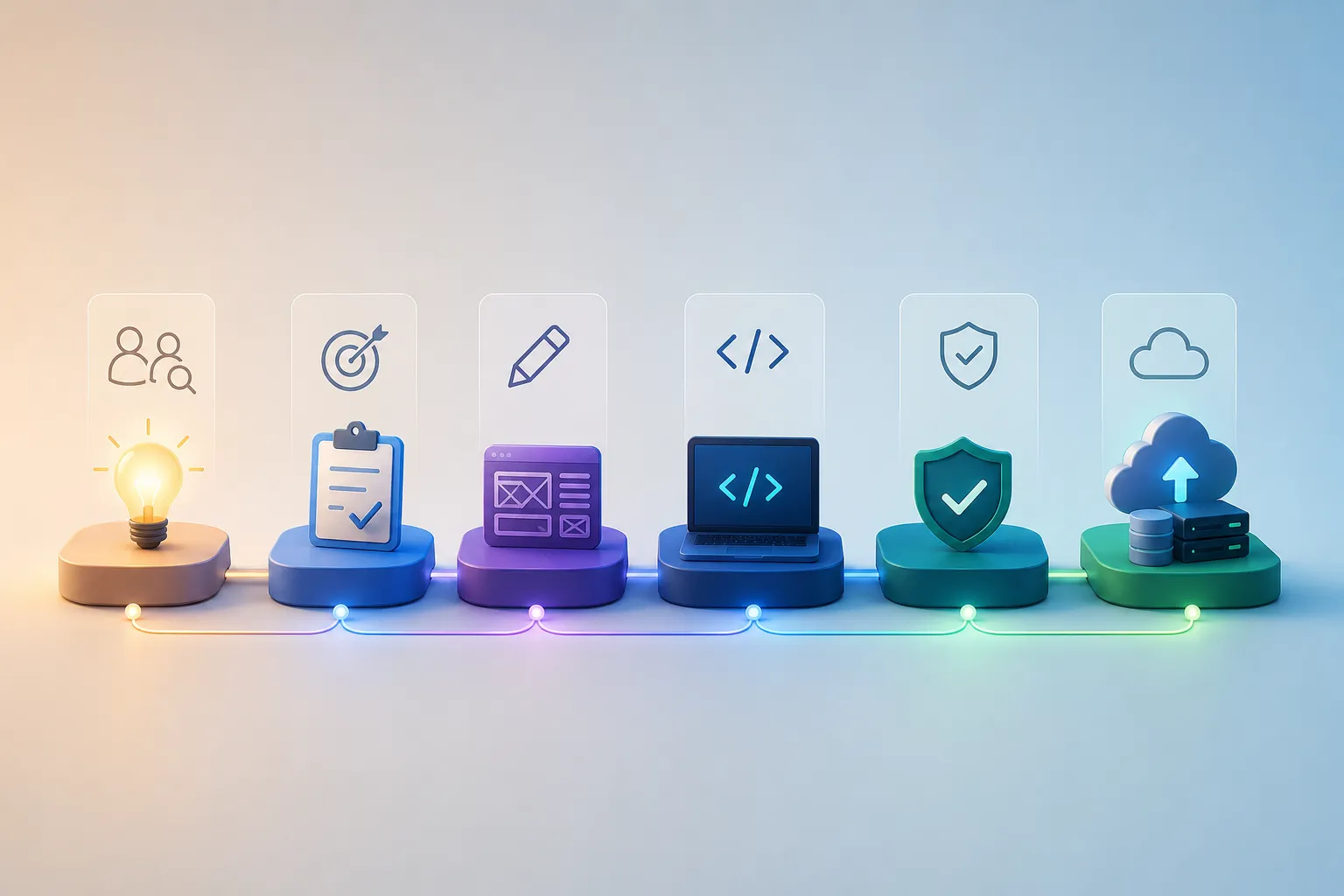
From early discovery to production infrastructure, every phase shapes the outcome.
And when one phase is rushed or skipped, the entire product feels it later.
This is what real software development looks like today.
The biggest misconception in software is that product development begins when coding starts.
In reality, the most important decisions happen before the first line of code is written.
This early stage is where teams validate whether the product should exist at all—and what form it should take.
Without this stage, teams often build solutions based on assumptions instead of evidence.
That creates expensive rework later.
1. Discovery: Understanding the Problem Before Building the Solution
Every strong software product begins with discovery.
This phase focuses on understanding:
- the business goal
- the user problem
- market opportunities
- operational constraints
- user expectations
- technical complexity
- success metrics
Discovery is not brainstorming.
It’s structured research.
It helps answer critical questions like:
- Who will use this product?
- What workflow are they trying to complete?
- What pain point are they experiencing?
- What already exists in the market?
- Why would someone switch to this solution?
- What creates real value for the business?
Many failed products skip this stage entirely.
Teams move too quickly into building.
And then months later they realize they solved the wrong problem.
The cost of correcting a product after development is always higher than validating the idea early.
2. Product Strategy: Turning Ideas Into Clear Direction
Once the problem is validated, strategy defines the path forward.
This is where a product starts becoming something actionable.
Product strategy includes decisions around:
- product vision
- positioning
- user value proposition
- MVP scope
- monetization direction
- feature prioritization
- go-to-market alignment
- long-term roadmap
This phase prevents “feature overload”.
Without strategy, products become collections of ideas instead of focused tools.
And when everything feels important, teams lose clarity on what actually matters.
Strong strategy creates alignment between:
- users
- business stakeholders
- product teams
- engineering
- design
- operations
Everyone works toward the same goal.
3. UX & Product Design: Translating Strategy Into Experience
Once strategy is defined, product design turns it into something users can interact with.
This goes far beyond visual design.
Modern product design includes:
- UX mapping
- user flows
- wireframes
- interface design
- usability testing
- accessibility planning
- interaction logic
- responsive behavior
Great software feels intuitive because the design work behind it was intentional.
Users should not need to “figure out” your product.
They should move naturally through it.
This is especially important in SaaS and internal business systems where users rely on workflows repeatedly.
Every unnecessary step creates friction.
Every confusing interaction creates drop-off.
Design is where strategy becomes usable.
4. Architecture: Building the Foundation Before Scaling
This is often the least visible phase, but one of the most important.
Architecture determines how the system will behave under real-world conditions.
Before development begins, teams need to define:
- backend structure
- frontend architecture
- databases
- APIs
- integrations
- infrastructure setup
- hosting strategy
- cloud environment
- performance requirements
- security planning
- scalability expectations
Architecture affects everything later:
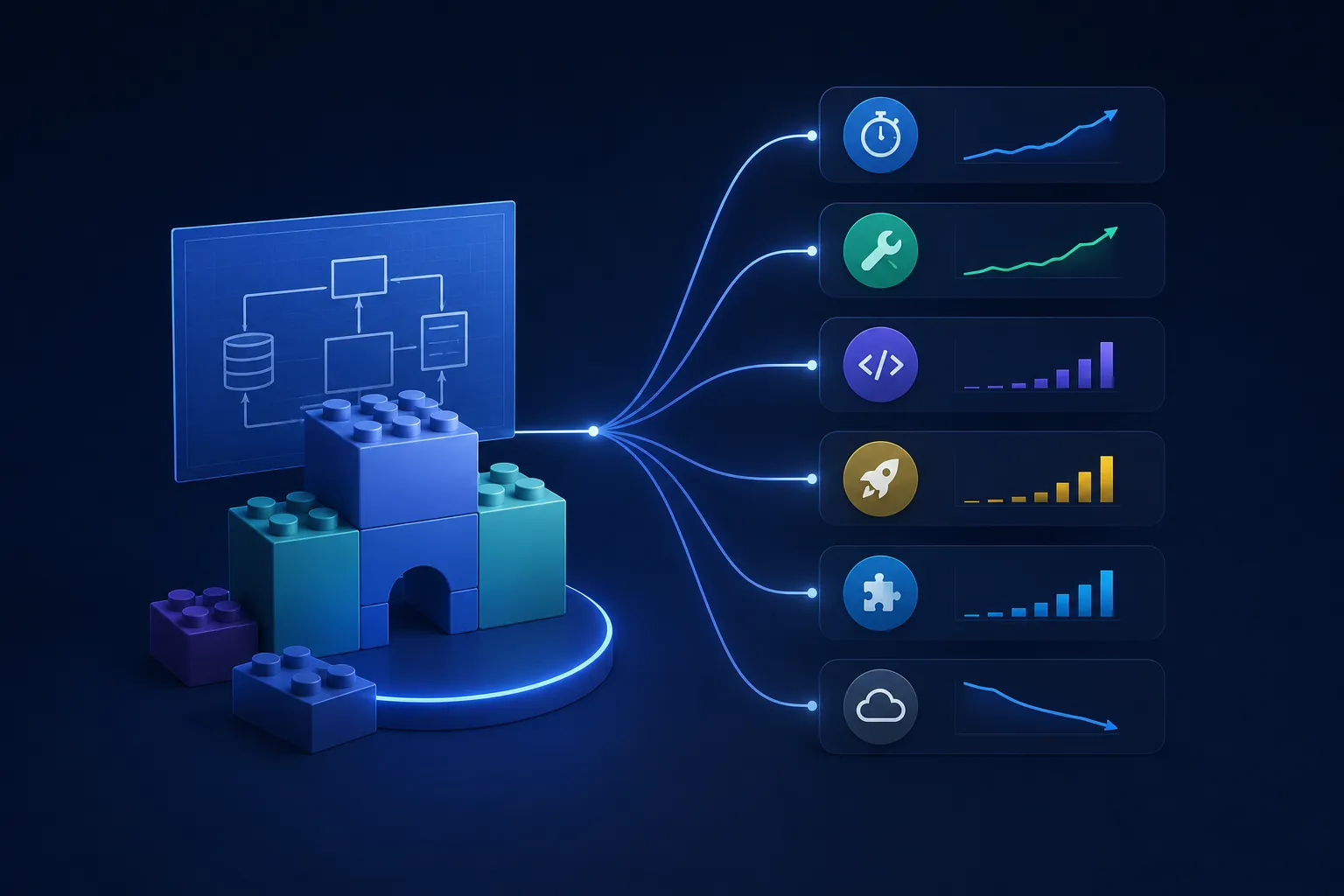
- speed
- maintainability
- developer velocity
- deployment stability
- feature expansion
- infrastructure cost
Poor architecture often looks fine early on.
But under growth, it becomes expensive.
Teams struggle with:
- technical debt
- slow releases
- bugs during scaling
- unreliable performance
- difficult integrations
Strong architecture protects the future of the product.
5. Development: Turning Product Vision Into Working Software
Only after discovery, strategy, design, and architecture are aligned does development move efficiently.
At this stage engineering becomes execution.
Modern development usually includes:
- frontend development
- backend development
- API development
- integrations
- cloud services
- database implementation
- QA and testing
- CI/CD pipelines
- deployment workflows
The goal isn’t simply “to build features.”
The goal is to build reliable product behavior.
That includes:
- performance
- security
- usability
- maintainability
- deployment readiness
Good development is not just code quality.
It’s product quality.
6. Launch: Moving From Product to Production System
Launch is often seen as the finish line.
But in modern software, launch is usually the beginning.
Once real users enter the system, teams start learning faster than ever before.
This is when real product data appears:
- usage patterns
- feature adoption
- drop-off points
- workflow friction
- performance bottlenecks
- support requests
- infrastructure load
What teams believed users would do often differs from what users actually do.
This is normal.
And this is where great products improve.
7. Post-Launch Growth: Continuous Improvement Is the Real Product Lifecycle
The strongest software products are never “finished.”
After launch, teams continue improving through:
- feature expansion
- optimization
- workflow improvements
- UX refinement
- performance tuning
- infrastructure scaling
- analytics-driven iteration
- maintenance
- security updates
- technical improvements
This is where software becomes a real production system.
And where products mature from MVP into long-term business assets.
The companies that win are usually the ones that keep learning after launch.
Why Product Development Today Requires End-to-End Thinking
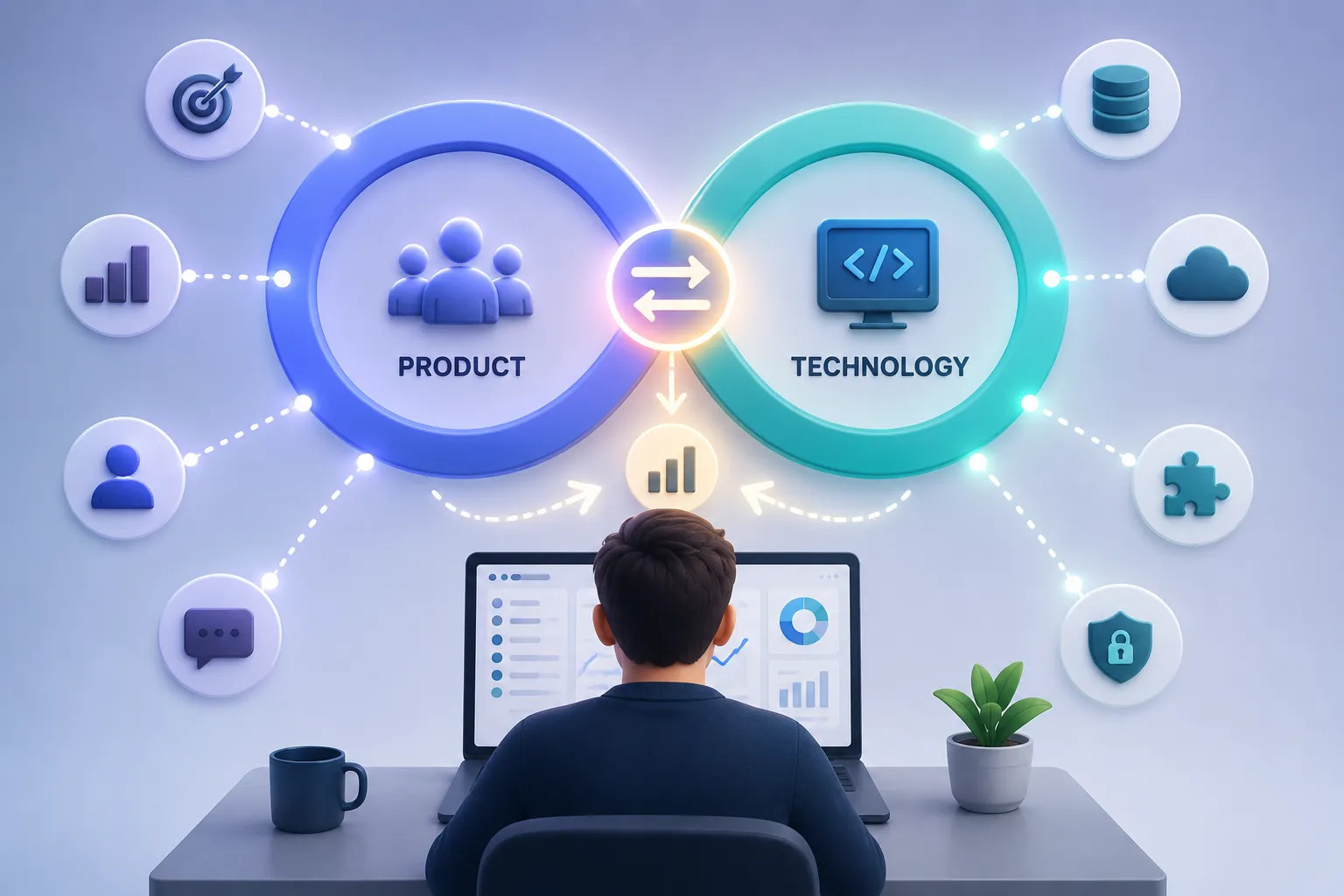
Modern software products are deeply interconnected.
Product decisions affect technical decisions.
Technical decisions affect UX. UX affects adoption.
Adoption affects business growth. Growth affects infrastructure.
Infrastructure affects scalability.
Nothing exists in isolation.
That’s why fragmented development creates problems.
When strategy, design, engineering, and scaling happen separately, teams lose momentum.
Handoffs become bottlenecks.
Priorities become unclear.
Execution slows down.
Modern product development works best when every phase is connected.
How SDH Builds Software Products End-to-End
At SDH, software development is approached as a full lifecycle, not just a coding phase.
The goal is not simply to deliver software.
The goal is to build products that work in production, scale over time, and continue creating value after launch.
That means supporting clients across every stage:
Product Discovery
Validating ideas, identifying opportunities, defining user and business requirements.
Product Strategy
Shaping product direction, roadmap priorities, MVP scope, and growth planning.
UX & Design
Designing intuitive digital experiences around real user workflows.
Architecture
Creating scalable technical foundations with the right infrastructure from day one.
Software Development
Building reliable, production-ready software across web, cloud, and platform layers.
Scaling & Optimization
Supporting growth through performance improvements, infrastructure scaling, and continuous iteration.
Long-Term Product Evolution
Helping products adapt as markets, users, and businesses evolve.
Building Software Today Means Building Systems
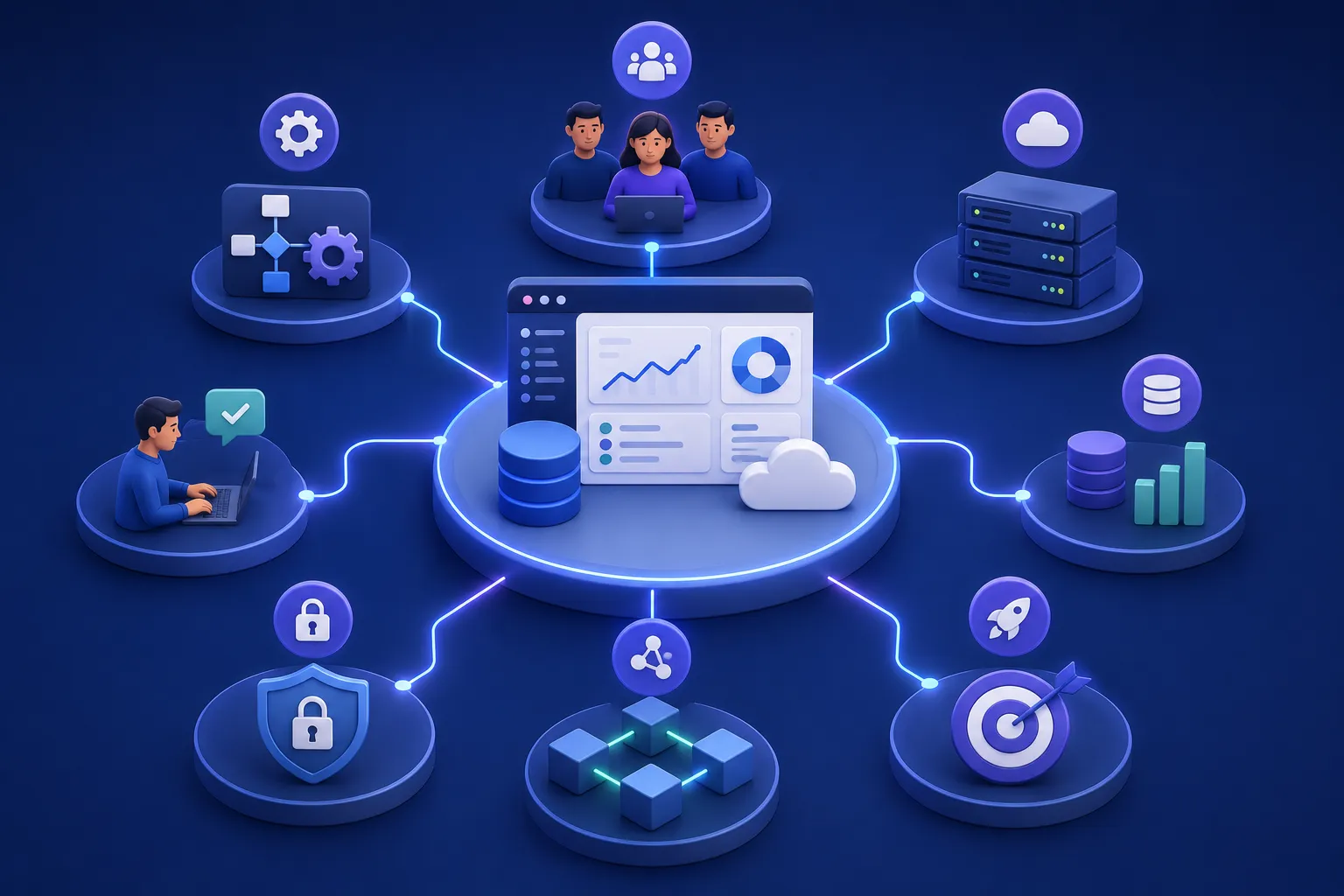
The best digital products today are not isolated apps.
They are operational systems.
They connect users, business logic, infrastructure, data, and long-term strategy.
Building them successfully requires more than development resources.
It requires product thinking.
It requires architecture.
It requires continuous iteration.
And it requires a partner who understands how every stage connects.
From idea to production system, successful software is built deliberately.
And the strongest products are the ones designed to keep evolving long after launch.
That’s the approach SDH brings to every product it builds.
Categories
About the author

CEO & Co-Founder at Software Development Hub. Innovation-driven expert with 20+ years of experience. A business practitioner with experience in creating and launching startups, an innovator and progressive-minded specialist, who helps turn raw ideas into profitable results.
Share




Need a project estimate?
Drop us a line, and we provide you with a qualified consultation.