
Understanding the Need for a Standard in AI Integration
What Is a Model Context Protocol (MCP)?
Why MCP Is Becoming the Standard
1. MCP Solves the N×M Integration Problem
2. MCP Enables True Plug-and-Play AI Integration
3. Industry Adoption Is Rapidly Increasing
4. MCP Supports Scalable AI Architectures
5. MCP Improves Security and Governance
6. MCP Enables Multi-Model AI Strategies
7. MCP Supports the Future of AI Agents
The Business Impact of MCP Adoption
Faster AI Deployment
Lower Development Costs
Improved Operational Efficiency
Better Decision-Making
Why Companies Need Expert Support for MCP Implementation
What SDH Offers in MCP Development
MCP Architecture Design
Custom MCP Server Development
AI Model Integration
Secure Deployment and Infrastructure Setup
Monitoring and Optimization
When Should Companies Adopt MCP?
The Future of AI Integration Is Standardized
MCP Is More Than a Trend, It’s the Future of AI Integration
Why MCP Is Becoming the Standard for AI Integration


Artificial intelligence is evolving rapidly from simple chatbots to fully autonomous systems capable of executing tasks, accessing data, and driving real business workflows.
However, as organizations adopt AI at scale, one major challenge continues to surface: integration.
AI models alone do not deliver value unless they connect seamlessly to the systems where business data lives CRMs, ERPs, databases, cloud platforms, and internal tools. Historically, connecting these systems required custom development, repetitive engineering work, and ongoing maintenance.
Understanding the Need for a Standard in AI Integration
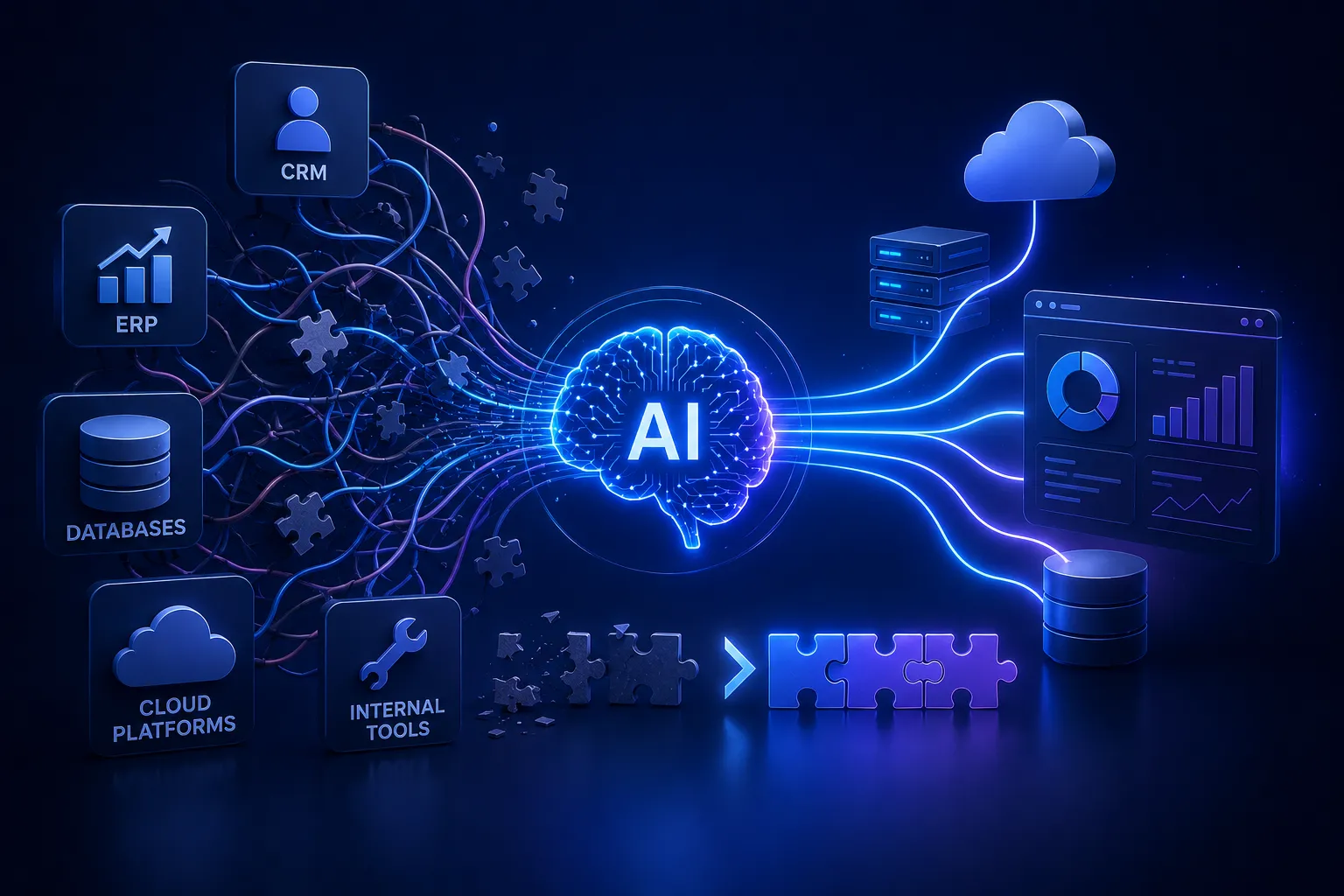
Before MCP, integrating AI into business environments was highly fragmented.
Each AI model required separate connections to every tool or system. If an organization used:
- 3 AI models
- 5 business tools
It often required 15 separate integrations.
This pattern is known as the N×M integration problem, where each new tool or model multiplies complexity.
Over time, this approach created:
- High development costs
- Integration instability
- Maintenance challenges
- Security inconsistencies
- Slower innovation cycles
Organizations needed a universal approach—something similar to how REST APIs standardized web communication decades ago. MCP is now fulfilling that role for AI systems.
What Is a Model Context Protocol (MCP)?
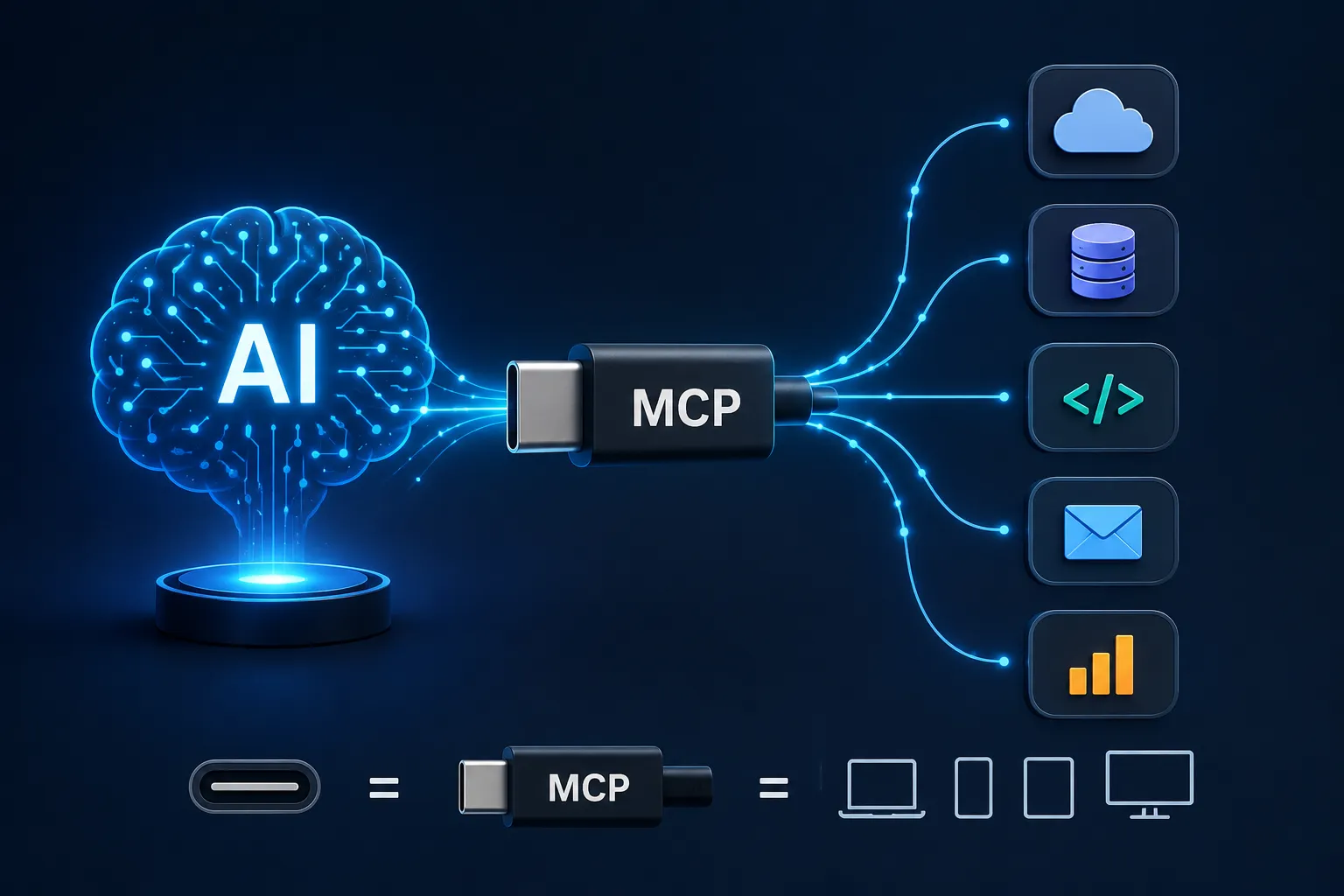
Model Context Protocol (MCP) is an open standard introduced to define how AI applications communicate with external tools, services, and data sources.
In simple terms, MCP acts as a universal interface between AI and the digital systems businesses rely on.
A helpful analogy is this:
MCP is like USB-C for AI systems.
Before USB-C, devices required different cables. After standardization, one connector worked across multiple devices. MCP performs the same role for AI integration—one standardized protocol that works across many systems.
Instead of building dozens of custom integrations, organizations build one MCP-compatible interface that works across platforms.
Why MCP Is Becoming the Standard
Standards emerge when industries face shared complexity. MCP is gaining adoption because it solves multiple critical problems at once.
Here are the core reasons MCP is becoming the dominant approach to AI integration.
1. MCP Solves the N×M Integration Problem
One of the biggest barriers to scaling AI is the exponential growth of integrations.
Without MCP:
- Each AI model needs separate integrations
- Each system requires custom connectors
- Maintenance grows rapidly
With MCP:
- Each tool connects once
- Multiple AI models reuse the same interface
- Integration complexity drops dramatically
This approach eliminates redundant engineering work and enables scalable system architecture.
For growing companies, this shift is transformative. It turns AI from an isolated experiment into an operational system.
2. MCP Enables True Plug-and-Play AI Integration
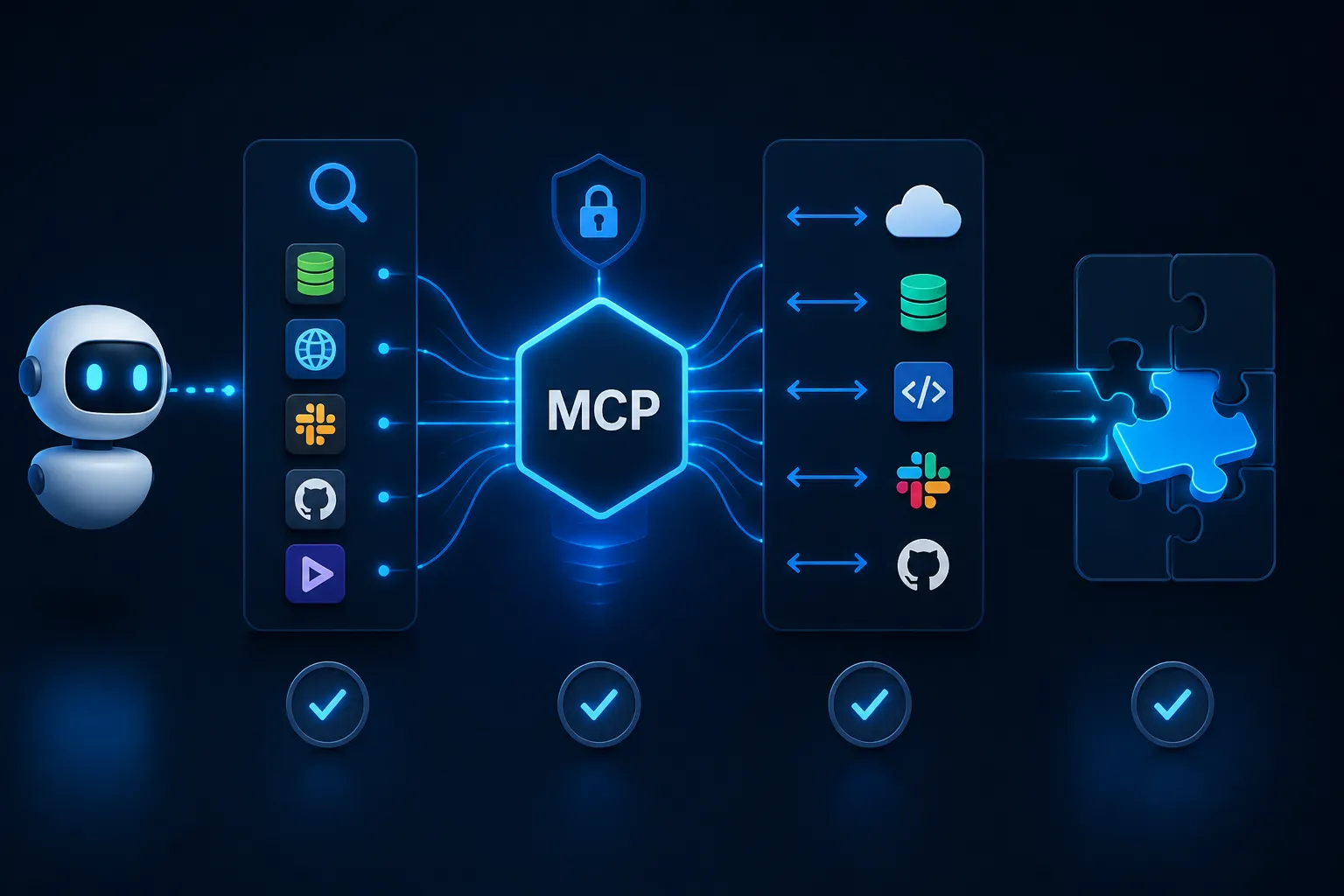
Standardization enables interoperability.
With MCP:
- AI systems discover tools automatically
- Communication follows consistent protocols
- New integrations require minimal effort
This enables plug-and-play architecture, where new tools or models can be added without rewriting existing integrations.
Organizations benefit from faster deployment and fewer technical dependencies.
3. Industry Adoption Is Rapidly Increasing
Standards become dominant when major platforms support them.
MCP adoption is expanding across:
- AI platforms
- Development environments
- Enterprise tools
- Cloud ecosystems
Major industry players are already supporting MCP-compatible environments, contributing to its rapid growth as a universal integration layer.
As more tools adopt MCP, interoperability improves—making it increasingly valuable to adopt early.
4. MCP Supports Scalable AI Architectures
Scalability is essential for enterprise-level AI systems.
Traditional integrations create fragile architectures that fail under increasing demand.
MCP supports scalability by:
- Enabling modular architecture
- Standardizing communication patterns
- Supporting distributed workflows
This structured approach ensures systems remain stable as they expand.
Organizations planning long-term AI growth increasingly rely on MCP-compatible infrastructure.
5. MCP Improves Security and Governance
Security is one of the most important factors in enterprise AI adoption.
Custom integrations often introduce inconsistencies in:
- Authentication
- Access control
- Logging
- Monitoring
MCP standardizes how systems communicate, making it easier to implement:
- Permission controls
- Data auditing
- Secure workflows
Structured integration improves visibility across systems and strengthens governance practices.
6. MCP Enables Multi-Model AI Strategies
Modern organizations rarely rely on a single AI model.
Instead, they use:
- Language models
- Vision models
- Analytics engines
- Custom AI tools
MCP supports multi-model environments by acting as a shared integration layer.
This prevents vendor lock-in and allows organizations to:
- Replace models when needed
- Add new capabilities
- Optimize performance
Without rebuilding infrastructure.
7. MCP Supports the Future of AI Agents
AI systems are evolving from passive tools into active agents.
These agents:
- Retrieve data
- Trigger workflows
- Execute business actions
However, these capabilities require reliable connections to real systems.
MCP provides the foundation for:
- Autonomous workflows
- Multi-agent systems
- Intelligent automation
Without standardized integration, these systems cannot operate reliably.
The Business Impact of MCP Adoption
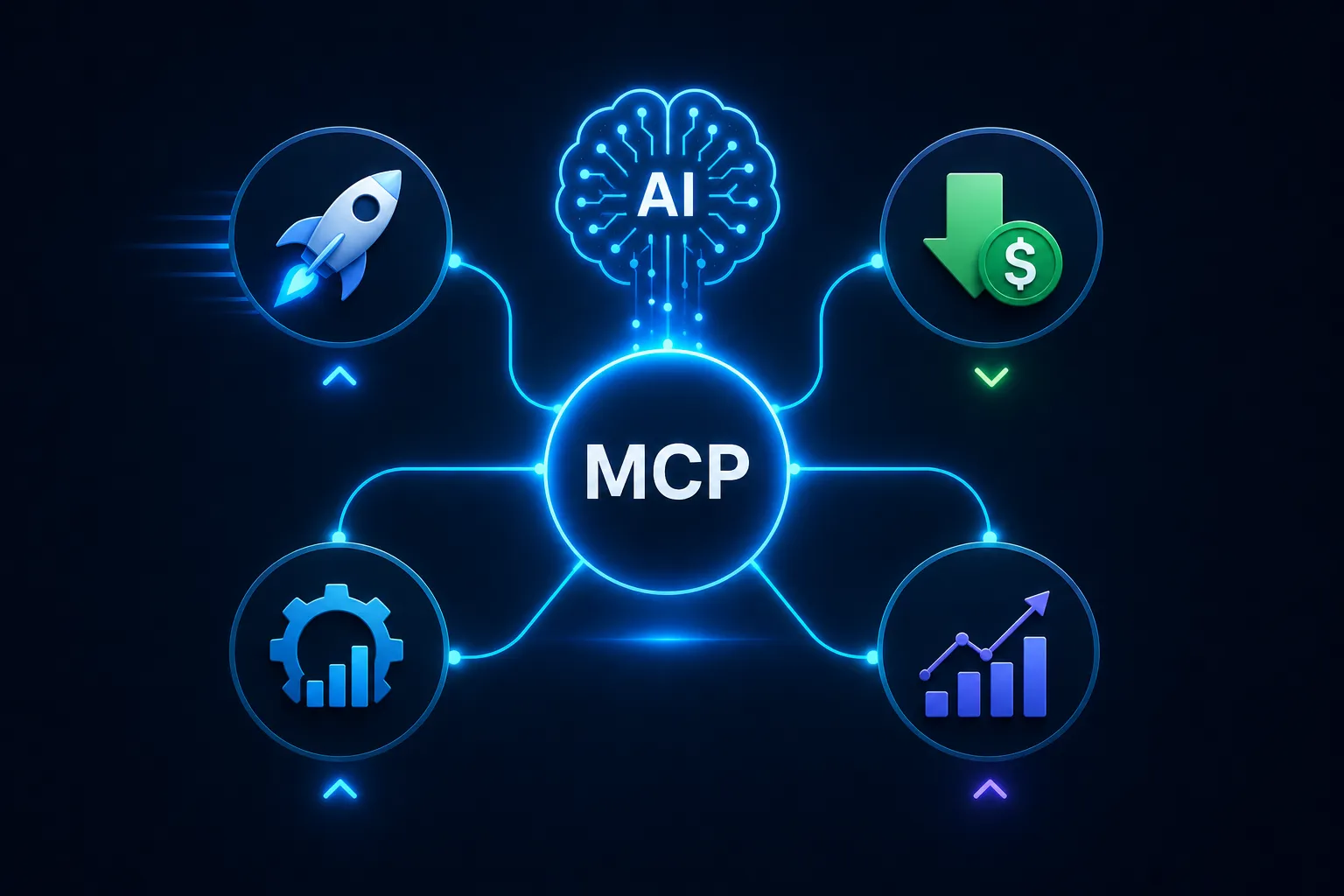
The shift toward MCP is not just technical—it is strategic.
Organizations adopting MCP experience measurable improvements across operations.
Faster AI Deployment
Standardized integration reduces development time significantly.
Teams can:
- Launch features faster
- Test ideas quickly
- Iterate without rebuilding systems
This accelerates innovation cycles.
Lower Development Costs
Custom integrations require ongoing engineering resources.
MCP reduces costs by:
- Reusing integration logic
- Simplifying maintenance
- Reducing duplication
Over time, this lowers total cost of ownership.
Improved Operational Efficiency
AI systems connected through MCP can automate real workflows.
Examples include:
- Updating customer records
- Processing transactions
- Managing inventory
- Generating reports
Automation improves speed and accuracy.
Better Decision-Making
AI systems gain access to real-time data.
This enables:
- Predictive analytics
- Real-time insights
- Intelligent recommendations
Decision-makers benefit from accurate, up-to-date information.
Why Companies Need Expert Support for MCP Implementation
While MCP simplifies integration, building production-grade systems requires technical expertise.
Successful implementation requires:
- Architecture design
- Security configuration
- Infrastructure planning
- Workflow orchestration
Without structured planning, integration risks increase.
This is why experienced implementation partners play a critical role.
What SDH Offers in MCP Development
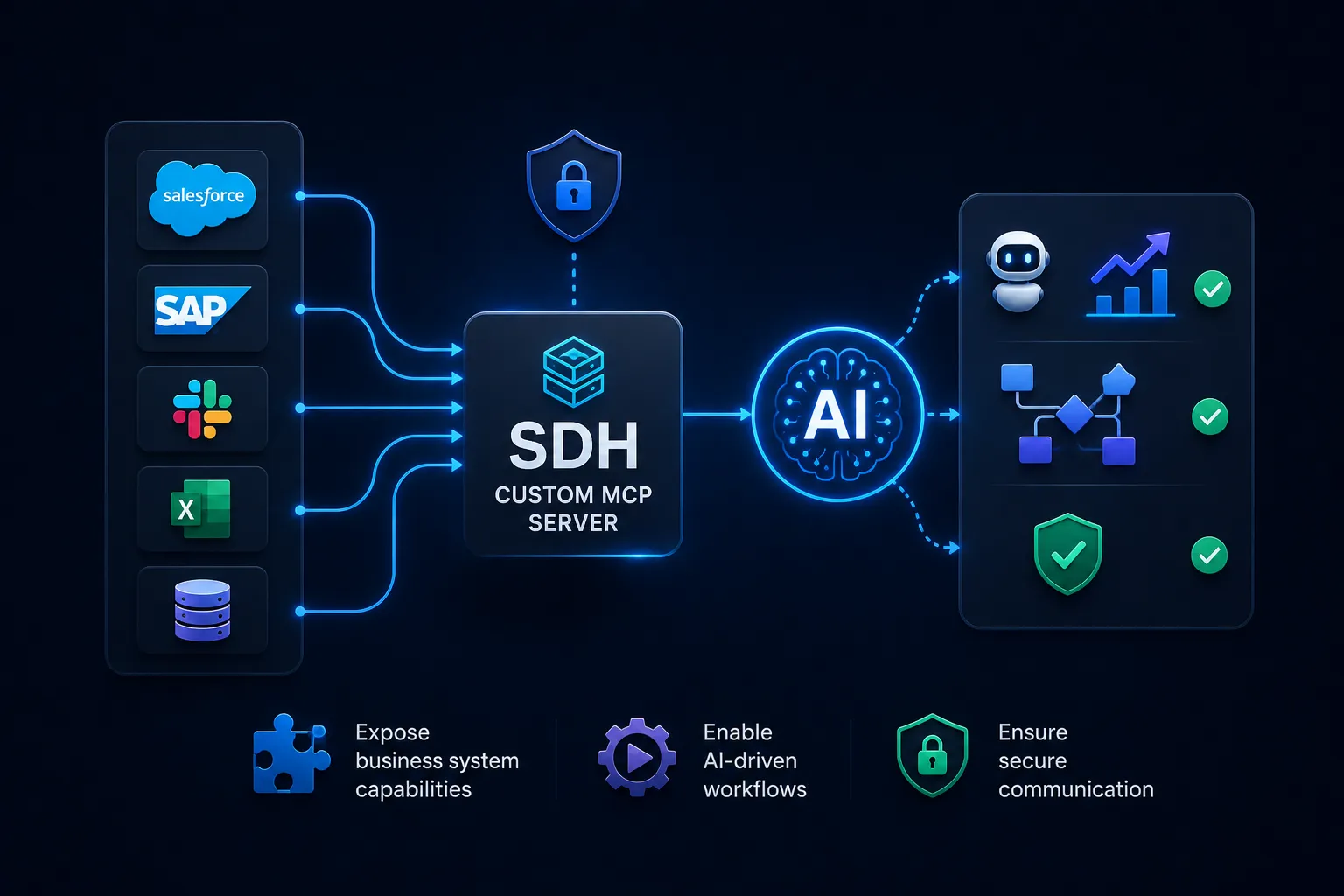
SDH provides comprehensive MCP services designed to help businesses integrate AI systems with enterprise infrastructure effectively.
Rather than offering isolated development tasks, SDH delivers end-to-end MCP solutions that support long-term scalability.
MCP Architecture Design
SDH begins by analyzing business workflows and system environments.
This includes:
- Mapping existing infrastructure
- Identifying integration points
- Designing scalable architecture
- Planning future expansion
Strong architecture ensures long-term reliability.
Custom MCP Server Development
Every organization uses unique tools and workflows.
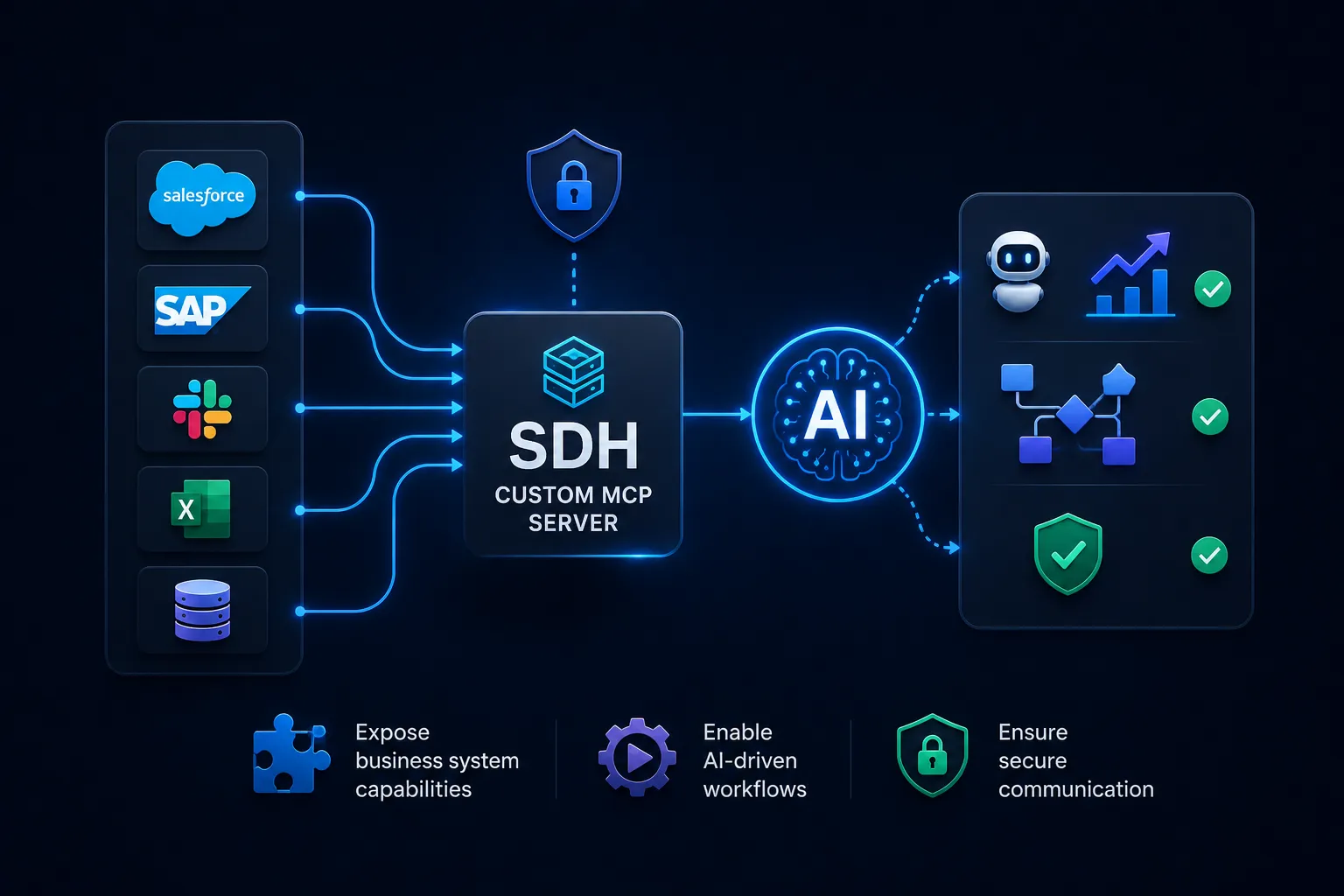
SDH develops custom MCP servers that:
- Expose business system capabilities
- Enable AI-driven workflows
- Ensure secure communication
These servers act as controlled gateways between AI and operational systems.
AI Model Integration
SDH connects MCP environments to modern AI models.
This includes:
- Multi-model support
- Workflow orchestration
- Real-time data access
This ensures seamless communication between AI and enterprise tools.
Secure Deployment and Infrastructure Setup
Deployment requires robust infrastructure.
SDH provides:
- Cloud deployment
- Containerization
- DevOps pipelines
- Performance optimization
This ensures stable system operation.
Monitoring and Optimization
AI integration is not a one-time project.
SDH supports continuous optimization through:
- System monitoring
- Performance tuning
- Error handling
- Security updates
This maintains long-term reliability.
When Should Companies Adopt MCP?
Many organizations benefit from adopting MCP earlier than expected.
Common indicators include:
- Multiple disconnected software systems
- Growing AI initiatives
- Increasing integration complexity
- Rising development costs
- Expanding automation requirements
Early adoption prevents architectural limitations later.
The Future of AI Integration Is Standardized
History shows that standardization drives innovation.
Examples include:
- HTTP for the web
- REST APIs for application communication
- USB for hardware compatibility
MCP is now following the same trajectory—standardizing how AI systems interact with the digital world.
As AI systems become more complex and interconnected, standardized protocols like MCP will define the foundation of future digital ecosystems.
Organizations that adopt MCP today position themselves for long-term success.
MCP Is More Than a Trend, It’s the Future of AI Integration
Artificial intelligence is shifting from isolated tools to integrated systems that drive real business operations.
Without structured integration, AI cannot scale effectively. With MCP, AI becomes operational, reliable, and deeply connected to business workflows.
That is why MCP is rapidly becoming the standard for AI integration.
For companies looking to build scalable AI infrastructure, automate workflows, or modernize digital operations, working with an experienced partner like SDH provides the expertise needed to design and deploy production-ready MCP systems.
The future of AI belongs to connected systems and MCP is the protocol making that future possible.
Categories
About the author

CEO & Co-Founder at Software Development Hub. 19+ years of experience in designing and developing complex IT products, including 11 years as a software architect.
Share
Recent posts





Need a project estimate?
Drop us a line, and we provide you with a qualified consultation.