
Understanding Technology Risk in Growing Companies
What Does a CTO Really Do?
Core Responsibilities of a CTO
Technology Strategy Development
Architecture and System Design
Risk Management and Security Oversight
Development Team Leadership
Budget and Vendor Management
Why Growing Companies Face Increasing Technology Risk
Rapid Product Development
Lack of Technical Governance
Expanding Infrastructure
Technical Debt Accumulation
What Is CTO as a Service?
How CTO as a Service Reduces Technology Risk
1. Strategic Technology Planning
2. Early Risk Identification
3. Scalable Architecture Design
4. Technology Standardization
5. Vendor and Tool Selection
6. Security and Compliance Oversight
7. Cost Optimization and Resource Planning
The Benefits of CTO as a Service for Growing Companies
What SDH Offers Through CTO as a Service
Technology Strategy and Roadmap Development
Technical Leadership and Governance
Architecture Design and System Integration
Risk and Security Management
How Companies Benefit from SDH’s CTO as a Service
Reduced Technology Uncertainty
Faster and Safer Scaling
Improved Technology ROI
Stronger Competitive Position
When Should a Company Consider CTO as a Service?
CTO as a Service vs Full-Time CTO: A Strategic Alternative
Technology Leadership Is Risk Management
How CTO as a Service Reduces Technology Risk in Growing Companies


Technology risk is one of the most underestimated threats facing growing companies today. As organizations expand, launch new products, or scale operations, their technology decisions become more complex and more critical to business success.
Without experienced technical leadership, companies often face unexpected delays, security vulnerabilities, unstable systems, and rising development costs.
This is where CTO as a Service (CaaS) becomes a powerful solution. CTO helps growing companies reduce risk, improve stability, and build scalable digital foundations.
Understanding Technology Risk in Growing Companies
Technology risk is not limited to cybersecurity threats or software bugs. It includes every technical decision that affects long-term performance, scalability, and reliability.
As companies grow, they face risks such as:
- Choosing the wrong technology stack
- Building systems that cannot scale
- Accumulating technical debt
- Hiring developers without clear leadership
- Failing to align technology with business goals
- Overlooking infrastructure and security risks
- Mismanaging development timelines
These risks often develop gradually. In the early stages, teams may rely on founders, project managers, or senior developers to make technology decisions. While this may work temporarily, it rarely supports long-term growth.
Eventually, the absence of strategic leadership creates instability. Systems become harder to maintain, projects take longer to deliver, and technology costs increase without delivering proportional value.
What Does a CTO Really Do?
CTO is not just a senior developer or technical supervisor. A true CTO plays a strategic role that connects technology decisions with business objectives.
In growing companies, the CTO acts as both an architect and a strategist, ensuring that technology supports long-term success rather than short-term fixes.
Core Responsibilities of a CTO
A professional CTO is responsible for multiple critical areas:
Technology Strategy Development

A CTO designs a long-term technology roadmap aligned with business goals. This includes:
- Selecting the right architecture
- Choosing appropriate tools and platforms
- Planning scalability
- Supporting innovation
- Ensuring long-term sustainability
Without strategic planning, technology becomes reactive rather than proactive.
Architecture and System Design
Technology architecture determines how systems interact, scale, and perform under pressure.
A CTO ensures that:
- Systems are modular and scalable
- Integration points are reliable
- Performance is optimized
- Infrastructure supports growth
- Systems remain maintainable over time
Poor architecture is one of the most expensive mistakes a growing company can make.
Risk Management and Security Oversight
Technology risk management is one of the most important responsibilities of a CTO.
This includes:
- Identifying vulnerabilities
- Establishing security protocols
- Ensuring compliance standards
- Managing data protection policies
- Preventing infrastructure failures
A proactive approach significantly reduces downtime and financial risk.
Development Team Leadership
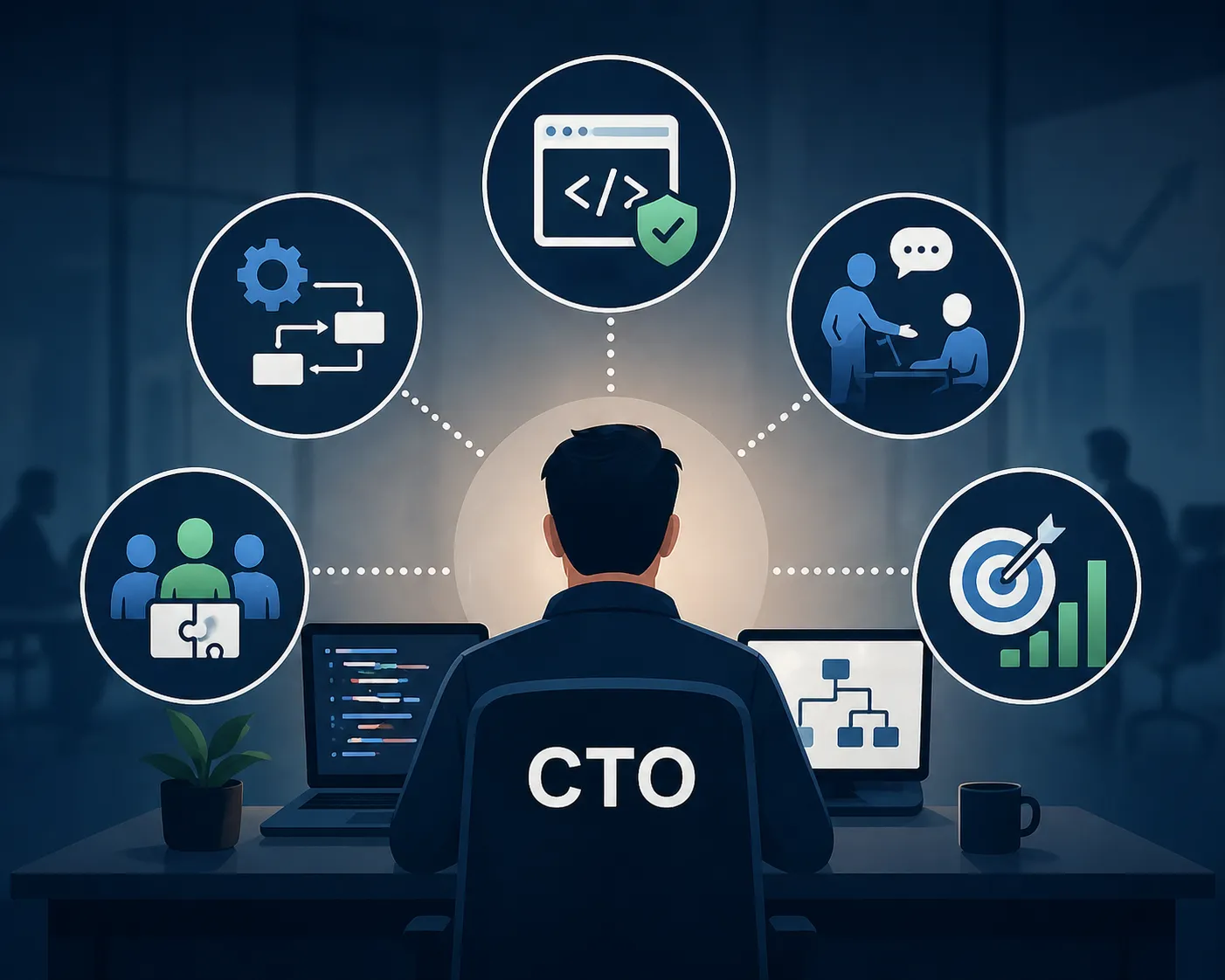
Technology teams perform best when guided by strong leadership.
A CTO:
- Defines coding standards
- Oversees development processes
- Mentors engineers
- Improves collaboration
- Aligns teams with business priorities
Without leadership, teams often work efficiently—but not effectively.
Budget and Vendor Management
Technology investments must be managed carefully.
A CTO helps:
- Control infrastructure costs
- Evaluate third-party vendors
- Prevent overspending
- Optimize resource allocation
- Forecast future technology expenses
This reduces unnecessary spending and improves return on investment.
Why Growing Companies Face Increasing Technology Risk
As organizations scale, complexity increases. More users, more systems, and more integrations introduce new vulnerabilities.
Some of the most common risk drivers include:
Rapid Product Development
Fast growth often leads to rushed decisions. Teams may prioritize speed over structure, creating fragile systems that fail under pressure.
Lack of Technical Governance
Without structured oversight, development practices become inconsistent. This leads to:
- Code duplication
- Poor documentation
- Integration failures
- Maintenance challenges
Expanding Infrastructure
As platforms grow, infrastructure becomes more complex. Without careful planning, systems may struggle to handle demand spikes.
Technical Debt Accumulation
Short-term solutions create long-term problems.
Technical debt often leads to:
- Slower releases
- Frequent system failures
- Increasing maintenance costs
What Is CTO as a Service?
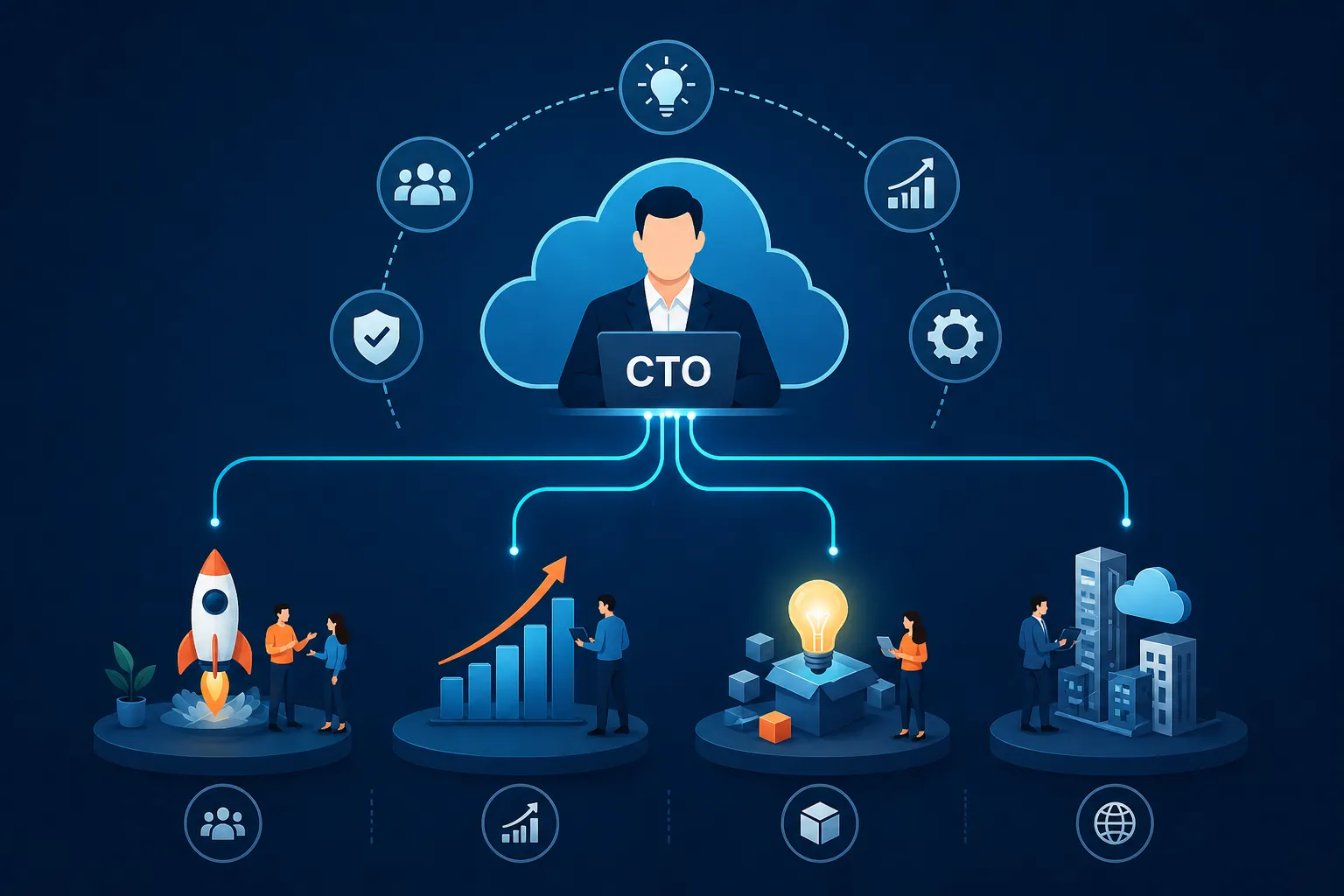
CTO as a Service provides companies with access to experienced technology leadership without requiring a full-time executive hire.
Instead of hiring a permanent CTO immediately, companies engage a fractional or external CTO who delivers strategic guidance, technical oversight, and risk management support.
This model is especially valuable for:
- Startups
- Scale-ups
- Enterprises launching new products
- Organizations undergoing digital transformation
How CTO as a Service Reduces Technology Risk
One of the greatest strengths of CTO as a Service is its ability to proactively reduce risk across the entire technology lifecycle.
Here’s how it works:
1. Strategic Technology Planning
A CTO as a Service creates a clear technology roadmap.
This roadmap helps companies:
- Avoid unnecessary rework
- Build scalable solutions
- Prioritize investments
- Reduce future migration risks
Strategic planning prevents reactive decision-making.
2. Early Risk Identification
Experienced CTOs recognize warning signs before problems escalate.
They identify risks such as:
- Weak infrastructure design
- Security vulnerabilities
- Performance bottlenecks
- Vendor lock-in risks
Early detection reduces costly emergencies.
3. Scalable Architecture Design
Scalability failures are among the most damaging risks.
CTO as a Service ensures:
- Systems support future growth
- Infrastructure adapts to demand
- Integrations remain stable
- Performance remains consistent
This prevents service interruptions during peak growth.
4. Technology Standardization
Standardization reduces chaos.
CTO-as-a-Service introduces:
- Coding standards
- Development workflows
- Testing procedures
- Deployment protocols
This creates consistency across teams.
5. Vendor and Tool Selection
Choosing the wrong vendor can lead to long-term problems.
A CTO evaluates:
- Vendor reliability
- Security compliance
- Integration compatibility
- Total cost of ownership
This minimizes long-term dependency risks.
6. Security and Compliance Oversight
Security risks continue to evolve.
CTO-as-a-Service ensures:
- Data protection strategies
- Secure system design
- Compliance readiness
- Incident response planning
These measures reduce legal and financial exposure.
7. Cost Optimization and Resource Planning
Technology risk often includes financial risk.
CTO-as-a-Service helps:
- Reduce unnecessary infrastructure costs
- Optimize cloud usage
- Avoid over-engineering
- Improve development efficiency
This protects financial stability.
The Benefits of CTO as a Service for Growing Companies
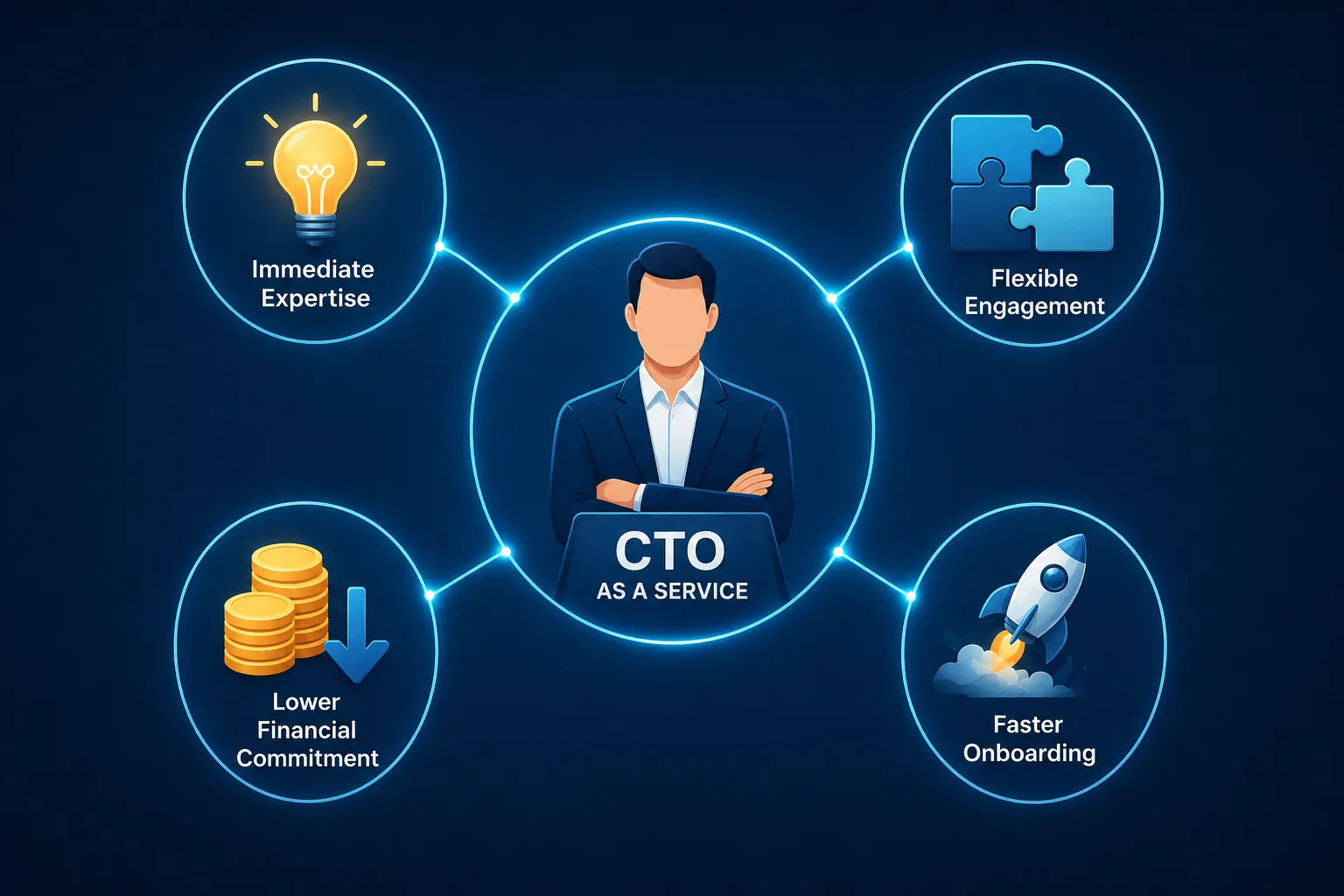
CTO as a Service offers significant advantages beyond risk reduction.
Hiring a full-time CTO is expensive and time-consuming.
CTO as a Service provides:
- Immediate expertise
- Flexible engagement
- Lower financial commitment
- Faster onboarding
This makes leadership accessible earlier.
What SDH Offers Through CTO as a Service
SDH provides structured CTO as a Service solutions designed to support companies at different stages of growth.
Rather than offering generic advisory services, SDH focuses on practical, results-driven leadership tailored to real business needs.
Technology Strategy and Roadmap Development
SDH helps companies design clear technology strategies that align with long-term business goals.
This includes:
- Technology assessments
- Architecture planning
- System modernization strategies
- Innovation planning
These services reduce uncertainty and improve planning accuracy.
Technical Leadership and Governance
SDH provides structured oversight for development teams.
This includes:
- Development process improvement
- Code quality management
- Workflow standardization
- Team mentoring
These practices improve productivity and reduce risk.
Architecture Design and System Integration
SDH specializes in designing reliable, scalable systems.
Services include:
- System architecture design
- Infrastructure planning
- Integration strategy development
- Performance optimization
This ensures long-term stability.
Risk and Security Management
SDH supports companies in identifying and mitigating risks.
This includes:
- Security reviews
- Infrastructure risk analysis
- Compliance preparation
- Risk mitigation planning
This strengthens operational resilience.
How Companies Benefit from SDH’s CTO as a Service
Organizations partnering with SDH gain more than technical advice — they gain structured leadership.
Here’s how companies benefit.
Reduced Technology Uncertainty
With SDH guidance:
- Decisions become structured
- Risks become predictable
- Technology investments become strategic
This builds long-term confidence.
Faster and Safer Scaling
Growth introduces pressure.
SDH helps companies:
- Scale infrastructure safely
- Handle increasing demand
- Maintain performance
This prevents growth-related failures.
Improved Technology ROI
Technology spending becomes more efficient.
Companies experience:
- Reduced rework costs
- Optimized infrastructure
- Better investment planning
This improves financial outcomes.
Stronger Competitive Position
Reliable technology creates competitive advantage.
Companies gain:
- Faster delivery cycles
- Better customer experiences
- Stronger system reliability
This improves market positioning.
When Should a Company Consider CTO as a Service?

Many organizations delay hiring technical leadership until problems appear.
However, the best time to engage CTO as a Service is before risk escalates.
Common indicators include:
- Rapid business growth
- Launching new digital products
- Experiencing system instability
- Expanding development teams
- Preparing for investment or scaling
- Modernizing legacy systems
Early engagement prevents long-term damage.
CTO as a Service vs Full-Time CTO: A Strategic Alternative
While full-time CTOs are valuable, not every company needs one immediately.
CTO as a Service offers:
- Flexible involvement
- Cost-effective leadership
- Immediate availability
- Scalable engagement
This allows companies to grow before committing to permanent executive hires.
Technology Leadership Is Risk Management
Technology is no longer just an operational tool, it is a strategic business asset. As companies grow, the risks associated with technology decisions increase significantly.
Without structured leadership, these risks often evolve into expensive problems that slow growth and damage reputation.
CTO as a Service provides a practical solution by delivering executive-level guidance without long-term hiring commitments. It reduces uncertainty, improves stability, and ensures that technology supports business success rather than becoming a liability.
For organizations looking to scale confidently, modernize infrastructure, or launch new digital solutions, partnering with an experienced CTO as a Service provider like SDH offers a structured path toward sustainable growth and reduced technology risk.
Categories
Share





Need a project estimate?
Drop us a line, and we provide you with a qualified consultation.