
From Software Products to AI-Driven Systems: What Is Actually Changing
The Rise of AI-Native and Agentic Architectures
Why Traditional Software Architecture Is Breaking Down
1. Non-determinism
2. Architectural drift
3. Hidden complexity
4. Reliability gaps
The New SDLC: From Development to Continuous Intelligence
Key Pain Points Businesses Face in This Transition
1. Lack of AI-ready architecture
2. Integration complexity
3. Cost unpredictability
4. Data fragmentation
5. Governance and compliance risks
6. Skills gap
The Strategic Opportunity: AI as the Core of Product Design
How SDH Helps Businesses Transition to AI-Driven Systems
AI-First Architecture Design
Enterprise AI Integration
Building Agentic Systems
Data + AI Infrastructure Alignment
Migration from Legacy Systems
The Future: Software That Thinks, Not Just Runs
Conclusion
The Shift From Software Products to AI-Driven Systems

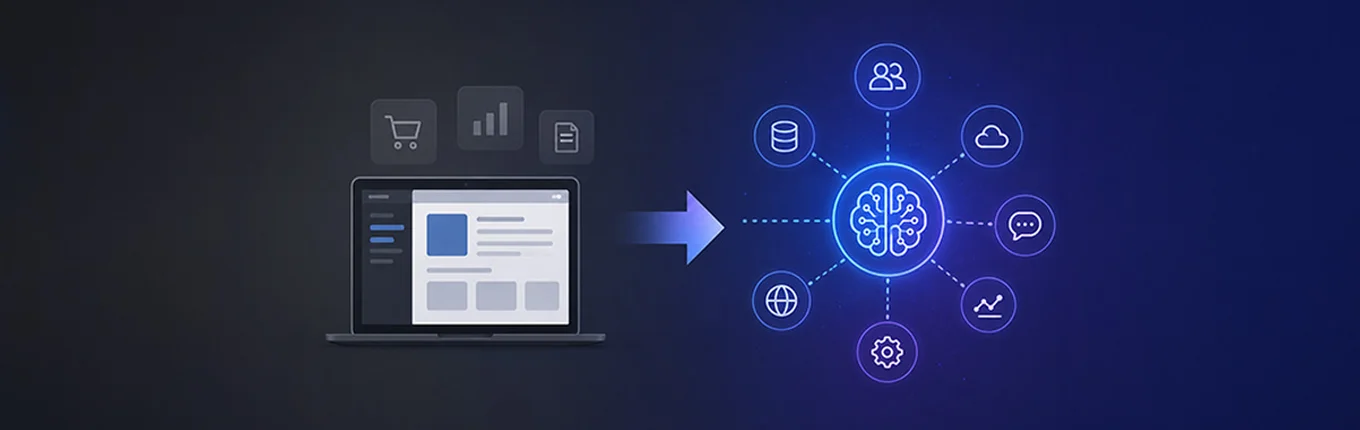
The software industry is undergoing a fundamental transformation. What was once built as static, feature-based software products is rapidly evolving into adaptive, autonomous AI-driven systems that learn, reason, and act in real time. This shift is not incremental—it is architectural.
Businesses are no longer just shipping applications. They are deploying intelligent systems that continuously evolve based on data, context, and user behavior.
From Software Products to AI-Driven Systems: What Is Actually Changing
Traditional software follows a predictable model:
- Developers write code
- Features are released in versions
- Users interact with fixed workflows
- Improvements come through updates and patches
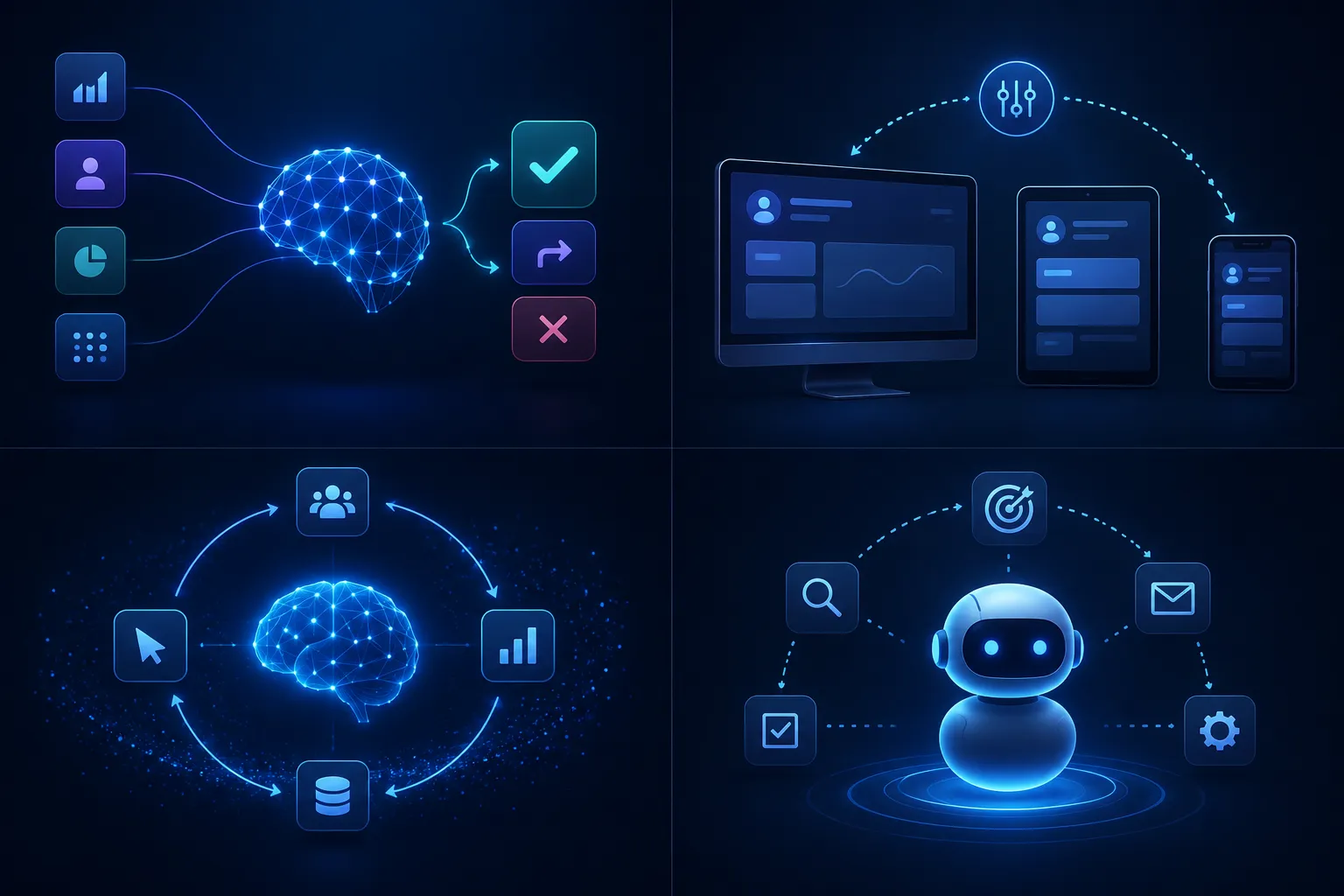
In contrast, AI-driven systems behave differently:
- They generate decisions dynamically
- They adapt interfaces and workflows in real time
- They learn continuously from usage data
- They increasingly operate as autonomous agents
This evolution is commonly described as the shift from software-as-a-tool to software-as-a-system of intelligence.
Modern AI systems are now capable of:
- Planning multi-step tasks
- Executing workflows end-to-end
- Orchestrating APIs and services
- Self-improving through feedback loops
In other words, software is no longer just executed—it behaves.
The Rise of AI-Native and Agentic Architectures
A major driver of this transformation is the rise of agentic AI systems.
Instead of simple models embedded into apps, we now see systems where AI:
- Acts as a coordinator between services
- Makes decisions based on goals rather than instructions
- Executes tasks autonomously
- Interacts with users and systems as a “digital operator”
These systems are shifting software from: “User clicks button → system responds”
to: “User expresses intent → AI plans, executes, and optimizes outcome”
This is leading to the emergence of:
- AI-native SaaS platforms
- Autonomous workflow engines
- Self-orchestrating cloud systems
- Multi-agent enterprise architectures
Software is becoming less deterministic and more adaptive—designed around goals instead of rigid flows.
Why Traditional Software Architecture Is Breaking Down
Legacy software architecture was designed for:
- Predictability
- Deterministic logic
- Fixed workflows
- Human-driven decision points
AI-driven systems introduce new challenges:
1. Non-determinism
AI outputs can vary, making traditional QA insufficient.
2. Architectural drift
Systems evolve automatically, often beyond initial design constraints.
3. Hidden complexity
Much of the logic now lives in models, prompts, and data pipelines rather than code.
4. Reliability gaps
AI-generated code and decisions can be “almost correct” but still fail in production scenarios
As a result, software architecture is shifting toward:
- Guardrails instead of fixed logic
- Observability instead of static debugging
- Continuous validation instead of release testing
- Governance layers for AI behavior control
The New SDLC: From Development to Continuous Intelligence
The Software Development Life Cycle (SDLC) itself is being redefined.
Instead of linear stages, modern AI-driven systems operate in continuous loops:
- Requirements → generated by AI insights
- Architecture → partially AI-assisted or AI-generated
- Development → agent-assisted or autonomous coding
- Testing → AI-generated test coverage and validation
- Deployment → adaptive CI/CD pipelines
- Maintenance → self-healing systems
AI is no longer just a tool inside SDLC, it is becoming a participant in it
This creates a new reality: Software is no longer “built once and maintained”.
It is continuously evolving.
Key Pain Points Businesses Face in This Transition
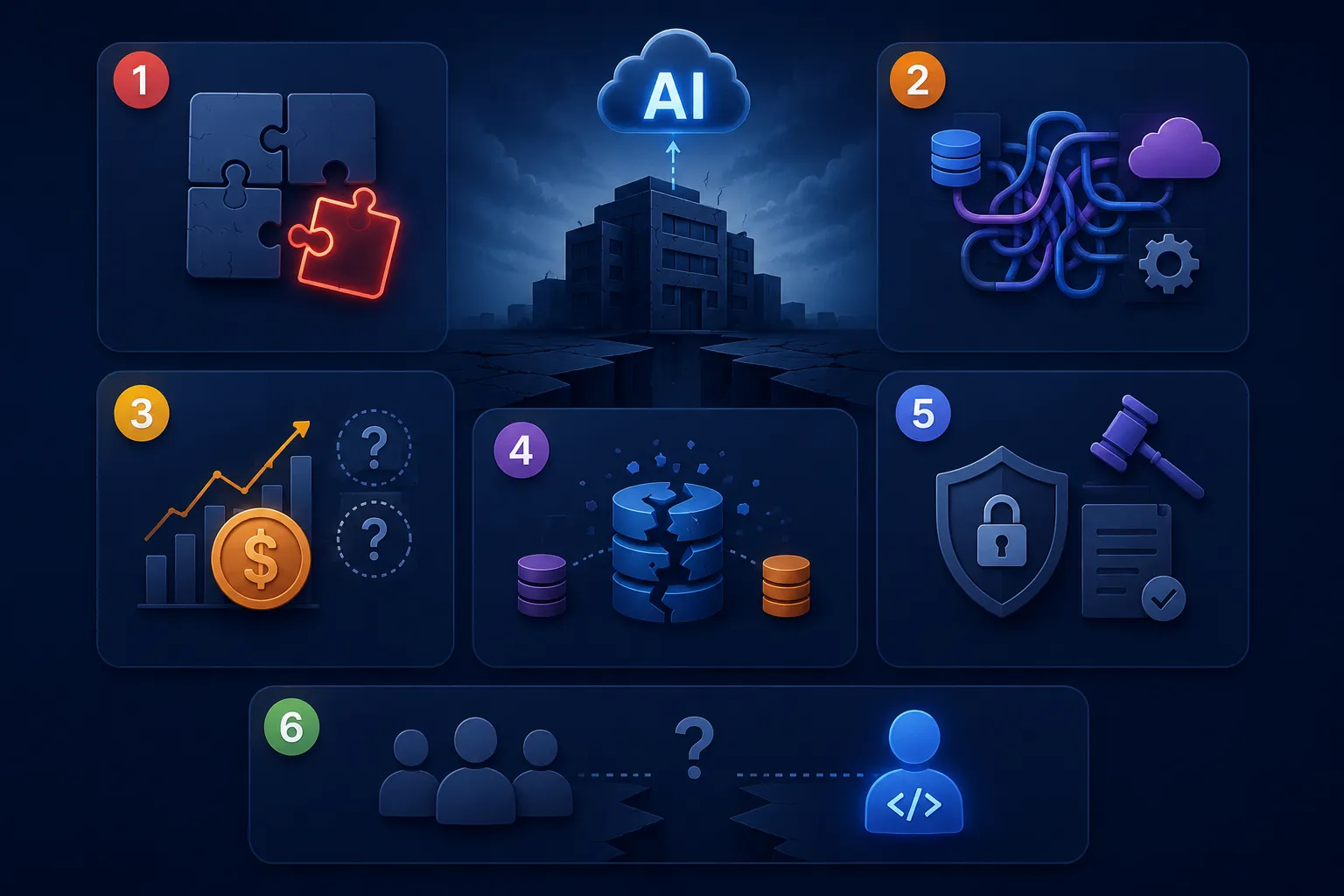
Despite its advantages, the shift introduces serious challenges:
1. Lack of AI-ready architecture
Many systems are still built for static logic, not dynamic intelligence.
2. Integration complexity
Embedding AI across legacy systems is difficult and expensive.
3. Cost unpredictability
Inference costs, model usage, and scaling introduce financial volatility.
4. Data fragmentation
AI systems require unified, high-quality data pipelines.
5. Governance and compliance risks
AI systems require new controls for safety, bias, and transparency.
6. Skills gap
Teams are moving from “coding software” to “designing intelligent systems”.
The Strategic Opportunity: AI as the Core of Product Design
Despite challenges, the opportunity is massive.
Companies that succeed are shifting:
- From feature-driven products → to outcome-driven systems
- From static UX → to adaptive UX
- From manual workflows → to autonomous workflows
- From applications → to intelligent platforms
AI is becoming:
- The core engine of SaaS products
- The decision layer in enterprise systems
- The automation backbone of operations
- The personalization layer of user experience
This is not just modernization—it is a full redesign of software thinking.
How SDH Helps Businesses Transition to AI-Driven Systems
This is where SDH plays a critical role.
As organizations shift from traditional software to AI-native systems, SDH helps bridge the gap between legacy architecture and modern AI-driven ecosystems.
AI-First Architecture Design
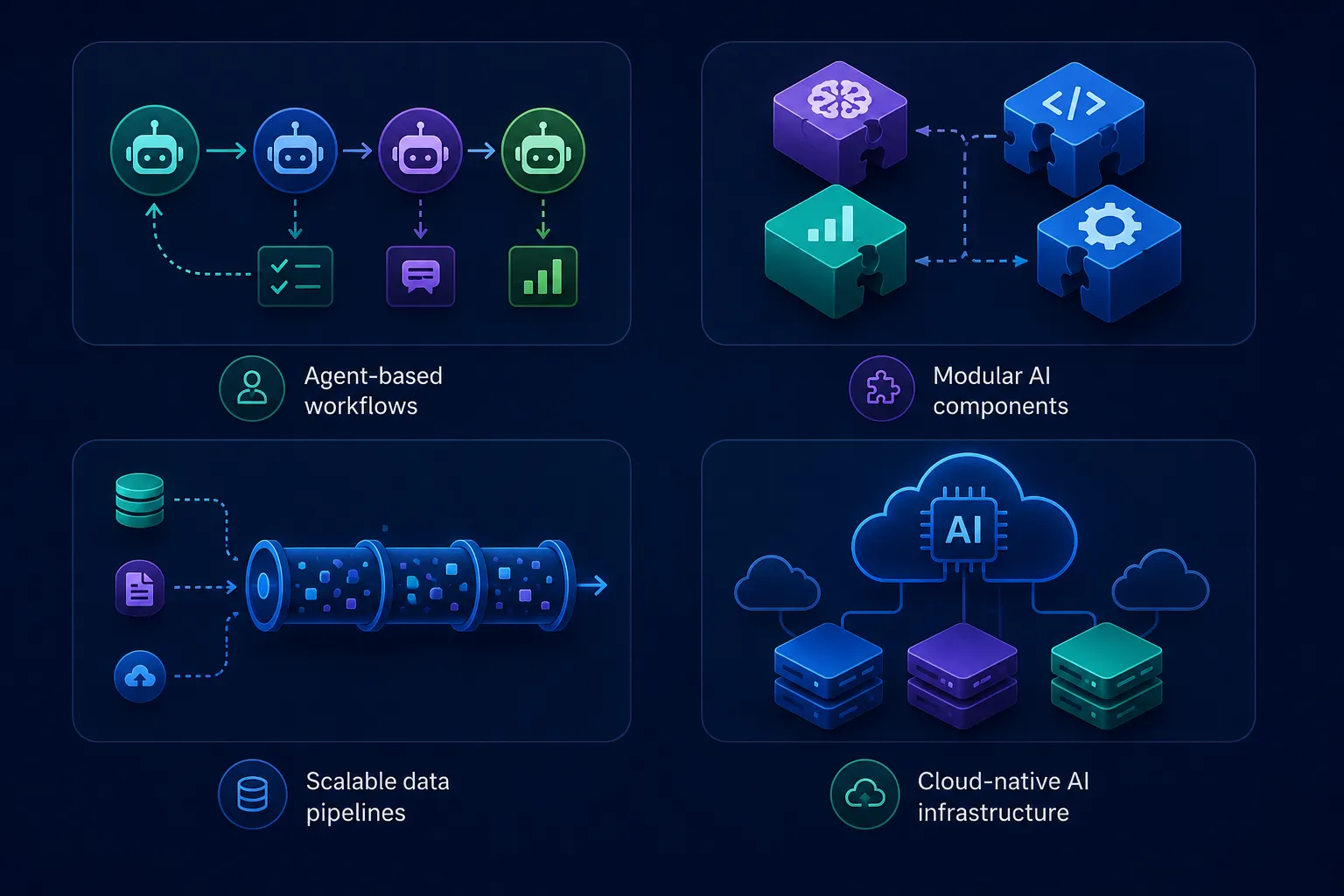
SDH helps companies redesign systems around:
- Agent-based workflows
- Modular AI components
- Scalable data pipelines
- Cloud-native AI infrastructure
This ensures AI is not “added on” but embedded into the system core.
Enterprise AI Integration
SDH enables integration of AI into:
- SaaS platforms
- Internal business tools
- Customer-facing applications
- Workflow automation systems
This transforms traditional software into adaptive systems that evolve with usage.
Building Agentic Systems
SDH supports the development of:
- Autonomous agents for operations
- AI copilots for users and teams
- Multi-agent orchestration systems
- Goal-driven automation layers
This allows businesses to move from tools → to intelligent operators.
Data + AI Infrastructure Alignment
AI systems require strong foundations. SDH helps design:
- Clean data pipelines
- Real-time data processing systems
- Scalable cloud architecture
- Secure AI data flows
Without this layer, AI systems cannot scale reliably.
Migration from Legacy Systems
Most enterprises do not start from scratch. SDH supports:
- Gradual modernization strategies
- Hybrid architecture (legacy + AI)
- System decomposition into AI-ready modules
- Risk-controlled transformation paths
The Future: Software That Thinks, Not Just Runs
The next generation of software will not behave like tools.
It will behave like systems that:
- Understand intent
- Plan execution
- Optimize outcomes
- Learn continuously
- Collaborate with humans
We are moving toward: Self-orchestrating software ecosystems
Where developers are no longer just writing applications, but designing intelligence layers.
Conclusion
The shift from software products to AI-driven systems represents one of the most important architectural changes in modern computing.
Businesses that adapt will:
- Build faster
- Operate smarter
- Automate deeper
- Scale more efficiently
Those that don’t will struggle with rigid systems in a world that is becoming dynamic and autonomous.
SDH positions organizations to make this transition successfully by transforming traditional software into AI-native, adaptive, and future-ready systems.
Categories
About the author

Head of Business Development at Software Development Hub, specializing in driving growth through strategic sales initiatives and partnerships. With deep expertise in the psychology of sales, this professional excels in developing and executing business strategies that resonate with clients and foster lasting relationships.
Share




Need a project estimate?
Drop us a line, and we provide you with a qualified consultation.