
The Reality of Modern Logistics Operations
What Is a Logistics Control Tower?
Why Traditional Logistics Management Fails
Top Logistics Challenges That Control Towers Solve
1. The Manual Data Trap
How Control Towers Solve It
2. Lack of End-to-End Visibility
3. Invisible Backlogs and Phantom Stock
4. Reactive Decision-Making
Operational Transformation
5. System Integration Complexity
6. Slow Operational Response
7. Fragmented Collaboration Across Partners
8. Scaling Logistics Without Losing Control
9. Security and Enterprise Governance Risks
10. The Excel Dependency Problem
Inside the SDH Control Tower Project
Near-Real-Time Visibility — What It Actually Means
How Control Towers Reduce Operational Issues
Long-Term Support and Continuous Evolution
The Strategic Impact of Logistics Control Towers
Why Control Towers Represent the Future of Logistics
Final Thoughts
Top Logistics Challenges That Control Towers Solve

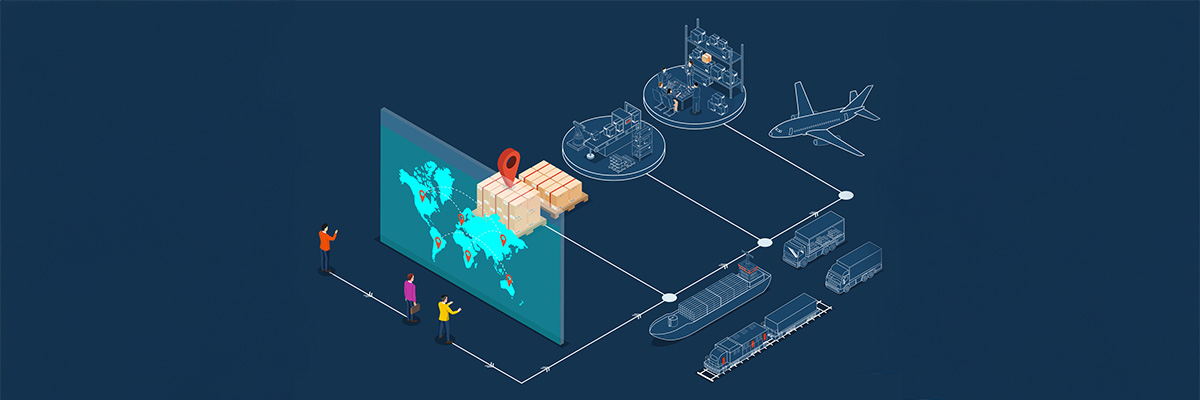
Modern logistics has officially outpaced the old-school way of doing things. Between global supply chain chaos, "buy-anywhere" shopping habits, and customers who want everything yesterday, spreadsheets and disconnected reports just don't cut it anymore. Relying on those old tools today is a recipe for blind spots and expensive mistakes.
- The industry’s answer?
- The Logistics Control Tower.
Think of it as a centralized "brain" that moves you away from putting out fires and toward proactive, real-time control.
Here’s a look at the major headaches Control Towers fix, how they actually work, and the real-world results we’re seeing with the engineering-driven solution developed by SDH.
The Reality of Modern Logistics Operations
Supply chains today operate under unprecedented pressure. Companies must coordinate warehouses, transport partners, suppliers, customers, and digital systems across multiple countries and time zones.
Research shows that modern supply chains suffer primarily from lack of visibility and coordination, as systems often operate independently and create fragmented decision-making environments.
Typical logistics environments include:
- Warehouse Management Systems (WMS)
- Transportation Management Systems (TMS)
- Enterprise Resource Planning (ERP)
- Carrier platforms
- Vendor systems
- Manual reporting workflows
Each system works — but not together.
The result is operational chaos disguised as organization.
Control Tower introduces a single operational command layer that aggregates, analyzes, and orchestrates logistics data in near real time.
What Is a Logistics Control Tower?
A logistics control tower functions similarly to an airport control tower: it monitors all movements, detects risks early, and coordinates actions across multiple participants.
Instead of airplanes, it supervises:
- Inventory movement
- Shipment execution
- Warehouse performance
- Delivery reliability
- Supply chain disruptions
Control Towers aggregate data streams into one operational view, enabling organizations to move from historical reporting to live operational intelligence.
At SDH, the Control Tower acts as a central nervous system for logistics, synchronizing WMS, TMS, and ERP platforms into a single source of truth while eliminating manual Excel reporting workflows.
Why Traditional Logistics Management Fails
Before understanding the value of a control tower, we must understand the problems it solves.
Most logistics organizations do not fail because of poor strategy — they fail because of operational invisibility.
Common symptoms include:
- Teams reacting to problems after customers notice them
- Managers relying on outdated reports
- Separate departments working with different data versions
- Decisions made without real-time operational context
These issues stem from systemic logistics challenges.
Top Logistics Challenges That Control Towers Solve
1. The Manual Data Trap
One of the biggest hidden costs in logistics is manual reporting.
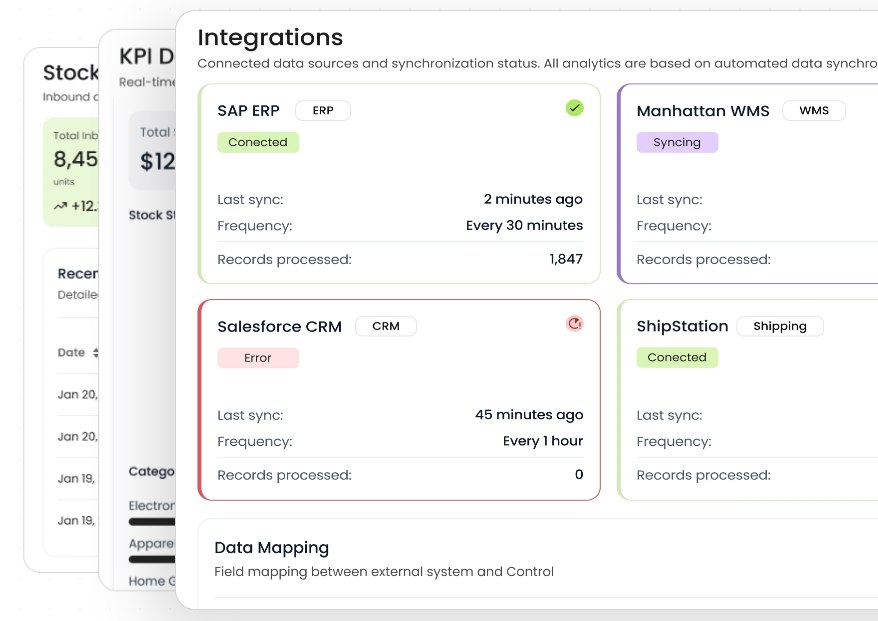
Operations teams often spend hours consolidating data from different systems into spreadsheets instead of solving problems. According to SDH, this “manual data trap” wastes valuable operational time and slows decision-making.
The Challenge։
- Data exported from multiple platforms
- Daily KPI preparation
- Reconciliation errors
- Human dependency for reporting cycles
By the time reports are complete, the situation has already changed.
How Control Towers Solve It
A control tower automatically synchronizes operational data across systems — typically every 30 minutes or according to business needs — delivering near-real-time visibility.
Instead of asking:
- “What happened yesterday?”
Teams can finally ask:
- “What must we fix right now?”
2. Lack of End-to-End Visibility
Disconnected logistics systems create blind spots across the supply chain.
Warehouses may see inventory.
Transport teams see shipments.
Executives see financial reports.
But no one sees the entire operational flow.
Industry research confirms that siloed logistics platforms lead to delayed shipments and inefficient resource allocation.
The Challenge։
- No unified operational dashboard
- Missing shipment context
- Limited collaboration between departments
- Slow escalation of problems
The SDH Control Tower aggregates all logistics data into one operational command view covering:
- Inventory velocity
- Shipment status
- Delivery performance
- Cross-system KPIs
This unified integration removes system silos and enables coordinated operations across teams.
3. Invisible Backlogs and Phantom Stock
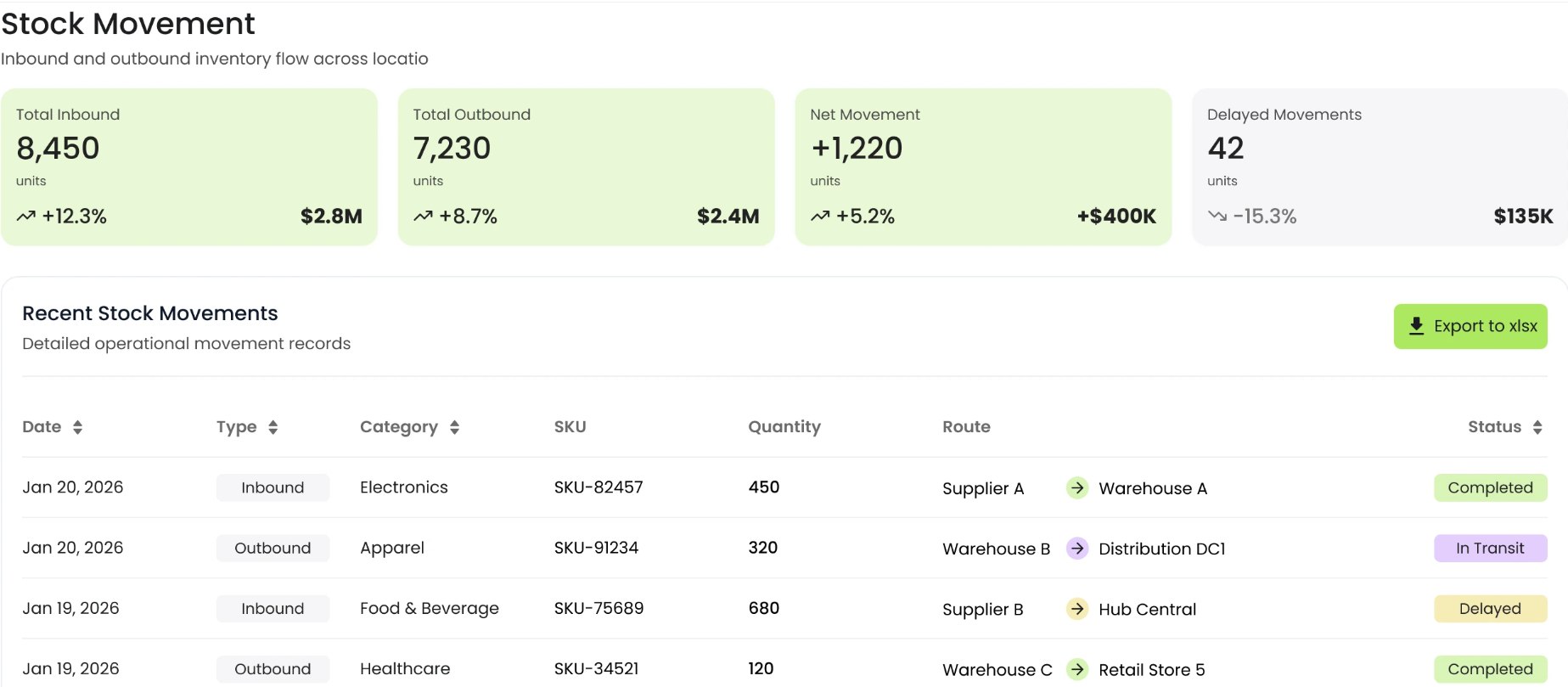
Few logistics problems are more damaging than inventory uncertainty.
Companies often discover:
- Stock exists in systems but not physically available
- Goods delayed in transit without alerts
- Warehouses overloaded without early warning
These “invisible backlogs” lead directly to missed SLAs and customer dissatisfaction.
Control Towers introduce exception management:
- Automated bottleneck detection
- Proactive alerts
- Early deviation signals
Instead of reacting to failure, organizations intervene before disruption escalates.
4. Reactive Decision-Making
Traditional logistics operates historically.
Reports describe past performance rather than guiding future action.
Modern supply chains require predictive and proactive control, not retrospective analysis.
Control tower platforms convert raw logistics data into actionable intelligence, enabling faster operational responses and higher service reliability.
Operational Transformation
|
Traditional Logistics |
Control Tower Logistics |
|
Static reporting |
Live monitoring |
|
Reactive decisions |
Proactive intervention |
|
Department silos |
Cross-functional orchestration |
|
Manual escalation |
Automated alerts |
5. System Integration Complexity
Many enterprises operate dozens of logistics platforms accumulated over years.
Integration becomes the biggest barrier to transformation.
Research highlights interoperability and data-sharing challenges as primary obstacles when organizations attempt to coordinate complex supply chains.
Typical Problems։
- Legacy ERP limitations
- Proprietary warehouse systems
- Multiple communication protocols
- Manual API workarounds
SDH’s engineering approach integrates:
- SAP
- Oracle
- Proprietary enterprise systems
- REST/SOAP APIs
- Custom connectors
The result is not off-the-shelf software but an engineered logistics ecosystem adapted to real workflows.
6. Slow Operational Response
Speed is now the defining competitive advantage in logistics.
Yet many companies still rely on human monitoring to detect disruptions.
By the time someone notices a delay, costs have already accumulated.
Control Towers provide automated exception detection that highlights bottlenecks immediately, enabling faster operational decision-making.
This shift dramatically reduces:
- Delivery delays
- Idle transport capacity
- Emergency operational costs
7. Fragmented Collaboration Across Partners
Modern supply chains involve multiple organizations:
- Suppliers
- Carriers
- 3PL providers
- Warehouses
- Customers
Academic research identifies inter-organizational coordination as one of the core challenges solved by control tower systems, which enable shared governance and coordinated decision-making.
Control Towers create a shared operational environment where stakeholders work from the same data context.
8. Scaling Logistics Without Losing Control
Growth introduces complexity faster than organizations can manage it.
Adding warehouses, regions, or transport modes often multiplies operational chaos.
SDH addresses this with scalable supply chain modules that allow companies to start with control tower visibility and expand into procurement, fleet management, or warehouse optimization as operations grow.
The control tower becomes the foundation for long-term logistics scalability.
9. Security and Enterprise Governance Risks
Supply chains handle sensitive operational and commercial data.
Enterprises require:
- Data isolation
- Role-based access control
- Audit readiness
- Compliance with international standards
The SDH Control Tower includes enterprise-grade RBAC security and multi-tenant architecture aligned with EU standards.
This ensures operational transparency without sacrificing governance.
10. The Excel Dependency Problem
Perhaps the most underestimated logistics risk is spreadsheet dependency.
Spreadsheets:
- Cannot operate in real time
- Require manual updates
- Introduce version conflicts
- Prevent automation
Control Towers eliminate Excel-centric operations by providing automated dashboards and live operational metrics.
The shift is cultural as much as technological:
From reporting → to controlling.
Inside the SDH Control Tower Project
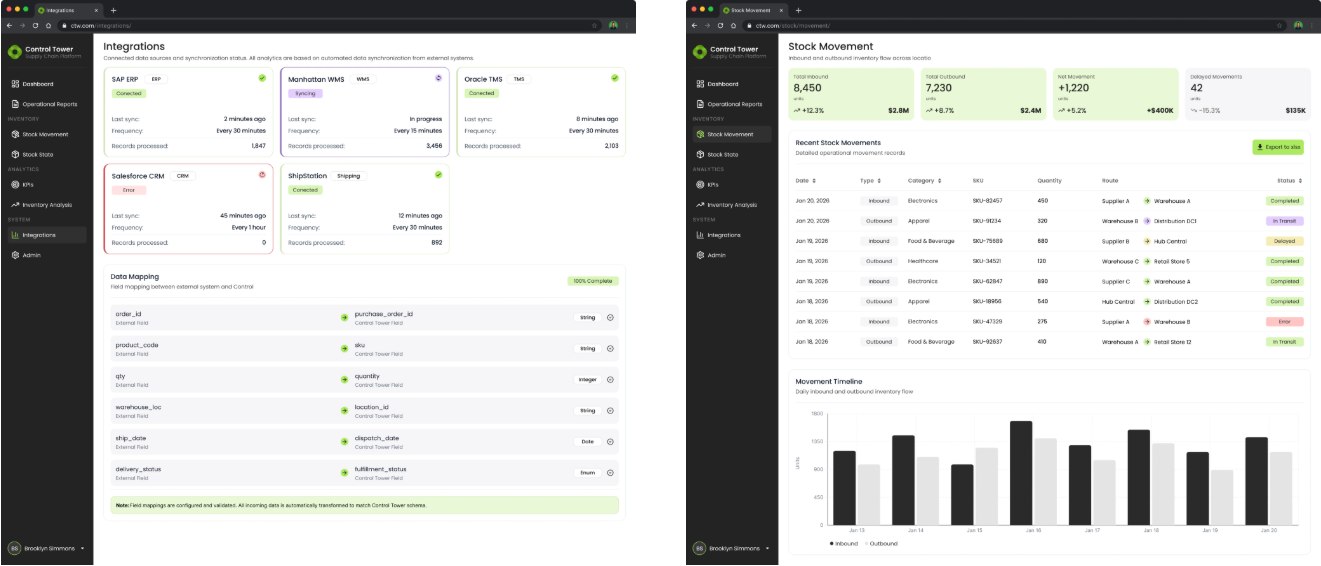
Real transformation happens through implementation — not theory.
The SDH Control Tower project demonstrates how engineering-led integration delivers measurable operational impact.
The project focused on building a unified logistics intelligence layer capable of:
- Aggregating enterprise logistics data
- Delivering executive command dashboards
- Providing operational drill-down analytics
- Supporting 24/7 monitored operations
Across SDH implementations:
- 90% of logistics operational processes become automated
- 24/7 live operations monitoring is enabled
- Production-grade logistics platforms are delivered at enterprise scale
The outcome is not simply better reporting — it is continuous operational control.
Near-Real-Time Visibility — What It Actually Means
Many vendors claim “real-time” logistics.
In practice, reliable logistics systems synchronize data at controlled intervals to ensure consistency and system stability.
SDH Control Tower typically synchronizes data on scheduled cycles (e.g., every 30 minutes), delivering near-real-time operational awareness without risking data conflicts.
This balanced approach ensures accuracy, scalability, and reliability.
How Control Towers Reduce Operational Issues
By consolidating data into one operational view, Control Towers enable:
- Early bottleneck detection
- Faster decision-making
- Reduced delivery delays
- Elimination of phantom inventory
- Improved SLA compliance
Organizations transition from firefighting logistics problems to preventing them altogether.
Long-Term Support and Continuous Evolution
Logistics never stands still.
New warehouses open.
New carriers integrate.
Business models evolve.
SDH provides ongoing engineering support and controlled change management, allowing the control tower to evolve alongside operational growth.
This transforms the control tower into a long-term operational platform rather than a one-time implementation.
The Strategic Impact of Logistics Control Towers
Beyond solving operational challenges, Control Towers reshape business strategy.
Companies gain:
- Faster execution cycles
- Improved customer satisfaction
- Lower operational costs
- Higher supply chain resilience
- Data-driven leadership decisions
Industry experts increasingly view Control Towers as foundational infrastructure for Logistics 4.0 — the next phase of intelligent, automated supply chains.
Why Control Towers Represent the Future of Logistics
The logistics industry is shifting from management to orchestration.
In the past:
- Humans coordinated systems.
Today:
- Systems coordinate logistics.
Tomorrow:
- Intelligent platforms will autonomously optimize supply chains.
Control Towers are the bridge between these stages.
They transform logistics organizations into adaptive, resilient networks capable of responding instantly to disruption.
Final Thoughts
Logistics complexity will continue to grow — driven by globalization, automation, and customer expectations for faster delivery and perfect visibility.
Organizations that rely on fragmented systems and manual reporting will increasingly struggle to compete.
Control Towers solve the most critical logistics challenges by delivering:
- Unified visibility
- Operational intelligence
- Proactive decision-making
- Scalable automation
- Enterprise-grade governance
The SDH Control Tower exemplifies how engineering-driven integration can move logistics operations beyond reporting and into true operational control.
Categories
About the author

CEO & Co-Founder at Software Development Hub. Innovation-driven expert with 20+ years of experience. A business practitioner with experience in creating and launching startups, an innovator and progressive-minded specialist, who helps turn raw ideas into profitable results.
Share






Need a project estimate?
Drop us a line, and we provide you with a qualified consultation.