
Why DevOps Is Still Critical for Enterprise Growth
Trend #1: AI-Driven DevOps (AIOps) Will Become Standard
Key Capabilities of AI-Driven DevOps
Why Enterprises Are Investing in AIOps
What to Expect by 2026–2030
Trend #2: Platform Engineering Will Replace Traditional DevOps Models
What Is Platform Engineering?
Why Platform Engineering Matters
Benefits for Enterprises
Trend #3: GitOps Will Drive Infrastructure Automation
How GitOps Works
Why GitOps Is Gaining Popularity
Enterprise Impact
Trend #4: DevSecOps Will Become Non-Negotiable
What DevSecOps Includes
The Enterprise Security Reality
The Future of DevSecOps
Trend #5: Multi-Cloud and Hybrid Cloud DevOps Will Expand
The Multi-Cloud Challenge
Emerging Multi-Cloud Solutions
Why Multi-Cloud Is Here to Stay
Trend #6: Serverless DevOps Will Continue to Grow
What Serverless Means for DevOps
Enterprise Benefits
Trend #7: Observability Will Replace Traditional Monitoring
The Three Pillars of Observability
Enterprise Observability Use Cases
The Next Phase of Observability
Trend #8: Infrastructure as Code (IaC) Will Become Fully Automated
Current IaC Limitations
What the Future Looks Like
Trend #9: Edge Computing Will Drive New DevOps Workflows
DevOps Challenges at the Edge
Enterprise Edge DevOps Strategies
Trend #10: Low-Code and No-Code DevOps Integration
DevOps Implications
Benefits for Enterprises
Trend #11: Sustainability and Green DevOps
What Is Green DevOps?
Why This Matters
Trend #12: Remote DevOps Teams and Global Collaboration
Key Requirements
The Future Workplace
How Enterprises Should Prepare for the Future of DevOps
1. Standardizing DevOps Workflows
2. Investing in Automation
3. Prioritizing Security Integration
4. Building Scalable Infrastructure
5. Training Teams Continuously
Common Challenges Enterprises Face When Modernizing DevOps
How Fully Managed DevOps Services Support Enterprise Success
Key Benefits of Managed DevOps Services
How SDH Helps Enterprises Build Future-Ready DevOps Environments
The Long-Term Outlook: What DevOps Will Look Like by 2030
Enterprises That Adapt Early Will Lead the Future
The Future of DevOps for Enterprises: Trends to Watch (2026 and Beyond)


Enterprise IT is moving at a breakneck pace. Between cloud-native shifts and the AI explosion, DevOps has evolved from a "nice-to-have" into the backbone of every modern organization.
But the DevOps playbook for 2026 has been completely rewritten. Simple pipelines aren't cutting it anymore; today’s teams are juggling multi-cloud chaos, tighter security demands, and the need for near-instant delivery.
Here’s a look at the trends actually moving the needle and how to stay ahead of the curve.
Why DevOps Is Still Critical for Enterprise Growth
DevOps has become the backbone of modern enterprise software delivery. It bridges development and operations teams, enabling faster releases, improved reliability, and better collaboration.
But in enterprise environments, the stakes are significantly higher.
Large-scale systems involve:
- Multiple development teams
- Distributed cloud environments
- Complex infrastructure
- Regulatory requirements
- Massive user bases
Without strong DevOps practices, enterprises face:
- Slow deployment cycles
- Increased downtime
- Security vulnerabilities
- Higher operational costs
- Reduced innovation speed
The next generation of DevOps aims to eliminate these bottlenecks through automation, intelligence, and platform standardization.
Trend #1: AI-Driven DevOps (AIOps) Will Become Standard
Artificial Intelligence is rapidly transforming DevOps workflows. AI-driven DevOps—often called AIOps—uses machine learning to automate complex operational processes.
This trend is expected to dominate enterprise infrastructure management in the coming years.
Key Capabilities of AI-Driven DevOps
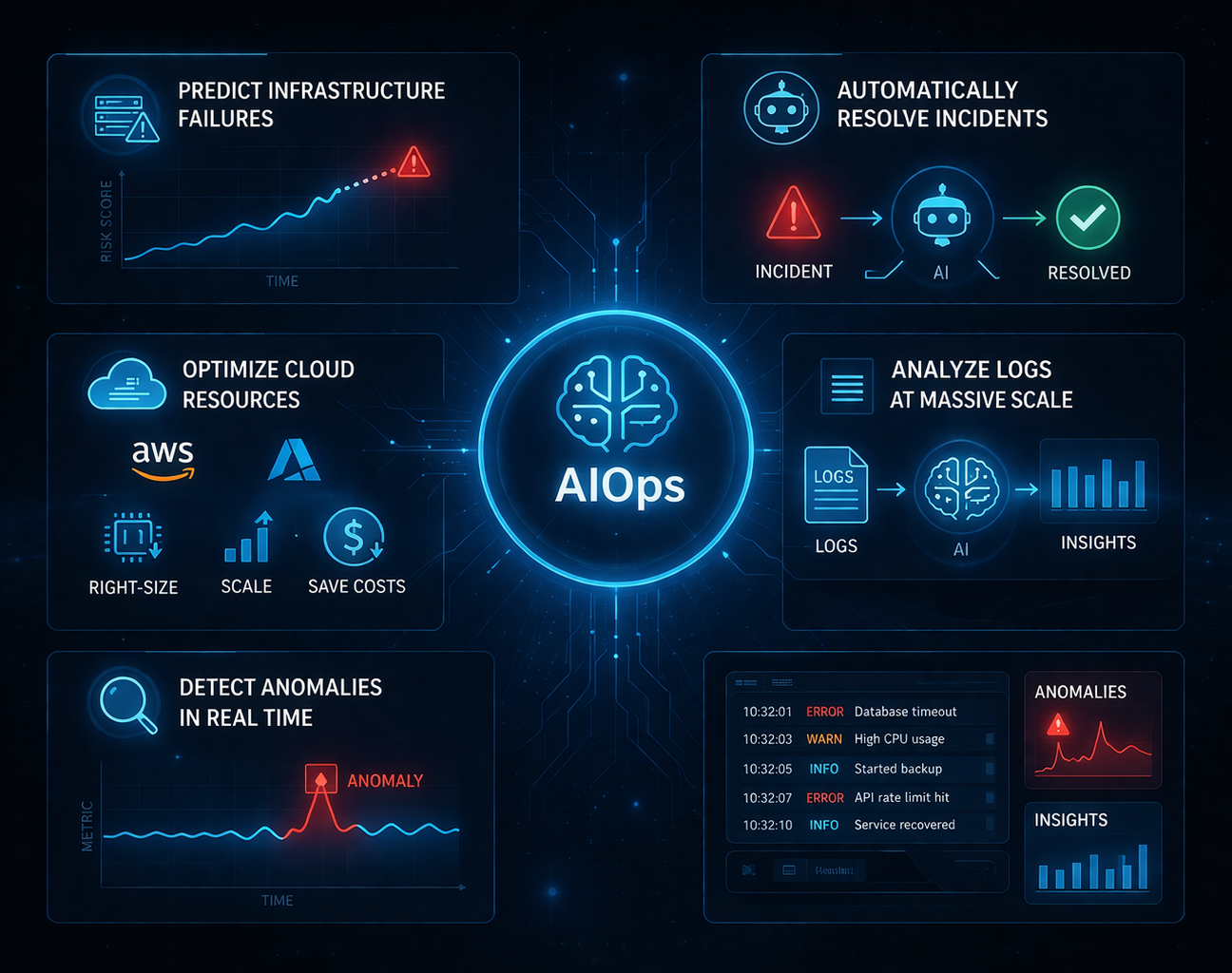 AIOps platforms can:
- Predict infrastructure failures
- Automatically resolve incidents
- Optimize cloud resources
- Analyze logs at massive scale
- Detect anomalies in real time
Instead of reacting to system failures, enterprises will increasingly prevent them before they occur.
Why Enterprises Are Investing in AIOps
Large organizations generate enormous amounts of data from:
- Logs
- Metrics
- Application events
- User activity
- Security alerts
Manual monitoring is no longer feasible.
AI-driven systems can analyze millions of data points instantly, reducing downtime and improving performance reliability.
What to Expect by 2026–2030
-
Self-healing infrastructure
- Autonomous incident response
- Intelligent performance optimization
- AI-powered root cause analysis
Enterprises that adopt AIOps early will gain a major competitive advantage through improved uptime and faster issue resolution.
Trend #2: Platform Engineering Will Replace Traditional DevOps Models
Platform Engineering is emerging as one of the most significant shifts in enterprise DevOps strategy.
Instead of relying on ad-hoc pipelines built by individual teams, enterprises are creating internal developer platforms (IDPs)—centralized systems that standardize development workflows.
What Is Platform Engineering?
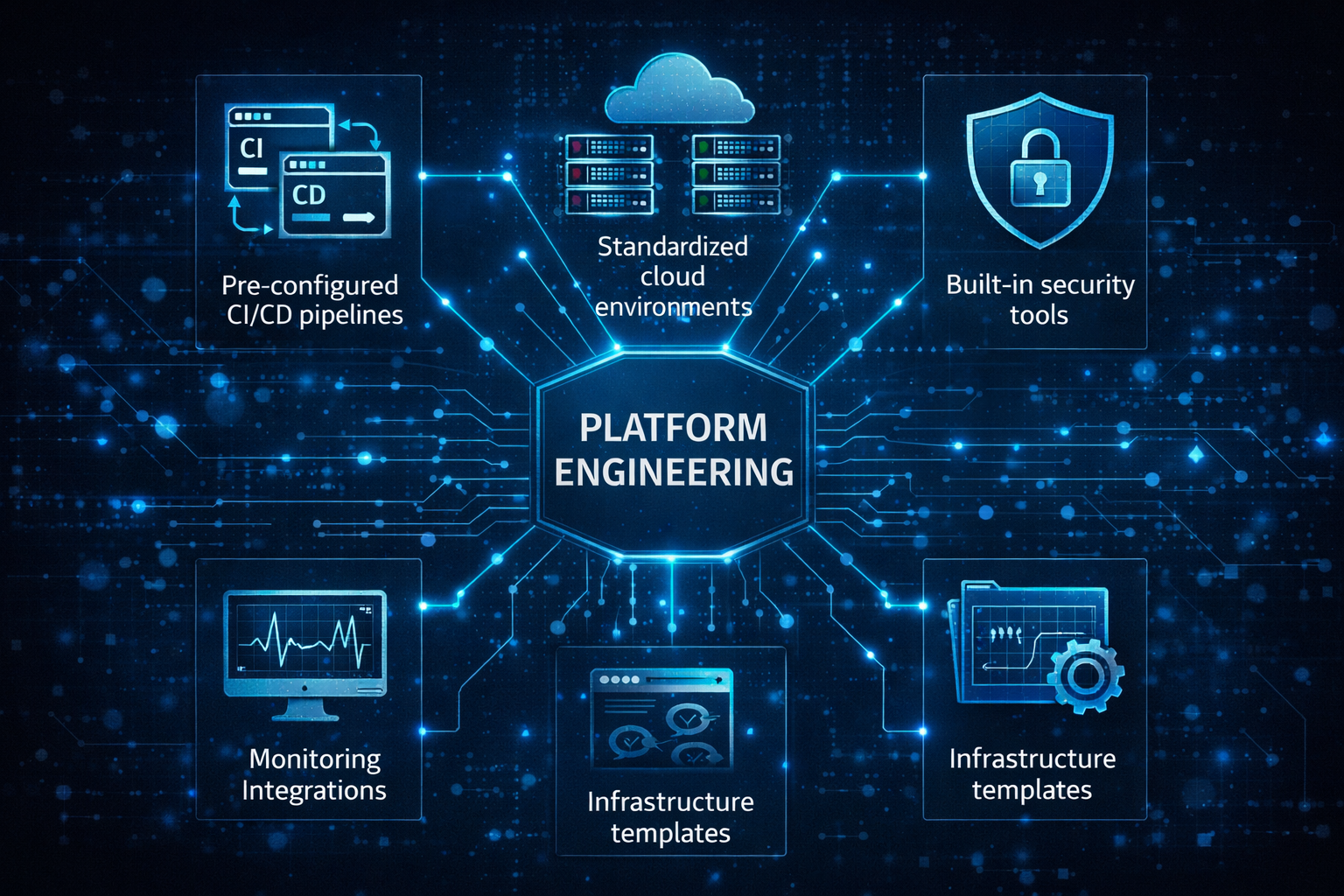 Platform Engineering focuses on building reusable infrastructure components that developers can access on demand.
These platforms typically include:
- Pre-configured CI/CD pipelines
- Standardized cloud environments
- Built-in security tools
- Monitoring integrations
- Infrastructure templates
Developers can launch production-ready environments with minimal manual effort.
Why Platform Engineering Matters
Enterprise environments often suffer from:
- Tool sprawl
- Inconsistent configurations
- Duplicate workflows
- Security gaps
Platform engineering solves these issues by enforcing consistency across teams.
Benefits for Enterprises
-
Faster development cycles
- Reduced operational complexity
- Improved governance
- Better developer productivity
- Scalable infrastructure management
By 2027, platform engineering is expected to become a core component of enterprise DevOps strategies.
Trend #3: GitOps Will Drive Infrastructure Automation
GitOps is becoming the preferred method for managing infrastructure in cloud-native environments.
This approach treats infrastructure as code and uses Git repositories as the single source of truth.
How GitOps Works
Infrastructure configurations are stored in version-controlled repositories. Changes are deployed automatically when updates are committed.
Key components include:
- Git repositories
- Continuous delivery pipelines
- Infrastructure-as-Code tools
- Kubernetes clusters
Why GitOps Is Gaining Popularity
GitOps offers several advantages for enterprise environments:
Improved Auditability
Every infrastructure change is tracked and documented.
This is especially important for industries with strict compliance requirements.
Faster Deployment
Changes can be rolled out instantly across environments.
Easy Rollbacks
If an issue occurs, systems can revert to a previous configuration quickly.
Enterprise Impact
GitOps significantly reduces configuration drift, making large-scale infrastructure management more predictable and secure.
Trend #4: DevSecOps Will Become Non-Negotiable
Security can no longer be treated as an afterthought.
With rising cyber threats and stricter regulations, DevSecOps—integrating security into the DevOps lifecycle—has become mandatory for enterprise environments.
What DevSecOps Includes
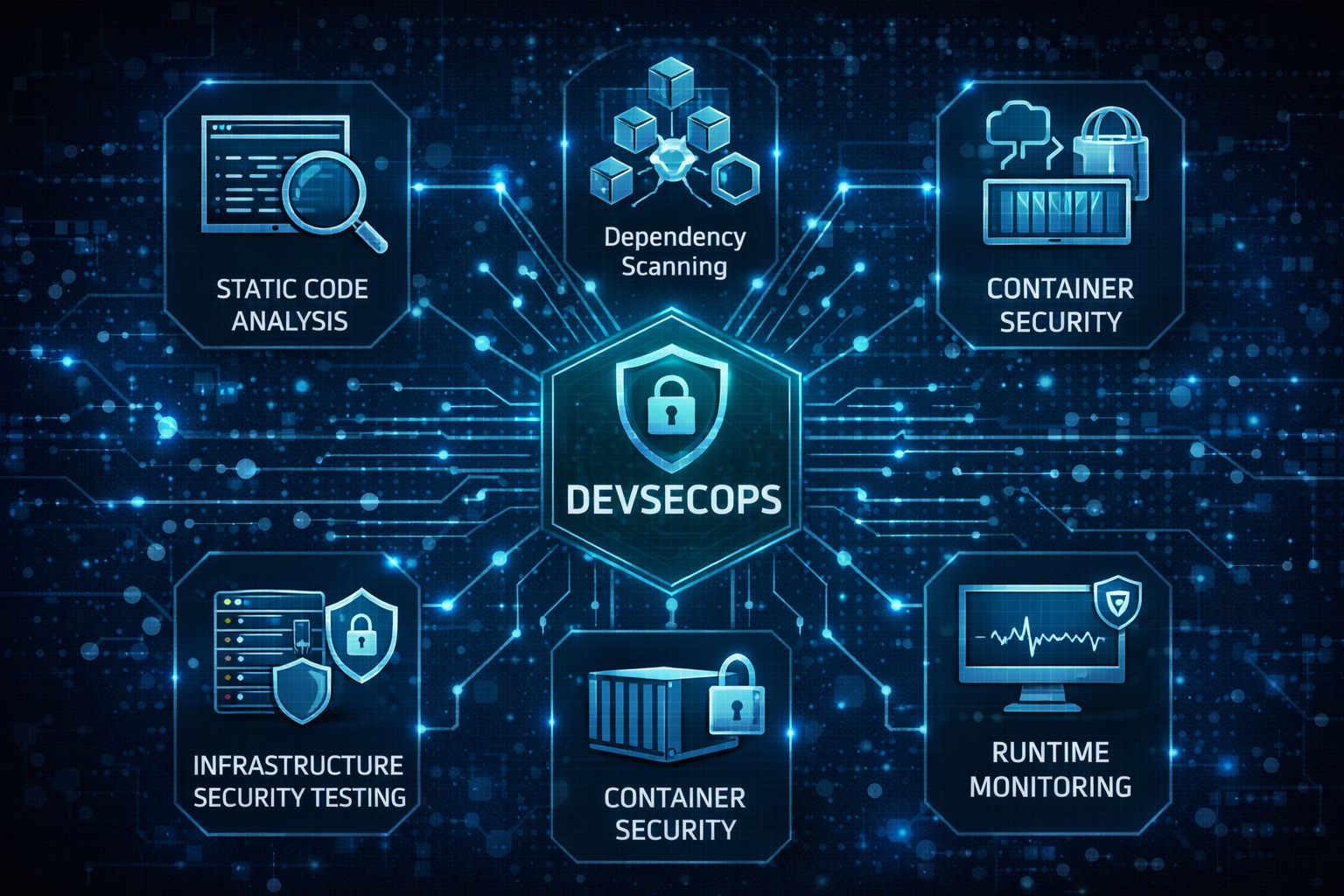 Modern DevSecOps pipelines integrate:
- Static code analysis
- Dependency scanning
- Container security
- Infrastructure security testing
- Runtime monitoring
Security checks are automated and performed at every stage of development.
The Enterprise Security Reality
Enterprises face increasing risks such as:
- Supply chain attacks
- Zero-day vulnerabilities
- Insider threats
- Cloud misconfigurations
Manual security processes are too slow to keep up with these threats.
The Future of DevSecOps
Expect to see:
- Automated threat remediation
- Continuous compliance validation
- AI-driven vulnerability detection
- Zero-trust security integration
Organizations that fail to adopt DevSecOps risk costly breaches and regulatory penalties.
Trend #5: Multi-Cloud and Hybrid Cloud DevOps Will Expand
Enterprise IT infrastructure is no longer confined to a single cloud provider.
Most large organizations now operate across:
- Public clouds
- Private clouds
- On-premise systems
This creates both flexibility and complexity.
The Multi-Cloud Challenge
Managing multiple environments introduces:
- Configuration inconsistencies
- Security risks
- Monitoring challenges
- Increased operational overhead
Without unified DevOps practices, systems become difficult to maintain.
Emerging Multi-Cloud Solutions
Modern DevOps strategies now include:
- Unified deployment pipelines
- Cross-cloud monitoring tools
- Infrastructure abstraction layers
- Centralized governance frameworks
Why Multi-Cloud Is Here to Stay
Enterprises adopt multi-cloud strategies to:
- Avoid vendor lock-in
- Improve resilience
- Optimize costs
- Meet regulatory requirements
DevOps teams must adapt to support increasingly distributed systems.
Trend #6: Serverless DevOps Will Continue to Grow
Serverless computing is changing how applications are deployed and managed.
Instead of managing infrastructure manually, developers focus solely on writing code.
What Serverless Means for DevOps
Serverless architectures reduce:
- Infrastructure maintenance
- Provisioning complexity
- Hardware dependency
However, they introduce new challenges:
- Event-driven debugging
- Monitoring distributed functions
- Managing cold starts
Enterprise Benefits
Serverless computing enables:
- Faster deployments
- Lower operational costs
- Automatic scaling
- Improved flexibility
As serverless technologies mature, DevOps teams will adopt specialized tools to manage these environments efficiently.
Trend #7: Observability Will Replace Traditional Monitoring
Monitoring tools are evolving into full observability platforms.
Traditional monitoring answers:
"What went wrong?"
Observability answers:
"Why did it happen?"
The Three Pillars of Observability
Modern observability systems analyze:
- Logs
- Metrics
- Traces
These provide deeper insight into application performance.
Enterprise Observability Use Cases
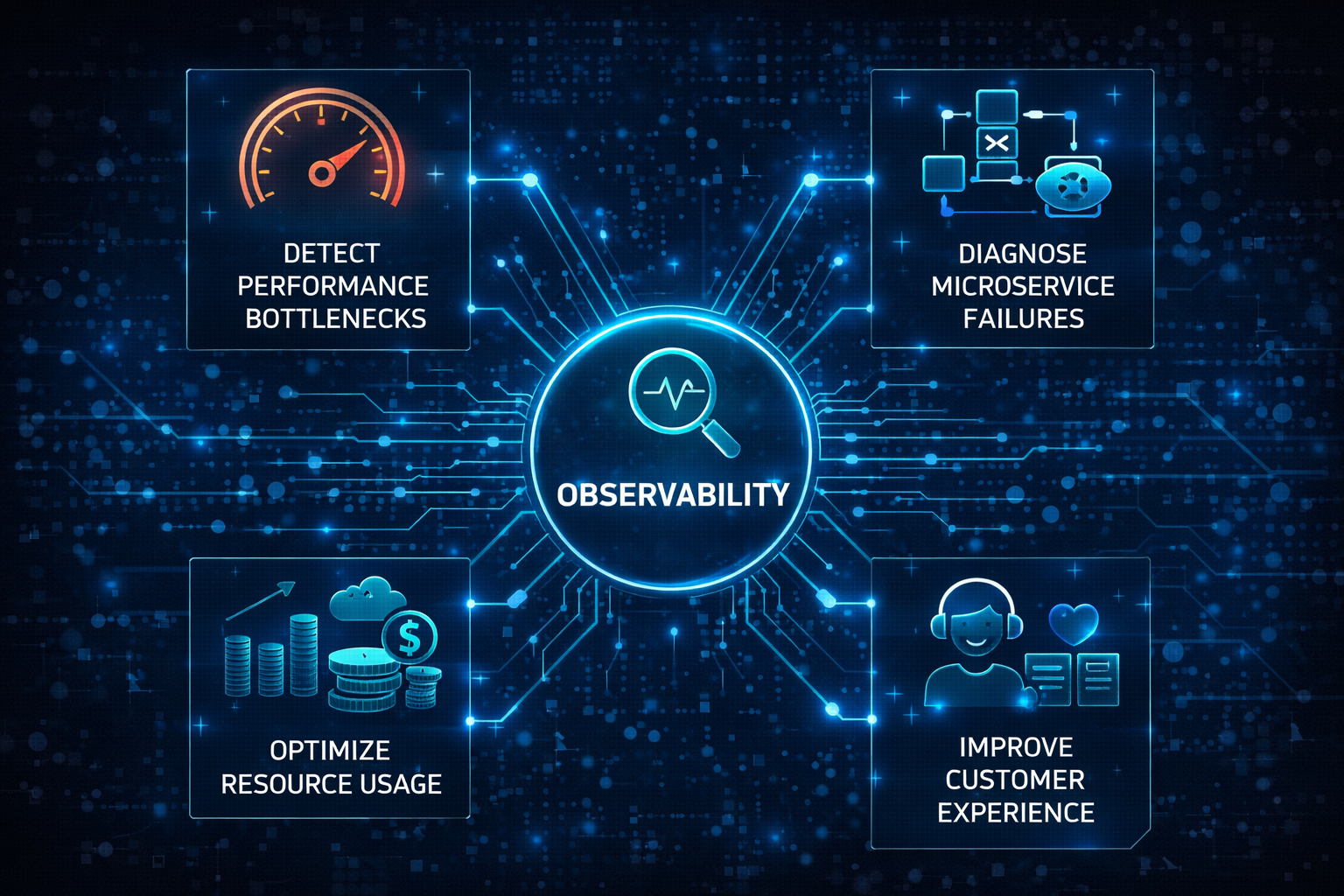 Observability helps enterprises:
- Detect performance bottlenecks
- Diagnose microservice failures
- Optimize resource usage
- Improve customer experience
The Next Phase of Observability
Future observability platforms will include:
- AI-driven anomaly detection
- Predictive performance analysis
- Real-time diagnostics
- Automated remediation
This shift will dramatically reduce mean time to resolution (MTTR).
Trend #8: Infrastructure as Code (IaC) Will Become Fully Automated
Infrastructure as Code (IaC) has already transformed how infrastructure is provisioned.
But the next phase involves full automation and orchestration.
Current IaC Limitations
Many enterprises still rely on:
- Manual configuration approvals
- Semi-automated workflows
- Limited integration between tools
These gaps slow deployment speed.
What the Future Looks Like
Next-generation IaC systems will feature:
- Policy-driven automation
- Self-validating configurations
- Dynamic scaling rules
- Automated compliance checks
This will reduce human error and increase system reliability.
Trend #9: Edge Computing Will Drive New DevOps Workflows
Edge computing is rapidly gaining traction across industries such as manufacturing, retail, healthcare, and logistics.
Instead of processing data in centralized data centers, edge computing processes data closer to its source.
DevOps Challenges at the Edge
Edge deployments introduce:
- Thousands of distributed nodes
- Limited hardware resources
- Network variability
- Security risks
Managing edge environments requires new deployment strategies.
Enterprise Edge DevOps Strategies
Future DevOps workflows will include:
- Lightweight containerization
- Remote orchestration
- Automated device updates
- Distributed observability
Edge computing will require DevOps teams to think beyond centralized cloud infrastructure.
Trend #10: Low-Code and No-Code DevOps Integration
Low-code and no-code platforms are becoming more common in enterprise environments.
Business users can now build applications without extensive programming knowledge.
DevOps Implications
DevOps teams must support:
- Citizen developers
- Rapid application creation
- Automated governance
This requires new tools that integrate low-code platforms into existing pipelines.
Benefits for Enterprises
-
Faster innovation cycles
- Reduced development bottlenecks
- Increased business agility
DevOps teams will evolve into platform enablers rather than infrastructure operators.
Trend #11: Sustainability and Green DevOps
Environmental sustainability is becoming a strategic priority for enterprises worldwide.
DevOps teams now play a role in reducing environmental impact.
What Is Green DevOps?
Green DevOps focuses on:
- Energy-efficient infrastructure
- Optimized cloud usage
- Reduced resource waste
- Sustainable deployment practices
Why This Matters
Large-scale enterprise infrastructure consumes enormous amounts of energy.
Optimized DevOps pipelines can significantly reduce:
- Power consumption
- Carbon emissions
- Operational costs
Sustainability metrics will become part of enterprise DevOps dashboards.
Trend #12: Remote DevOps Teams and Global Collaboration
The modern workforce is distributed across multiple time zones and regions.
DevOps workflows must support global collaboration.
Key Requirements
Enterprises must implement:
- Cloud-based development environments
- Secure remote access systems
- Standardized deployment pipelines
- Real-time communication tools
The Future Workplace
DevOps platforms will continue evolving to support remote-first teams, improving productivity while reducing operational delays.
How Enterprises Should Prepare for the Future of DevOps
Adopting future-ready DevOps strategies requires more than tools—it requires cultural transformation.
Enterprises should focus on:
1. Standardizing DevOps Workflows
Avoid fragmented systems by creating unified pipelines across teams.
2. Investing in Automation
Manual processes slow innovation.
Automation enables scalability.
3. Prioritizing Security Integration
Security must be embedded into every phase of development.
4. Building Scalable Infrastructure
Cloud-native architecture is essential for growth.
5. Training Teams Continuously
DevOps technologies evolve rapidly.
Continuous learning is necessary.
Common Challenges Enterprises Face When Modernizing DevOps
Despite its advantages, DevOps transformation is not always straightforward.
Common obstacles include:
- Legacy system dependencies
- Tool integration complexity
- Skill shortages
- Security concerns
- Budget limitations
These challenges often slow enterprise adoption.
Working with experienced DevOps specialists helps organizations navigate these complexities efficiently.
How Fully Managed DevOps Services Support Enterprise Success
Many enterprises lack the internal resources required to manage complex DevOps environments at scale.
Fully managed DevOps services provide end-to-end support across infrastructure, automation, and security.
Key Benefits of Managed DevOps Services
Organizations gain:
- Faster deployment cycles
- Improved system reliability
- Reduced operational costs
- Enhanced security posture
- Scalable infrastructure management
Managed DevOps teams handle day-to-day operations while internal teams focus on innovation.
How SDH Helps Enterprises Build Future-Ready DevOps Environments
Modern DevOps transformation requires deep technical expertise and enterprise-level experience.
This is where SDH fully managed DevOps services play a critical role.
SDH supports organizations through:
- End-to-end DevOps implementation
- CI/CD pipeline design and optimization
- Infrastructure as Code deployment
- Cloud-native architecture development
- DevSecOps integration
- Multi-cloud and hybrid cloud management
- Monitoring and observability setup
- Continuous performance optimization
Their team helps enterprises reduce infrastructure complexity, accelerate delivery cycles, and maintain high reliability across distributed environments.
Rather than managing fragmented tools internally, businesses can rely on SDH to build standardized, scalable DevOps ecosystems tailored to enterprise needs.
The Long-Term Outlook: What DevOps Will Look Like by 2030
DevOps is evolving toward full autonomy.
By 2030, enterprise DevOps systems will likely feature:
- Autonomous infrastructure management
- Fully self-healing environments
- Predictive security systems
- AI-driven deployment optimization
- Fully automated compliance validation
Human engineers will shift from manual operations to strategic oversight roles.
This transformation will redefine how enterprises build, deploy, and maintain software systems.
Enterprises That Adapt Early Will Lead the Future
The future of DevOps is intelligent, automated, and highly scalable.
Enterprises that embrace emerging DevOps trends today will gain:
- Faster innovation cycles
- Improved operational resilience
- Reduced downtime
- Stronger security posture
- Competitive market advantage
DevOps is no longer just a methodology—it is a strategic capability that determines how quickly organizations can innovate and scale.
As technologies continue evolving, businesses must rethink their infrastructure strategies and invest in future-ready DevOps practices.
Those that act early will not just adapt to change—they will define it.
Categories
About the author

Lead DevOps Engineer at Software Development Hub with over 18 years of experience in Linux-based systems and cloud resource automation. Adept at designing, implementing, and optimizing deployment processes to ensure seamless operations and high system performance.
Share






Need a project estimate?
Drop us a line, and we provide you with a qualified consultation.