
What Is Augmented Reality (AR)?
How Does Augmented Reality Work?
AR, VR, MR, XR: Understanding the Differences
Augmented Reality (AR)
Virtual Reality (VR)
Mixed Reality (MR)
Extended Reality (XR)
AR in Mobile Apps
Device Capabilities
Development Platforms
Real-World AR Use Cases
Retail & E-Commerce
Gaming & Entertainment
Education & Training
Navigation & Travel
Healthcare
Industrial & Field Operations
AR in Today’s Mobile Apps — Why It Matters
How SDH Can Help You Leverage AR
End-to-End AR/VR Development
Expertise Across Platforms
Industry Use Cases
Immersive Entertainment
Why Companies Are Investing in AR Now
Final Thoughts: The Future of AR Applications
AR Applications: Digital Experiences into the Real World


From Pokémon GO turning the world into a game board to furniture apps that let you place virtual sofas in your living room before buying — Augmented Reality (AR) is no longer sci-fi. It’s changing how people interact with technology, making digital information more intuitive, immersive, and actionable.
What Is Augmented Reality (AR)?
Augmented Reality (AR) is a technology that overlays digital information—such as images, animations, 3D objects, or data—onto a user’s real-world environment in real time. Instead of placing someone in a fully virtual space (like VR does), AR enhances what you see, hear, or even feel around you by adding virtual elements into your real surroundings.
The essence of AR is simple: take the live view of your environment—often captured through a camera—and enrich it with digital content so the digital and physical worlds coexist. This enhances context, interaction, and understanding in tasks that span entertainment, productivity, and real-world decision-making.
How Does Augmented Reality Work?
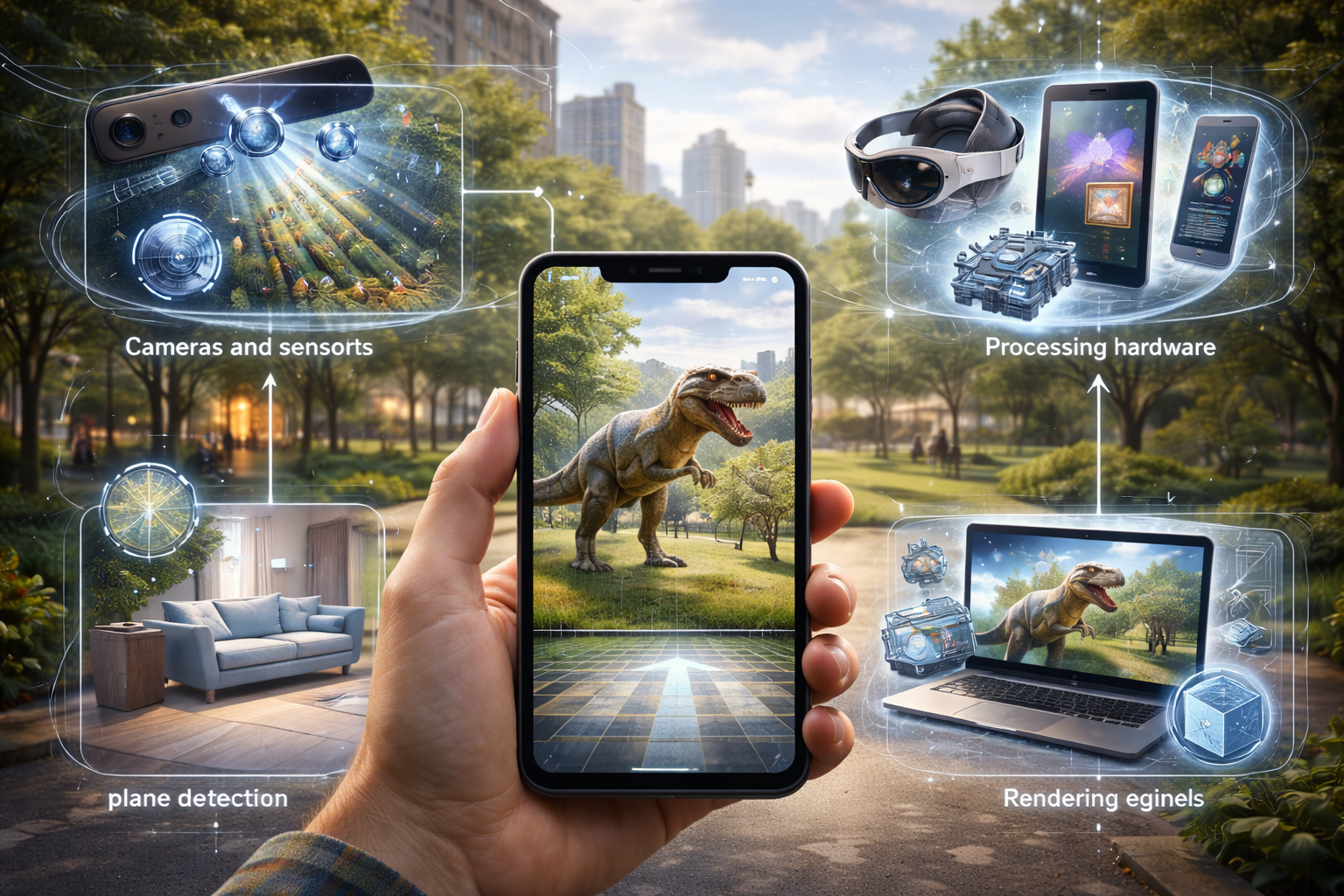 At a high level, AR works by capturing sensory data from the environment and rendering digital content that aligns with real-world objects, spaces, and lighting conditions. Most consumer AR systems rely on a combination of:
- Cameras and sensors – These capture the environment and track motion, depth, and orientation.
- Processing hardware – A smartphone, tablet, or AR glasses runs complex algorithms to analyze the scene and place virtual elements correctly.
- Rendering engines – Software that draws the augmented objects and blends them with the real view so they appear natural and stable.
- Tracking and mapping – Computer vision techniques identify surfaces, objects, and movements to “anchor” virtual content in physical space.
For example, in mobile AR, your smartphone’s camera feeds live video to the AR app. The app’s SDK (software development kit) like Vuforia, ARKit, or ARCore then identifies planes or images in the scene and uses this data to correctly place digital 3D models or UI elements so they appear as if they belong there.
AR, VR, MR, XR: Understanding the Differences
There’s often confusion around the terms used to describe immersive technologies, so let’s break them down:
Augmented Reality (AR)
- Enhances the real world by overlaying virtual elements (graphics, data, 3D objects) onto your physical environment.
- You still see your world—you’re just seeing extra digital content layered on top.
- Commonly experienced through smartphones, tablets, or AR glasses.
Virtual Reality (VR)
- Completely replaces the real world with a fully digital environment.
- Requires headsets that block your physical surroundings so you’re immersed in a virtual scene.
- Great for gaming, simulations, and virtual tours.
Mixed Reality (MR)
- A blend of AR and VR elements where virtual objects not only appear in the real world but can also interact realistically with real objects.
- Unlike AR, MR understands the environment deeply so digital items can, for example, sit on tables or bounce off walls.
Extended Reality (XR)
- An umbrella term that includes AR, VR, and MR.
- “XR” simply refers to all technologies that alter or enhance our perception of reality.
|
Technology |
Experience |
Devices |
|
AR |
Adds digital content to real world |
Phones, tablets, glasses |
|
VR |
Fully immersive virtual world |
Headsets |
|
MR |
Interactive mix of real & digital |
Advanced headsets |
|
XR |
Broad category (AR + VR + MR) |
Varies |
Each of these technologies has its strengths and best-fit scenarios depending on what experience you want to create or solve.
AR in Mobile Apps
Mobile devices have been a major driver of AR adoption. Because smartphones come with powerful processors, high-resolution cameras, and built-in sensors, they are ideal platforms for delivering AR experiences without the need for specialized hardware.
Here’s how AR works in mobile apps and what it enables:
Device Capabilities
Modern phones use:
- Camera feeds to capture the environment
- Gyroscopes and accelerometers to know where the device is pointing
- Spatial recognition to detect surfaces and objects
This allows apps to “anchor” digital elements—like furniture in your living room or animated characters on your table—and have them stay in place as you move around.
Development Platforms
AR apps are built using AR SDKs like:
- ARKit for iOS
- ARCore for Android
- Unity or Unreal Engine with AR plugins
These tools provide the building blocks for detecting surfaces, tracking motion, and rendering 3D content.
Real-World AR Use Cases
AR isn’t just a gimmick—its applications span many industries and business goals:
Retail & E-Commerce
Imagine pointing your phone at your living room and seeing how a new sofa fits before you buy it. AR retail apps reduce guesswork and returns by helping customers visualize products in their space.
Gaming & Entertainment
Games like Pokémon GO turned the world into a playground by placing digital creatures in real environments, captivating millions. AR entertainment can range from interactive storytelling to visual effects layered onto live video.
Education & Training
AR brings learning to life. Students can dissect a virtual frog on their desk, learn anatomy overlaid onto a real human body, or practice complex skills in safe, controlled environments.
Navigation & Travel
AR navigation can overlay arrows onto the road or sidewalk to guide you turn by turn. In travel, AR apps can provide real-time information about landmarks and cultural sites as you explore.
Healthcare
AR assists in surgeries by overlaying vital patient data in the surgeon’s view. It can help with physiotherapy, patient education, and even mental health care by making treatment more interactive.
Industrial & Field Operations
Technicians can get AR step-by-step instructions layered over machinery, reducing errors and speeding up repairs. AR makes complex procedures easier to learn and execute.
Each of these cases not only enhances user experiences but often improves efficiency, reduces errors, and drives deeper engagement.
AR in Today’s Mobile Apps — Why It Matters
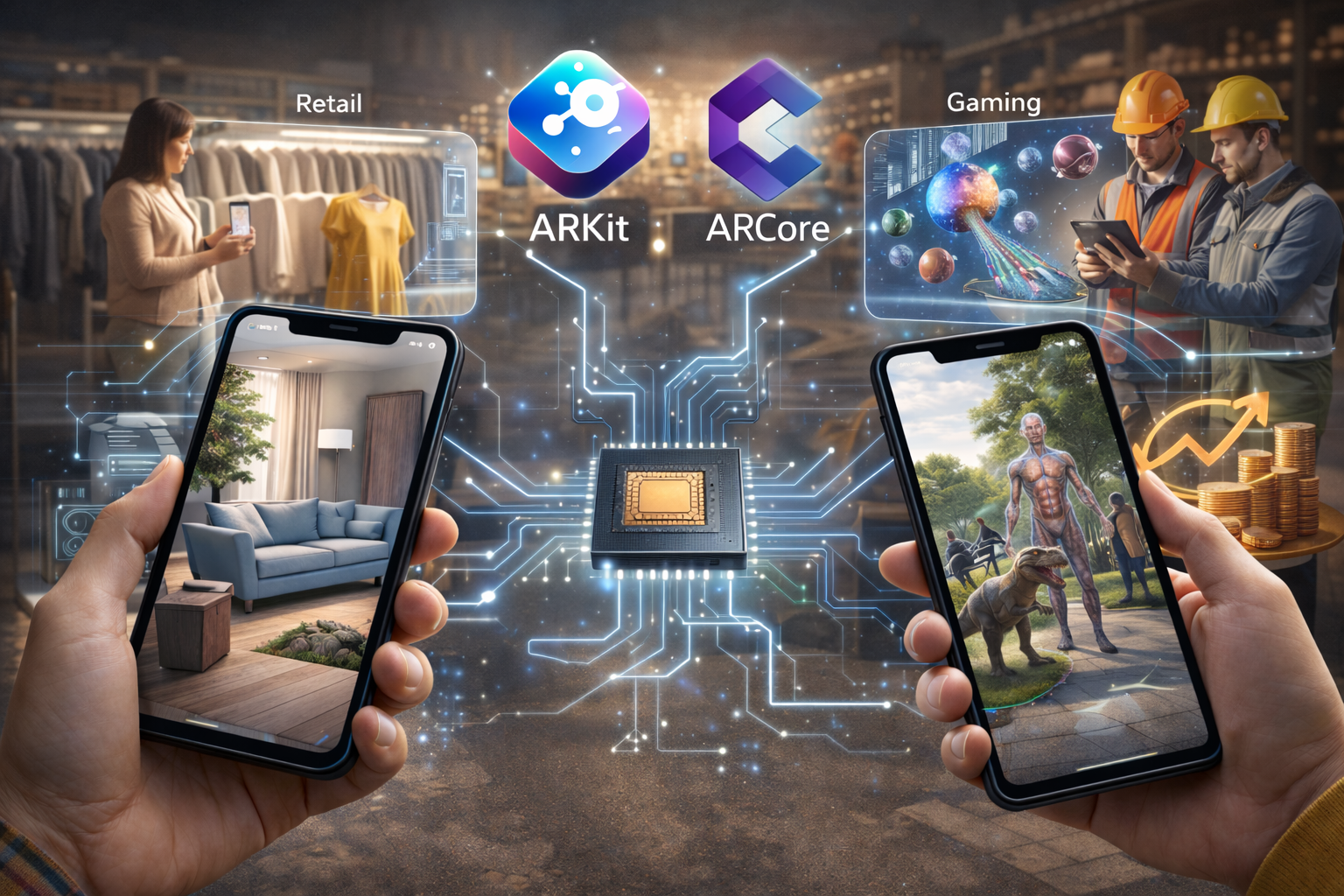
Mobile devices have become the most accessible platform for AR — primarily because:
- Phones/tablets have powerful processors
- They’re equipped with cameras and motion sensors
- Developers can build on mature AR platforms (ARKit, ARCore)
- Users don’t need extra hardware like headsets
According to industry forecasts, mobile AR is projected to generate billions in revenue by 2027, especially in retail, gaming, education, and enterprise applications.
This growth isn’t accidental — companies are discovering that AR boosts engagement, increases conversion, and improves training outcomes.
How SDH Can Help You Leverage AR
If your business or product roadmap includes AR experiences—whether it’s mobile apps, interactive entertainment, or sophisticated mixed-reality applications—Software Development Hub (SDH) has the expertise to bring those ideas to life. Here’s how:
End-to-End AR/VR Development
SDH provides full-cycle development services for AR and VR technologies—from initial concept and prototyping to final deployment and ongoing support. Whether you’re targeting iOS, Android, or specialized devices, SDH’s team can architect, design, and build immersive experiences tailored to your goals.
Expertise Across Platforms
Their cross-disciplinary specialists can develop AR solutions that integrate with mobile apps, IoT devices, and cloud systems. That means you get a scalable solution that fits your technical ecosystem and business strategy.
Industry Use Cases
SDH has experience building AR and VR solutions that serve business cases across entertainment, education, logistics, healthcare, fintech, and more. Whether your focus is customer engagement, training, or operational efficiency, their team understands how to apply AR where it matters most.
Immersive Entertainment
Specifically in the entertainment space, SDH develops AR applications that engage users with interactive and dynamic content, and VR experiences that transport users into new worlds and enhance immersion.
Why Companies Are Investing in AR Now
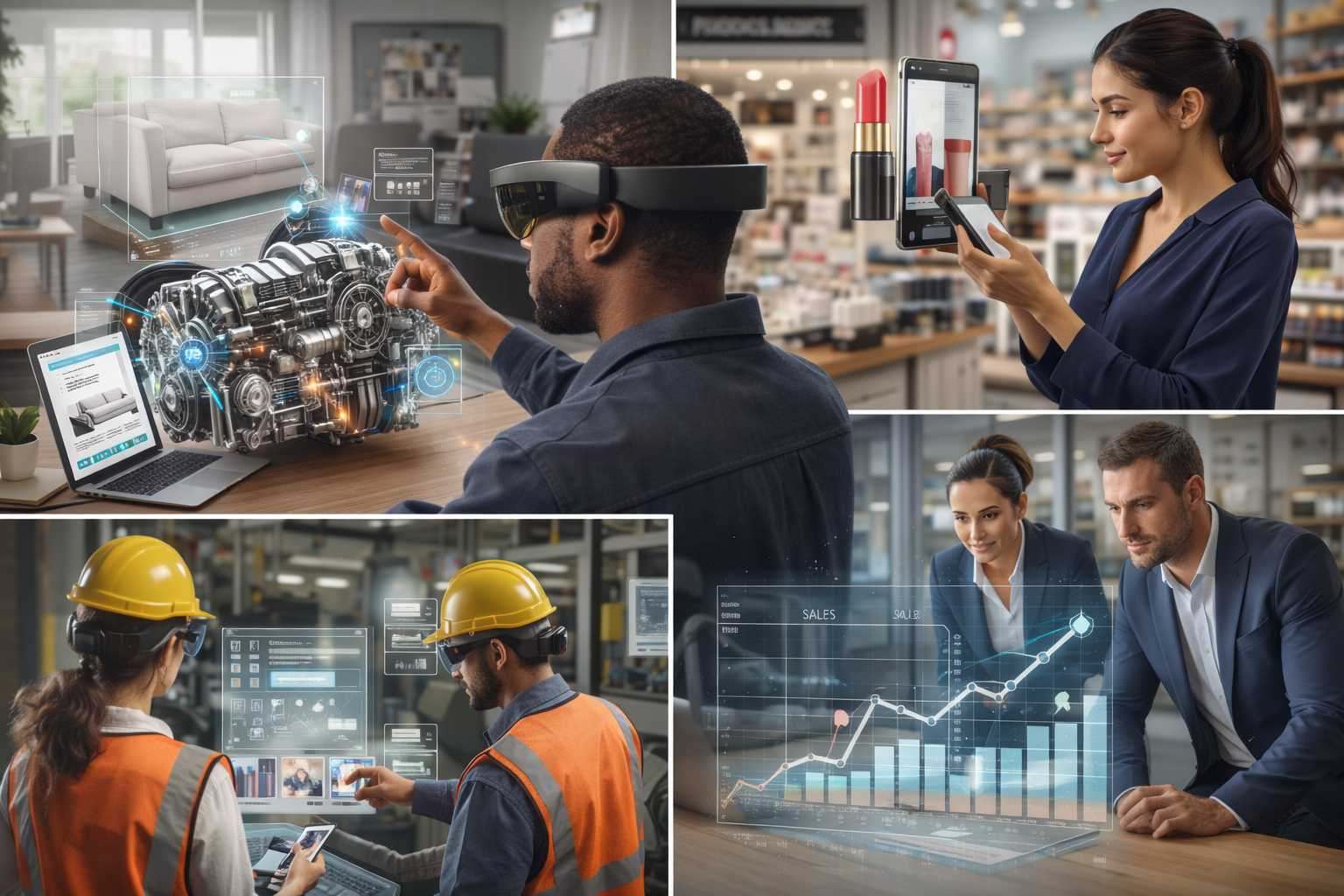 Here’s why AR isn’t just a fad anymore:
- Increased user engagement
- Enhanced customer experience
- Improved training & reduced operational risk
- Higher conversion rates in e-commerce
- Competitive advantage in digital transformation
AR drives measurable business outcomes — not just cool effects.
Final Thoughts: The Future of AR Applications
Augmented Reality is more than a trend—it’s a transformative technology that blends the digital world with our physical reality in meaningful ways. From mobile apps that enhance how we shop and play, to enterprise solutions that improve productivity and training, AR is reshaping industries.
As hardware becomes more powerful and development tools more accessible, the opportunities for AR will only grow. Whether you're a startup exploring AR for the first time or an established business looking to innovate, engaging with AR today lays the foundation for powerful customer experiences tomorrow.
Categories
Share






Need a project estimate?
Drop us a line, and we provide you with a qualified consultation.