
APIs Are the Foundation of Modern Digital Business
1. APIs Enable Speed and Faster Innovation
2. APIs Make Businesses More Agile
3. APIs Improve Customer Experience at Scale
4. APIs Unlock Automation and Operational Efficiency
5. APIs Support Scalability Without Chaos
6. APIs Enable Ecosystem Expansion
7. APIs Reduce Technical Debt and Future Risk
8. APIs Are Essential for AI and Data-Driven Business
Best Practices for Turning APIs Into Competitive Advantage
Where Development Partners Fit In
APIs Are Strategy, Not Just Technology
What Makes an API a Competitive Advantage Today?


APIs used to be invisible.
A decade ago, most businesses thought of APIs (Application Programming Interfaces) as purely technical tools — something developers built so software systems could exchange data.
Today, that view is outdated.
In 2026, APIs are no longer just backend infrastructure. They are strategic business assets. Companies with strong API ecosystems move faster, scale better, integrate smarter, and deliver superior customer experiences.
In many industries, the most competitive organizations are not simply the ones with the best products — they are the ones with the best platforms, and APIs are what make platforms possible.
So what exactly makes APIs such a powerful competitive advantage today?
Let’s break it down.
APIs Are the Foundation of Modern Digital Business
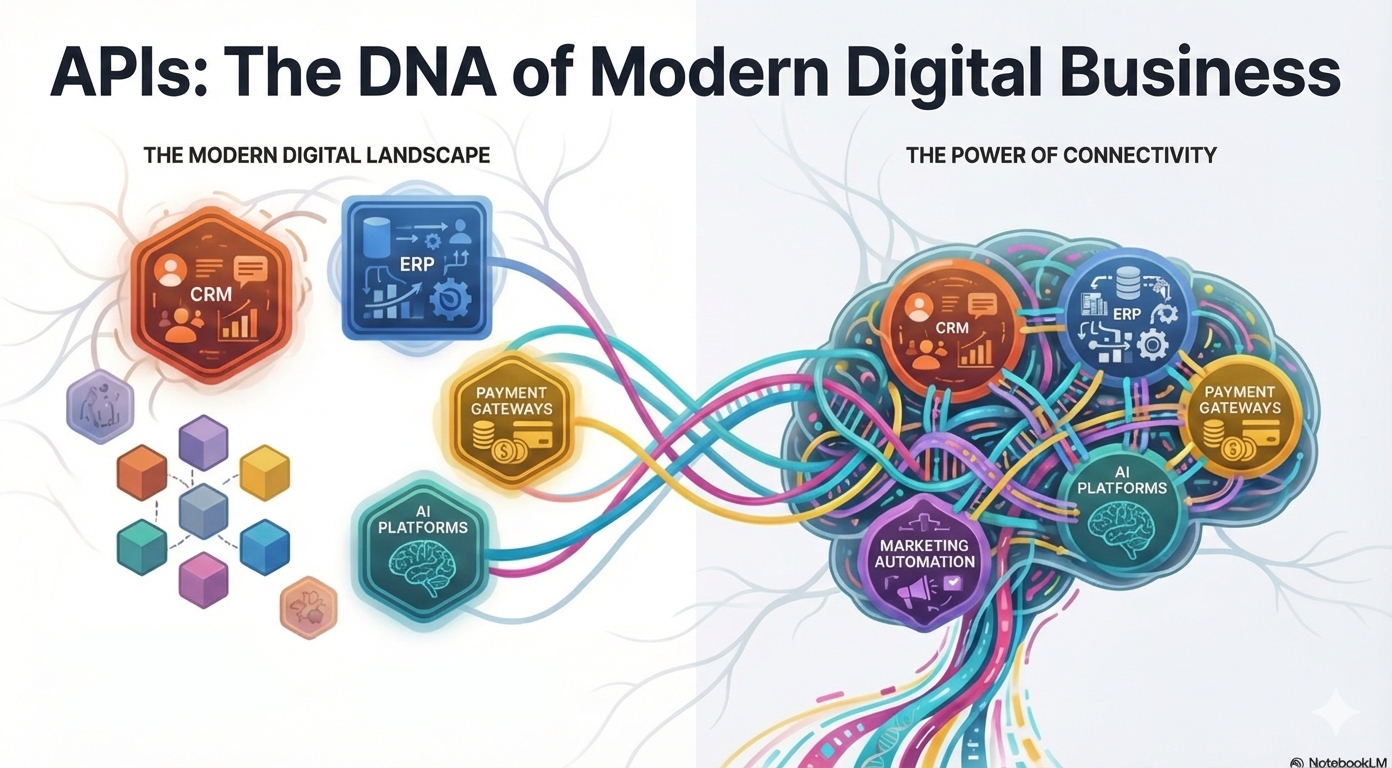 Modern companies rarely operate with a single system.
Even a mid-sized organization uses dozens of digital tools:
- Customer-facing web and mobile applications
- Payment gateways
- CRM platforms
- Marketing automation systems
- Analytics dashboards
- Internal ERP and HR systems
- AI services and data platforms
Without APIs, these systems become isolated.
With APIs, they become connected.
APIs are what allow businesses to function as integrated digital ecosystems rather than disconnected software silos.
In simple terms:
APIs are how digital businesses communicate, operate, and scale.
1. APIs Enable Speed and Faster Innovation
In competitive markets, speed wins.
The companies that deliver new features, launch services, and respond to customer needs faster are the ones that stay ahead.
APIs accelerate innovation because they allow teams to:
- Reuse existing functionality
- Build modular services
- Integrate third-party capabilities instantly
- Avoid rebuilding the same systems repeatedly
Instead of spending months developing a payment system, a business can integrate one securely through APIs in days.
Instead of building a customer identity system from scratch, companies can connect authentication providers instantly.
This reduces development cycles dramatically.
APIs turn product development into assembly rather than reinvention.
That speed becomes a lasting advantage.
This is exactly why custom API development is now a strategic priority — and where professional services like SDH’s custom API design and integration can accelerate deliver.
2. APIs Make Businesses More Agile
Agility is not a buzzword anymore.
In 2026, agility determines whether organizations survive disruption.
Customer expectations change quickly. Markets shift. Regulations evolve. New competitors appear overnight.
Companies built on tightly coupled, rigid systems struggle to adapt.
API-driven businesses can change faster because APIs create loose connections between systems.
That means you can:
- Replace one service without breaking everything
- Launch new channels without rebuilding infrastructure
- Expand into new regions with fewer technical barriers
- Add new capabilities incrementally
An API-first organization is not locked into one structure.
It is built to evolve.
SDH’s API consulting and architecture services help companies design systems that adapt to change rather than break under it.
3. APIs Improve Customer Experience at Scale
Customer experience is one of the most powerful competitive differentiators today.
Customers expect:
- Real-time updates
- Personalized recommendations
- Seamless omnichannel interactions
- Instant support
- Smooth digital journeys
APIs are what make those experiences possible.
For example:
- A retail app pulls real-time inventory through APIs
- A banking platform sends fraud alerts instantly via APIs
- A healthcare portal retrieves lab results securely through APIs
- A travel platform updates flight data continuously via integrations
The more connected and responsive your systems are, the better your customer experience becomes.
And better experience translates directly into:
- Higher retention
- Stronger loyalty
- Increased revenue
APIs enable personalization and speed at scale - and SDH’s mobile and web API development ensures those experiences are robust and reliable.
4. APIs Unlock Automation and Operational Efficiency
Competitive advantage isn’t only about customer-facing innovation.
It’s also about running smarter internally.
Many organizations still rely on manual workflows:
- Copying data between systems
- Approving repetitive requests
- Updating reports manually
- Handling customer onboarding through email chains
APIs eliminate these inefficiencies.
When systems communicate automatically, workflows become faster and more accurate.
API-driven automation can enable:
- Instant order processing
- Automated invoicing
- Real-time supply chain updates
- Integrated HR and payroll systems
- Seamless partner onboarding
The result is lower operational cost and higher productivity.
Efficiency becomes a strategic advantage.
5. APIs Support Scalability Without Chaos
Growth is exciting — until systems break under pressure.
As businesses scale, they face challenges like:
- Increased traffic
- More integrations
- More data sources
- More partners
- More product complexity
APIs provide structure and stability.
Instead of building one massive monolithic system, companies can scale through modular services connected by APIs.
This allows organizations to:
- Handle millions of requests reliably
- Expand product lines without rewriting core systems
- Support new devices and platforms easily
- Scale teams without creating technical bottlenecks
Scalable APIs are what make modern SaaS platforms possible.
6. APIs Enable Ecosystem Expansion
Some of the most dominant companies today are ecosystem builders.
Think of:
- Stripe in payments
- Shopify in commerce
- Twilio in communications
- Salesforce in CRM
- AWS in cloud infrastructure
Their advantage is not only their product.
It’s that they allow others to build on top of them.
APIs make this possible.
When businesses expose partner or public APIs, they create opportunities for:
- Third-party integrations
- Developer adoption
- Platform monetization
- Strategic partnerships
- Network effects
An API ecosystem increases to reach far beyond what one company could build alone.
APIs transform products into platforms.
7. APIs Reduce Technical Debt and Future Risk
Legacy systems are one of the biggest barriers to competitiveness.
Older infrastructure is often:
- Hard to integrate
- Expensive to maintain
- Difficult to modernize
- Risky to scale
APIs help businesses modernize gradually.
Instead of replacing everything at once, organizations can wrap legacy systems with API layers, allowing new applications to interact with old systems safely.
This approach reduces risk while enabling innovation.
APIs become a bridge between past infrastructure and future growth.
8. APIs Are Essential for AI and Data-Driven Business
AI is now a core business capability.
But AI does not function without access to data and systems.
APIs provide that access.
APIs enable organizations to:
- Feed real-time data into machine learning models
- Connect AI assistants to business workflows
- Automate decisions through intelligent systems
- Integrate generative AI into customer service and content pipelines
In 2026, the companies that win with AI will be the ones with strong API foundations.
AI runs on connectivity — and APIs provide it.
Best Practices for Turning APIs Into Competitive Advantage
Not all APIs create value.
To become strategic assets, APIs must be designed intentionally.
Key principles include:
- Security-first design (authentication, authorization, monitoring)
- Clear documentation for developer adoption
- Versioning strategies to support long-term evolution
- Performance optimization for high-load environments
- Reusable modular architecture instead of one-off endpoints
- Governance frameworks for consistency across teams
APIs are not just code.
They are long-term business infrastructure.
Where Development Partners Fit In
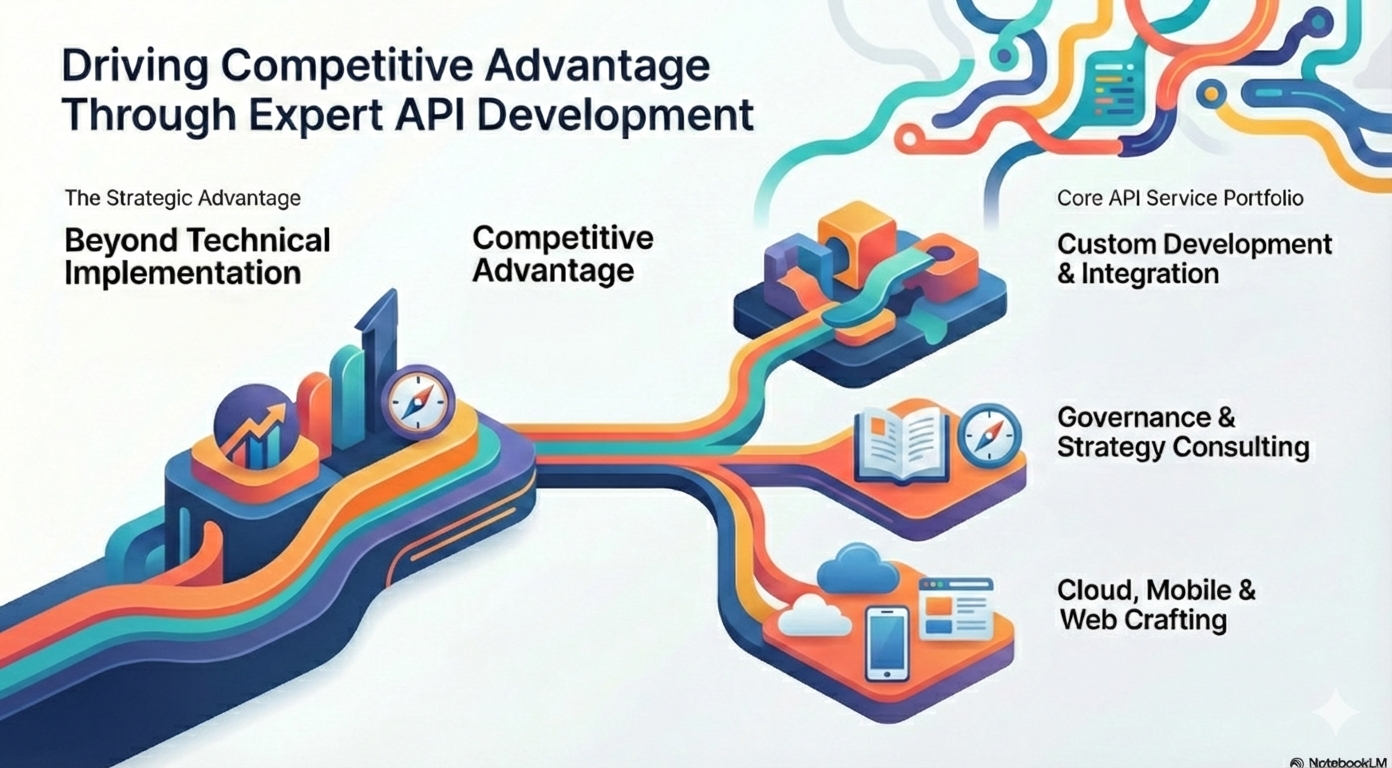 Building APIs that deliver competitive advantage requires more than technical implementation.
It requires:
- Architecture expertise
- Security planning
- Scalability engineering
- Integration experience
- Long-term governance
This is where experienced API development teams like SDH can support organizations — helping businesses design, build, and modernize robust API ecosystems aligned with growth strategy.
APIs Are Strategy, Not Just Technology
In today’s digital economy, competitive advantage is built on speed, agility, scalability, and connected customer experiences.
APIs enable all of it.
They help companies innovate faster, automate smarter, scale reliably, expand ecosystems, and unlock AI-driven transformation.
The businesses that treat APIs as strategic assets — not backend plumbing — will lead their industries in 2026 and beyond.
APIs are no longer optional.
They are the backbone of modern competition.
Categories
About the author

UI/UX Designer at Software Development Hub with 4+ years experience. Skilled in designing mobile app, websites, SaaS products. She is passionate about improving how people engage with interfaces, focusing on creating seamless, user-centered designs that not only look appealing but also feel intuitive.
Share






Need a project estimate?
Drop us a line, and we provide you with a qualified consultation.