
The Rise of AI-Powered Personalized Learning
Microlearning and On-Demand Education
Gamification: Making Learning Engaging
Learning Analytics and Data-Driven Education
Skills-Based Learning Is Replacing Traditional Course Structures
Dynamic Skill Mapping and Gap Analysis
Micro-Credentials and Digital Badges
Learning in the Flow of Work
Integration with Talent Management Systems
Immersive Learning with AR and VR
Mobile-First Learning Experiences
Lifelong Learning and Continuous Upskilling
What Organizations Should Look for in a Modern E-Learning Platform
How SDH Helps Organizations Build Future-Ready E-Learning Platforms
Custom E-Learning Platform Development
Final Thoughts
The Future of E-Learning Platforms in 2026: Trends Every Organization Should Know


The global e-learning market continues to grow rapidly, with projections estimating it will reach $842.64 billion by 2030.
To meet the demands of today’s learners, modern platforms must be engaging, flexible, scalable, and measurable. By 2026, the most effective e-learning systems will combine AI, personalized learning paths, advanced analytics, and immersive technologies to deliver meaningful and lasting results.
Here are the key trends shaping the future of e-learning and what organizations should consider when investing in digital education solutions.
The Rise of AI-Powered Personalized Learning
Artificial intelligence is quickly becoming the core of modern e-learning systems. Rather than delivering the same lessons to every learner, AI analyzes user behavior, pace, and performance to create personalized learning paths.
Adaptive algorithms can adjust course difficulty, recommend extra materials, or skip unnecessary content. Students struggling with a topic receive additional exercises, while those who excel move on to more advanced material.
This personalization boosts engagement and learning outcomes. By 2026, most enterprises are expected to use AI-driven platforms to tailor learning paths and provide real-time feedback.
AI also supports automated tasks such as:
- generating quizzes and assessments
- grading assignments
- providing instant feedback
- predicting learner performance
- identifying at-risk students early
These capabilities allow educators and organizations to focus more on mentorship and strategic learning design rather than administrative tasks.
Microlearning and On-Demand Education
Traditional long courses are gradually being replaced by short, focused learning modules known as microlearning.
Microlearning lessons typically last between 3 and 10 minutes and focus on one specific concept or skill. Research shows that these formats significantly improve completion rates and engagement compared to traditional long-form courses.
This approach is especially effective for:
- corporate training programs
- professional development
- onboarding processes
- technical skill training
Modern e-learning platforms now deliver microlearning directly within workplace tools such as communication apps or CRM systems. This means employees can learn while working instead of leaving their workflow to complete training modules.
The shift toward microlearning reflects a broader trend: learning is becoming continuous, flexible, and integrated into everyday work.
Gamification: Making Learning Engaging
One of the biggest challenges of online education has always been engagement. Without the structure of a classroom, learners can easily lose motivation.
Gamification solves this problem by incorporating game-like mechanics into the learning experience.
Common gamification features include:
- quizzes and interactive challenges
- achievement badges
- progress tracking
- leaderboards
- rewards and milestones
These elements create a sense of achievement and competition that encourages learners to stay active. Studies indicate that gamification can increase engagement in training programs by up to 40 percent.
Digital badges and achievement systems also help organizations track progress and recognize learning milestones, making them particularly valuable in corporate learning environments.
Learning Analytics and Data-Driven Education
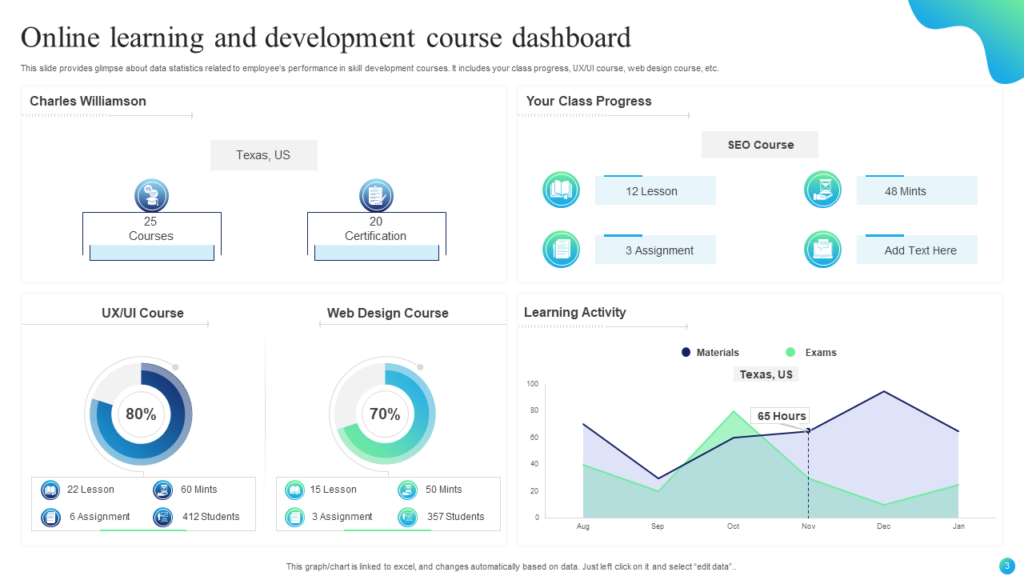
In 2026, learning platforms are no longer just content delivery tools—they are powerful analytics systems.
Organizations now expect their learning platforms to provide measurable insights such as:
- learner engagement rates
- skill gaps across teams
- course completion statistics
- performance trends
- training ROI
Advanced reporting dashboards help educators and managers understand how learners interact with content and where improvements are needed.
Predictive analytics can even forecast performance and identify learners who may require additional support before problems arise.
These insights allow organizations to optimize training programs and align learning initiatives with business objectives.
Skills-Based Learning Is Replacing Traditional Course Structures
Traditional course catalogs are gradually being replaced by skills-focused learning models. Organizations increasingly recognize that job roles evolve faster than traditional curricula, creating a gap between what employees learn and the skills they actually need. Today, 63% of organizations identify the skills gap as a major barrier to transformation.
Dynamic Skill Mapping and Gap Analysis
Modern e-learning platforms help organizations identify and address these gaps through continuous skill mapping and analysis. Instead of relying on occasional assessments, AI-powered systems analyze performance data in real time, highlighting skill shortages and recommending targeted learning opportunities.
This approach is becoming essential as workforce demands evolve—nearly 60% of employees are expected to require significant retraining by 2030, and about 85% of employers now prioritize upskilling existing staff over hiring externally.
Micro-Credentials and Digital Badges
Micro-credentials are becoming a popular way to validate specific competencies. These short, skill-based certifications allow learners to demonstrate practical knowledge in a focused area.
Digital badges represent these achievements online and contain verified metadata such as issuer information, skill criteria, and evidence of completion.
Research shows that 72% of employers are more likely to hire candidates with micro-credentials, and 74% value non-degree certifications during recruitment. Learners can also combine multiple micro-credentials to build personalized learning pathways aligned with their career goals.
Learning in the Flow of Work
The concept of “learning in the flow of work,” introduced by learning expert Josh Bersin, emphasizes accessing knowledge exactly when it is needed without interrupting daily tasks.
This approach is particularly important because employees often have less than 30 minutes per week for formal training. Modern digital learning platforms solve this challenge by embedding guidance directly into workplace tools through contextual tips, walkthroughs, and real-time assistance.
Studies show that employees who learn during work experience:
- 47% less stress
- 39% higher productivity
- 23% greater readiness for new responsibilities
Integration with Talent Management Systems
Modern e-learning platforms are also integrated with talent management systems, ensuring that learning outcomes align with performance goals and organizational strategies. AI-driven platforms can curate personalized content and deliver the right training at the right time.
Organizations looking to build these capabilities can partner with companies like SDH, which develops custom e-learning platforms that support skills-based learning frameworks, analytics dashboards, digital credentialing, and seamless integration with enterprise systems.
Immersive Learning with AR and VR

Immersive technologies such as augmented reality (AR) and virtual reality (VR) are quickly gaining traction in digital education.
These technologies allow learners to experience realistic simulations and practice skills in virtual environments.
Examples include:
- medical students practicing surgical procedures
- engineers operating virtual machinery
- language learners interacting with simulated conversations
- history students exploring virtual historical environments
The immersive learning market is expanding rapidly, with billions of dollars expected to be invested in educational AR and VR technologies in the coming years.
As hardware becomes more accessible, immersive learning will become a standard feature of advanced e-learning platforms.
Mobile-First Learning Experiences
Modern learners expect to access educational content anywhere and anytime.
This is why mobile-first design has become a core requirement for modern e-learning platforms. Mobile-optimized systems allow users to:
- complete lessons on smartphones or tablets
- receive notifications about assignments or progress
- switch between devices without losing progress
- download content for offline learning
Mobile learning also supports global accessibility, allowing students and professionals to continue learning even in environments with limited infrastructure.
Lifelong Learning and Continuous Upskilling
The modern workforce is evolving rapidly due to automation, digital transformation, and artificial intelligence.
As a result, organizations are investing heavily in continuous learning and upskilling programs.
E-learning platforms are becoming essential tools for:
- corporate training programs
- employee skill development
- professional certification programs
- lifelong learning initiatives
Digital learning is no longer limited to formal education institutions. It has become a central component of career development and workforce transformation.
What Organizations Should Look for in a Modern E-Learning Platform

As digital learning continues to evolve, organizations must carefully evaluate the capabilities of their learning platforms.
Key features to prioritize include:
- AI-driven personalization
- interactive quizzes and assessments
- gamification elements such as badges and rewards
- advanced reporting dashboards
- mobile accessibility
- scalable cloud infrastructure
- integration with other enterprise systems
Platforms that combine these capabilities will be better positioned to deliver engaging learning experiences and measurable results.
How SDH Helps Organizations Build Future-Ready E-Learning Platforms
Building a modern e-learning platform requires expertise in both education technology and software engineering. SDH helps organizations design and develop scalable digital learning platforms tailored to their needs.
Custom E-Learning Platform Development
SDH builds interactive platforms that make online education engaging and effective. These platforms can include:
- interactive quizzes and assessments
- digital badges and achievement systems
- performance analytics and reporting dashboards
- gamified learning experiences
Scalable and Secure Architecture
SDH develops platforms optimized for performance and security, capable of supporting hundreds or thousands of learners.
Data-Driven Learning Tools
Advanced dashboards and analytics help organizations track learner progress, measure training outcomes, and improve education programs.
Integration with Existing Systems
SDH solutions integrate seamlessly with HR platforms, CRM tools, and learning management systems, creating a connected digital learning ecosystem.
By combining modern technologies with strong development expertise, SDH enables organizations to build scalable, future-ready e-learning platforms.
Final Thoughts
The future of e-learning platforms is intelligent, interactive, and highly personalized.
Artificial intelligence, immersive technologies, data analytics, and gamification are transforming digital education into a dynamic experience that adapts to every learner.
For organizations investing in education technology, the challenge is no longer simply delivering content—it is creating engaging learning ecosystems that drive measurable outcomes.
Companies that adopt modern e-learning platforms today will be better prepared to educate employees, students, and customers in the rapidly evolving digital economy.
With the right technology partner and a forward-looking strategy, the future of learning is not only digital—it is smarter, more engaging, and more accessible than ever.
Categories
About the author

UI/UX Designer at Software Development Hub with 4+ years experience. Skilled in designing mobile app, websites, SaaS products. She is passionate about improving how people engage with interfaces, focusing on creating seamless, user-centered designs that not only look appealing but also feel intuitive.
Share





Need a project estimate?
Drop us a line, and we provide you with a qualified consultation.