
None
Boilerplate in Context
Why Boilerplate Matters
What Is a Template? A Customizable Starting Structure
Common Template Use Cases
Template Benefits
What Is a Blueprint? A Detailed Plan or Guide
Blueprints in Practice
Blueprint vs Template
Comparing Boilerplate, Blueprint, and Template
When to Use Each in Software & Business Projects
Boilerplate:
Template:
Blueprint:
How SDH Global Uses These Concepts in Practice
Choosing the Right Tool for the Right Task
Boilerplate vs Blueprint vs Template: Key Concepts Every Team Should Understand

In software development, project management, and business documentation, the terms boilerplate, blueprint, and template frequently appear — often interchangeably. But while they may seem similar at first glance, each term has a specific purpose and value depending on the context.
SDH Global provides custom software, web & mobile development, and digital transformation solutions, precise terminology enables better collaboration, clearer documentation, and more effective delivery across services like MVP development, SaaS solutions, and enterprise software engineering.
This article delves into what boilerplates, blueprints, and templates are, how they differ, and how to use them strategically in your development and business processes.
What Is a Boilerplate? Standardization for Consistency and Speed
Definition:
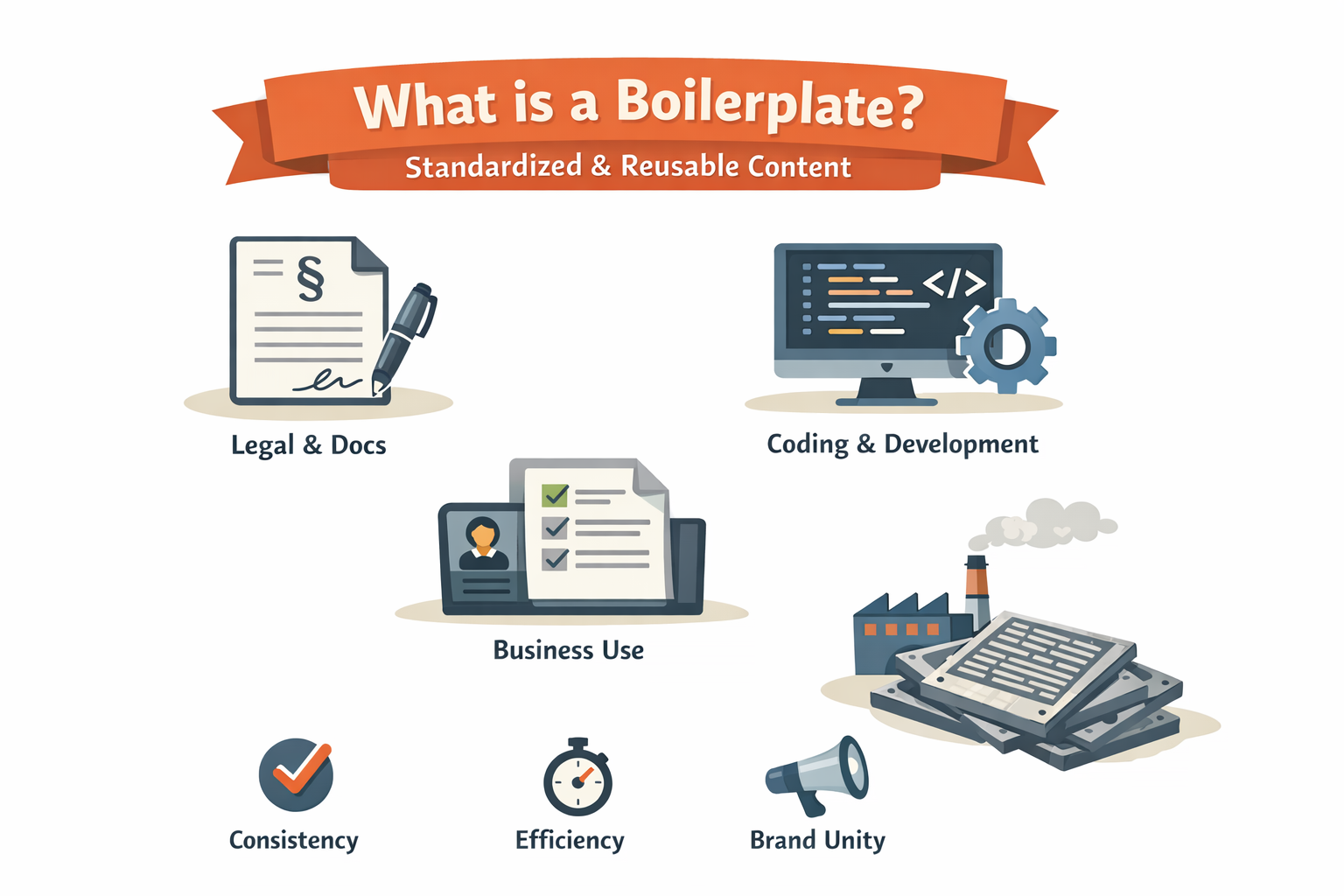
A boilerplate is a block of standardized text, code, or content that is reused repeatedly with minimal change. Originally, the term referred to pre-manufactured metal plates that were used to mass-print text — hence the name boilerplate text. Today, boilerplate can refer to standardized legal clauses, code snippets, or other reusable components that help maintain consistency and speed up repetitive tasks.
Boilerplate in Context
- Documentation & Legal Use: Often used in contracts or press releases where the core language is predictable and doesn’t change (e.g., a company description or disclaimer).
- Coding & Development: In software projects, boilerplate code includes standard setup code, reusable configuration files, or starter code that ensures uniformity across projects without writing everything from scratch.
- Business Communication: Teams use boilerplate language in common internal docs — like email signatures, project briefs, or requirements checklists — to preserve corporate style and reduce redundant writing.
Why Boilerplate Matters
- Consistency: Ensures that key sections of text or code look and read the same across projects.
- Efficiency: Saves time during initial setup and reduces the chance of error by using tested standard elements.
- Brand Integrity: Maintains a unified voice in external communications.
However, boilerplates are meant to stay mostly unchanged. Overusing them where customization matters can lead to generic or unclear outcomes.
What Is a Template? A Customizable Starting Structure
 Definition:
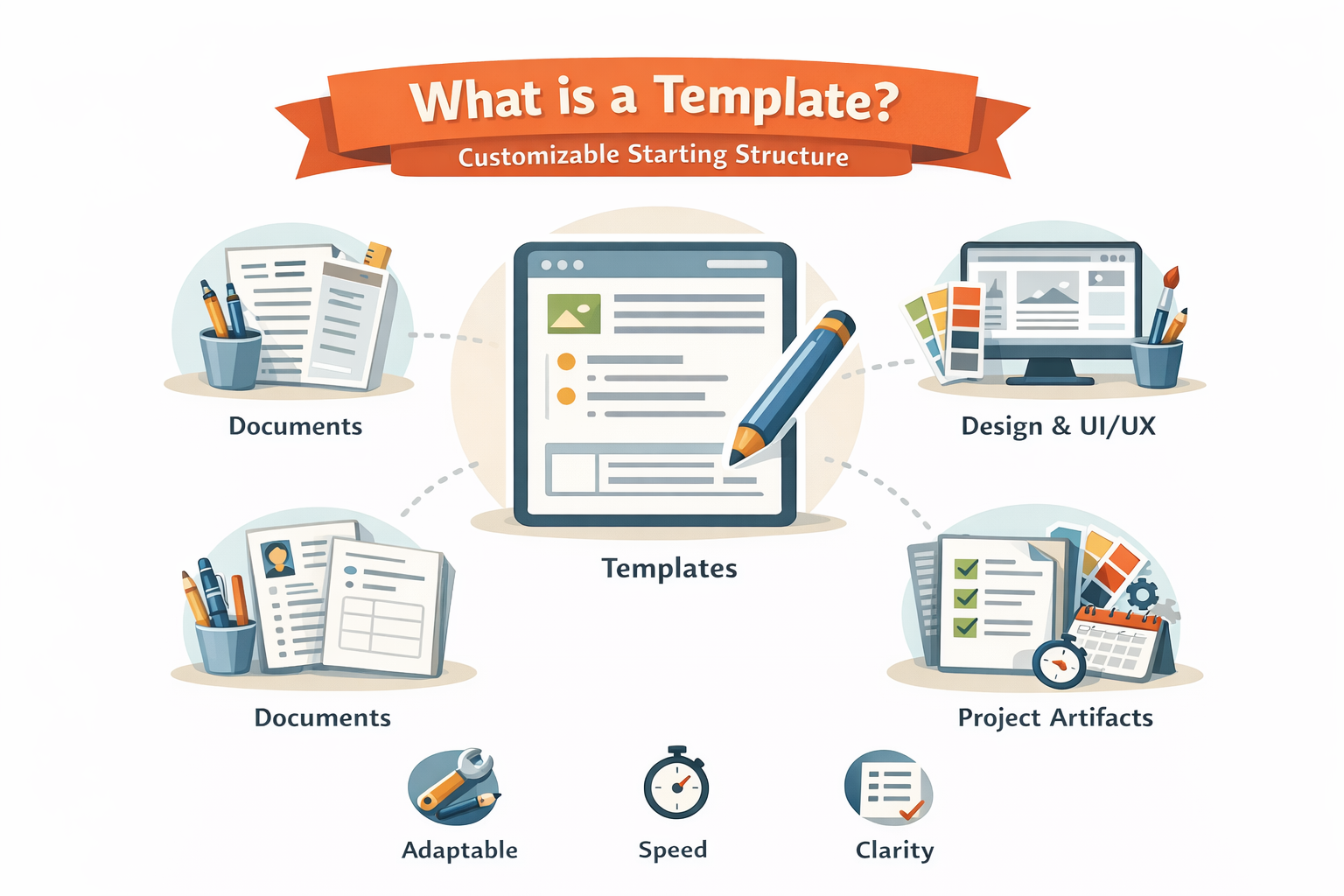
A template is a pre-defined structure or layout designed to be filled in or customized. Templates provide a framework — like placeholders for content — that can be adapted for specific use cases.
Common Template Use Cases
- Documents: Resumes, internal reports, proposals, or specifications often begin with a template that defines sections, formatting, and placeholders.
- Design & UI/UX: Website or app screens often start from a design template outlining layout and style elements.
- Project Artifacts: Templates for user stories, test plans, or sprint retrospectives ensure teams follow a uniform structure.
Unlike boilerplate, templates invite customization. They reduce setup time while still allowing teams to tailor the content to specific needs.
Template Benefits
- Adaptability: Each document retains consistent structure, yet can contain unique content relevant to the task.
- Speed: Teams don’t start from zero; they can focus on adding value instead of formatting or redesigning fundamentals.
- Clarity: Having mapped sections reduces ambiguity about what needs to be included.
What Is a Blueprint? A Detailed Plan or Guide
Definition:
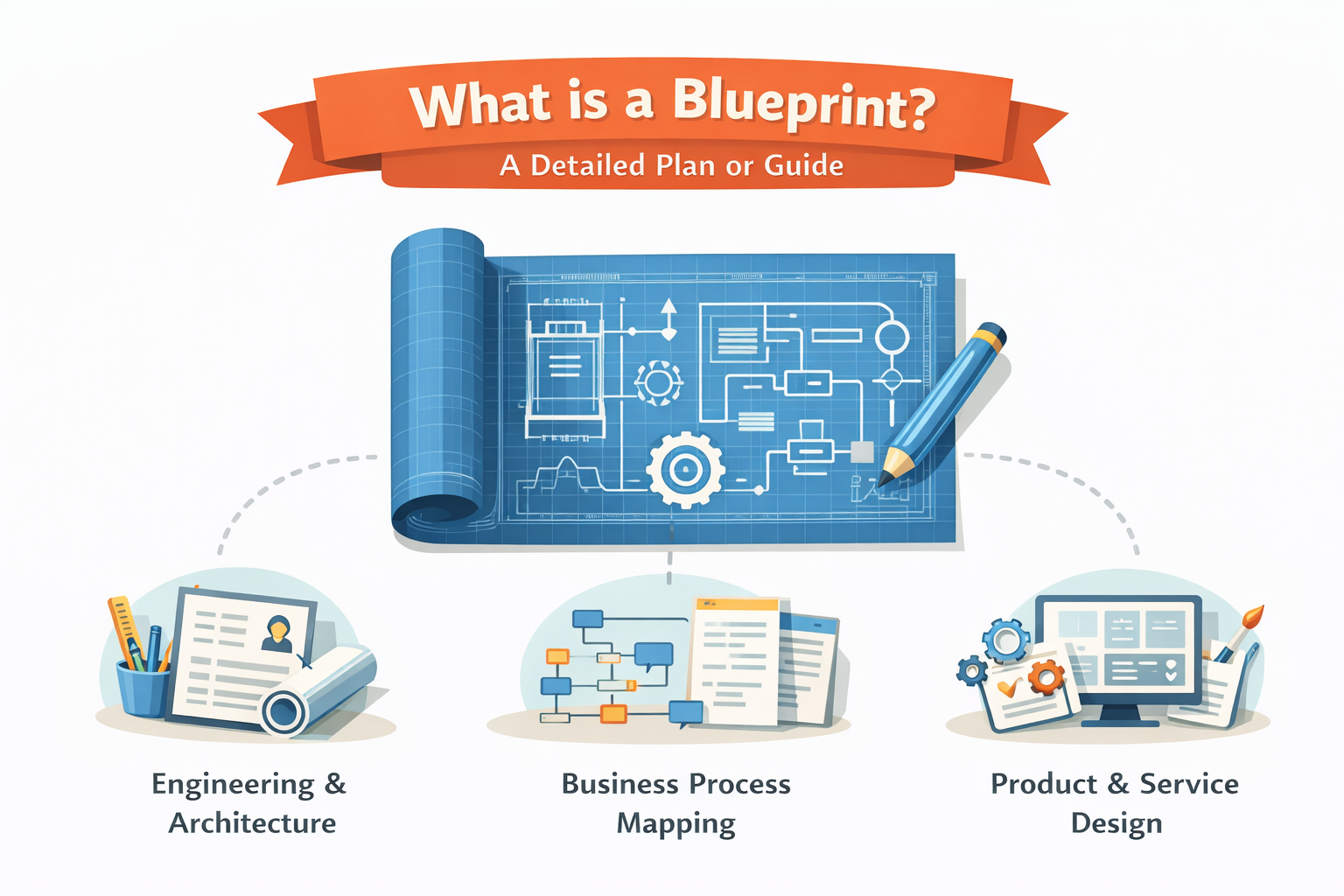
Originally a term for detailed architectural prints with white lines on a blue background, blueprint has evolved to mean a comprehensive plan or guide — outlining the steps, structure, and logic needed to achieve an outcome.
In business and technical environments, a blueprint provides a detailed, often visual representation of a system, workflow, or solution design.
Blueprints in Practice
- Engineering & Architecture: Technical drawings showing precise construction details.
- Business Process Mapping: A business blueprint could map all operational processes to align teams with strategic goals.
- Product & Service Design: In software and product teams, blueprints help design processes — from requirement flows to service touch points.
Blueprint vs Template
While templates give you a starting structure to fill in, blueprints provide the full strategic layout — often a plan that guides multiple decisions and steps. In technical or business contexts, blueprints function as a master plan rather than a simple fill-in document.
Comparing Boilerplate, Blueprint, and Template
|
Aspect |
Boilerplate |
Template |
Blueprint |
|
Purpose |
Reuse standard content/code |
Provide a customizable structure |
Serve as a comprehensive plan/guide |
|
Flexibility |
Low |
High |
Varies — often detailed but flexible in interpretation |
|
Use Case |
Consistency in repetitive content |
Creating new docs or structures |
Planning systems, processes, or designs |
|
Customization |
Minimal |
Extensive |
Guides strategy and decision points |
|
Example |
Legal clauses, starter code |
Report layout, UI template |
Process map, system design specification |
When to Use Each in Software & Business Projects
Understanding when to use each can significantly streamline workflows and increase quality in SDH’s engagements — whether building enterprise solutions, MVPs, or product roadmaps.
Boilerplate:
- Set up standardized code or legal text that doesn’t change project-to-project.
- For example: API response formats, contract disclaimers, CI/CD config stubs — or starter kits like TurboStarter that help teams skip repetitive setup and move faster into real product development.
Template:
- For documents and artifacts that need structure but individualized content.
- Examples: documentation templates, sprint planning docs, UI design layouts.
Blueprint:
- In planning phases — for architectural designs, business processes, or service maps.
- Useful in early discovery workshops, UX strategy sessions, or defining MVP scope with clients.
How SDH Global Uses These Concepts in Practice
At SDH Global, delivering high-quality solutions — from custom mobile apps to scalable SaaS platforms — requires structured thinking at every stage of the development lifecycle.
- Blueprints help the team and stakeholders align on vision and architecture before development begins. They act as strategic guides in business analysis and design.
- Templates ensure documentation and deliverables remain consistent and easy to consume — from requirement specs to test plans.
- Boilerplate components (whether code or content) allow engineers to focus on unique logic rather than reinventing necessary standardized parts.
Together, these elements create a balanced workflow that combines efficiency, consistency, and clarity — essential components of successful software delivery and client satisfaction.
Choosing the Right Tool for the Right Task
Boilerplates, templates, and blueprints are not just jargon — they represent fundamentally different approaches to managing complexity in documentation, code, and planning. When used appropriately:
- Boilerplates streamline repetitive work and maintain standards.
- Templates accelerate creation while leaving room for customization.
- Blueprints guide complex thinking and strategic planning.
For modern software teams and businesses — especially those focused on digital transformation and custom engineering like SDH — mastering these concepts enhances productivity, ensures quality, and fortifies communication across teams and with clients.
Categories
About the author

UI/UX Designer at Software Development Hub with 4+ years experience. Skilled in designing mobile app, websites, SaaS products. She is passionate about improving how people engage with interfaces, focusing on creating seamless, user-centered designs that not only look appealing but also feel intuitive.
Share





Need a project estimate?
Drop us a line, and we provide you with a qualified consultation.